Reviewed · BAKU TOURS
Baku’s Ancient Heart
Baku’s old walls tell many stories. This walking tour brings you through the UNESCO-listed Old City, from the famous Maiden Tower and Shirvanshah Palace to caravanserais, mosques, artists’ homes, and narrow lanes shaped by Silk Road trade. I especially like the mix of major sights and small surprises, such as the miniature-book museum, Ali Shamsi’s lion mural, and the old bathhouses. I also like the guide’s conversational style. Heydar is praised for clear explanations, humor, patience, and an ability to keep teenagers interested.
The main point to consider is the advertised two-hour length. That is enough for an introduction, but not enough to properly explore every sight, especially the palace. The walk also includes some tight streets and the Maiden Tower has a narrow staircase with no elevator. If you want a slower visit or time inside the main monuments, plan for extra time.
In This Review
- Key points at a glance
- Why Baku’s Old City deserves a walking tour
- Maiden Tower and the old market area
- Caravanserais built for Silk Road merchants
- Legends, khans, and an underground bathhouse
- Art on the walls and books smaller than a fingernail
- Shirvanshah Palace and the poet’s Tree of Life
- Soviet cinema, wine, and Baku jazz
- The Old City’s mosques and changing religious history
- What $25 includes, and what it does not
- Who will enjoy this walk most
- Should you book Baku’s Ancient Heart?
- FAQ
- How long does the Baku Old City tour last?
- What is included in the $25 price?
- Can I climb the Maiden Tower?
- Does the tour enter the Palace of the Shirvanshahs?
- Where does the tour start and finish?
- What happens if the weather is poor or the minimum number is not met?
Key points at a glance
- Maiden Tower begins the story: Learn why Baku’s best-known monument was built, then pay extra if you want to climb its narrow stairs for city views.
- Silk Road buildings remain part of the walk: Multani and Bukhara caravanserais show how merchants once lodged and protected their goods.
- The route goes beyond standard sightseeing: You’ll pass a miniature-book museum, a jazz musician’s home, a working hammam, and a wine shop.
- Heydar’s guiding style is a major strength: His explanations are described as simple, detailed, humorous, and easy to follow.
- The tour is good value at $25: It includes a licensed English or Russian-speaking guide, while tips and optional admissions cost extra.
- Expect a compact Old City walk: The group can have up to 15 people, and the route starts and ends at 16 Asəf Zeynallı küç.
Why Baku’s Old City deserves a walking tour
Baku’s historic center is small enough to explore on foot, but its story is not simple. Merchants from across the region passed through here, local khans ruled from within the walls, religious buildings rose and changed over the centuries, and later Russian and Soviet influence left its mark.
A guide helps you read those layers. Without one, you might see the Maiden Tower, photograph the palace entrance, and move on. With Heydar, the same streets become a sequence of questions: why was the tower built, who used the caravanserais, why is one mosque called the Broken Tower, and how did an Azerbaijani musician join Mugam with American jazz?
That is the real value of this walk. It is not just a checklist of old buildings. It connects architecture to trade, religion, music, film, local legends, and daily life.
The route is also a practical first look at Baku. You get your bearings near the old walls, see where the major monuments sit, and finish back at the same meeting point. Since the tour operates on foot and the meeting point is near public transportation, it is easy to fit into a first day in the city.
A few more ways to spend a day out of Baku
- Baku: Gobustan, Mud Volcano, Fire Mount, Temple Lunch Entry
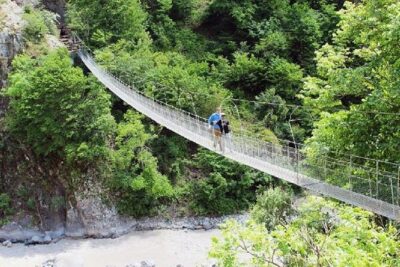
★ 4.9 · 3,246 reviews - Baku: Guba, Shahdag, Laza & Lunch w/ Free City & Night Tour
★ 4.8 · 1,455 reviews - BEST Gobustan, Volcanoes & Absheron Fire Tour (Group or Private)
★ 5.0 · 1,254 reviews
Maiden Tower and the old market area
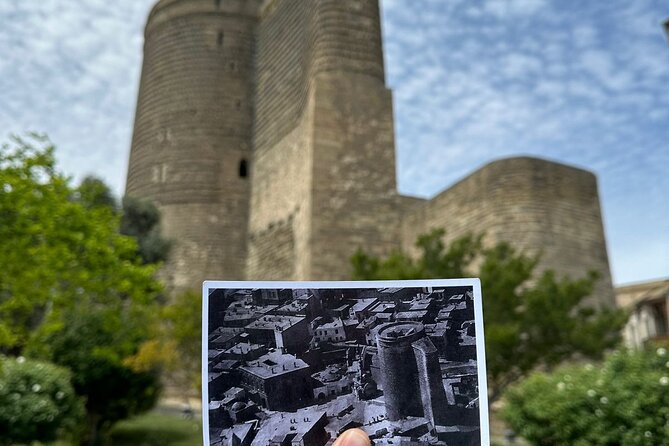
The Maiden Tower is the natural place to begin. It is one of Azerbaijan’s main symbols, but its original purpose remains a subject of debate. Was it a defensive structure, a religious site, an astronomical building, or something else? The tour uses the tower to introduce Baku’s early history and the legends attached to it.
You can buy a ticket separately if you want to go inside and climb to the top. The reward is a view over the Old City and the newer parts of Baku, including the direction of the Caspian Sea. The practical warning is important: the staircase is narrow, and there is no elevator. Anyone who dislikes confined stairways may prefer to admire the tower from ground level.
Next comes the open-air museum beside the tower and the remains of Saint Bartholomew Chapel. More than 50 gravestones were found here, and local tradition connects the area with an old marketplace. That detail gives the stones a wider setting. This was not simply a residential quarter. It was a place where merchants met, traded, and moved goods through the city.
The stop is short, listed at about five minutes, so think of it as an explanation and orientation rather than a full museum visit.
Caravanserais built for Silk Road merchants
The Multani Caravanserai is a compact fortified lodging place tied to merchants from Multan, a city in present-day Pakistan. When the Silk Road route passed near the Maiden Tower, merchants needed secure places for themselves and their goods. The building helps you picture the practical side of long-distance trade: lodging, storage, protection, and organized movement through a busy commercial city.
The Bukhara Caravanserai carries another geographic clue. Its name points toward Bukhara in modern Uzbekistan and reflects the movement of people, goods, and political power across the region. The explanation also touches on the Mongol period and Tamerlane’s campaigns.
These stops are brief, but they are among the most useful on the route because they turn the phrase Silk Road into something concrete. You are looking at the kind of building that made long-distance trade possible, not just hearing a broad historical label.
Legends, khans, and an underground bathhouse
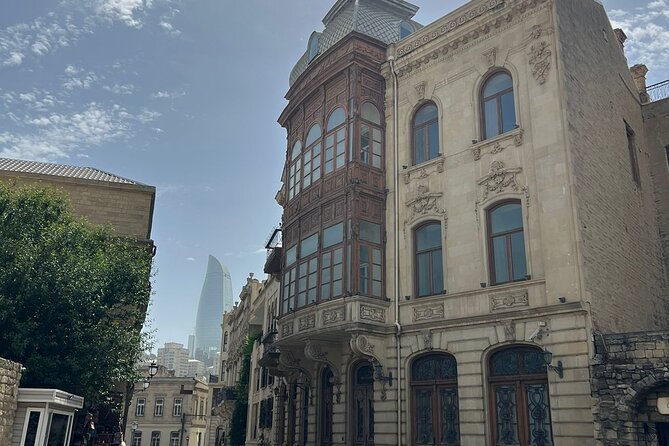
The Monument to Lovers and Cats is one of the route’s lighter moments. It comes with several local legends, including sad stories and tales of love. This is a good reminder that the Old City is not only a collection of official monuments. Its identity also lives in stories passed from one generation to the next.
The House of the Baku Khans shifts the focus to political history. From 1747 to 1806, the local khans ruled the city from within this city-within-a-city. Azerbaijan was later annexed by the Russian Empire, so the building marks a change from local rule to imperial control.
Near the Double Gates, you can see the entrance to Yeraltı Hamam, an underground bathhouse from the 17th century. Baku once had several bathhouses, and the Old City still preserves evidence of this public tradition. The short stop is especially useful because it shows how people cared for daily needs in a dense medieval town.
Since the tour does not promise an extended interior visit at every location, ask Heydar how much access is available on your date. Several stops are primarily exterior explanations.
A completely different sort of day out of Baku:
- Gobustan and Absheron tour (All inclusive)
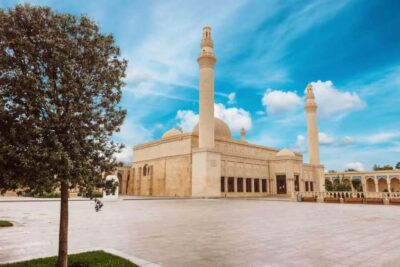
★ 5.0 · 1,014 reviews - Shamakhi And Gabala Tour (All inclusive)
★ 5.0 · 815 reviews - From Baku: Gabala and Shamakhi Tour (Free Baku City Tour)
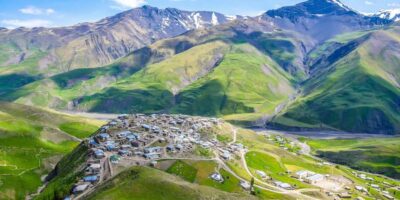
★ 4.8 · 695 reviews - Baku: Candy Cane, Guba, Khinaliq village with Homemade Lunch
★ 4.9 · 519 reviews
Art on the walls and books smaller than a fingernail
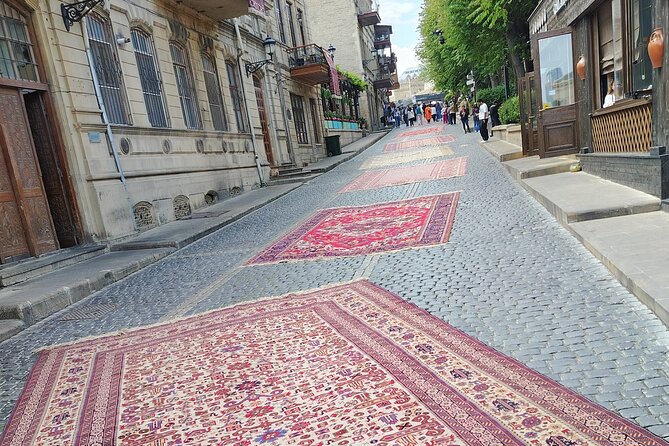
Ali Shamsi’s workshop is easy to recognize because of the large lion head painted on the wall. People often pause outside to look at it, making the gallery a lively visual break from stone walls and formal monuments. It also shows that the Old City is still a place for working artists, not a preserved shell with nothing happening inside.
The Baku Museum of Miniature Books is another unusual stop. Its collection includes books the size of a fingernail and smaller, and it entered the Guinness World Records in 2014 for its collection of miniature books. One especially notable item is a 17th-century miniature Holy Koran.
This is the kind of small museum that can make a city walk memorable. At the same time, the listed stop lasts only about five minutes. If tiny books interest you, you may want to return later for a longer look rather than trying to rush through it during the group walk.
Shirvanshah Palace and the poet’s Tree of Life
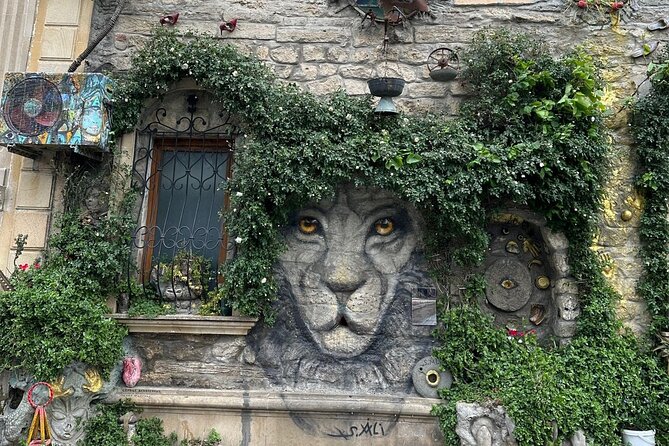
The Palace of the Shirvanshahs is the grand historical center of the Old City. Built between the 12th and 15th centuries, it served as the residence of the rulers of the medieval Shirvan state and their servants. The complex was damaged several times and was restored most recently in 2004.
The palace, Maiden Tower, and Old City were added to the UNESCO World Heritage List in 2000. That designation matters because it confirms the importance of the entire historic setting, not only one famous building.
The tour explains the palace from outside but does not include an interior visit. The reason is practical: the complex covers more than a hectare, and a proper visit would take at least another hour. If you have limited time, the exterior briefing gives you useful context. If the palace is your main reason for visiting Baku, budget a separate visit and admission.
The nearby Vahid Monument honors Aliagha Vahid, an Azerbaijani poet known for satirical poetry. The statue is called the Tree of Life, with the poet’s ideas about life and death represented in his head. It is a compact stop, but it adds local literature to a route otherwise dominated by rulers, religion, and trade.
Soviet cinema, wine, and Baku jazz
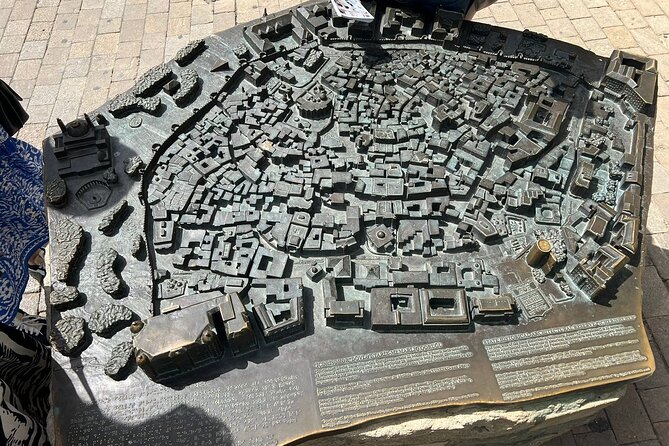
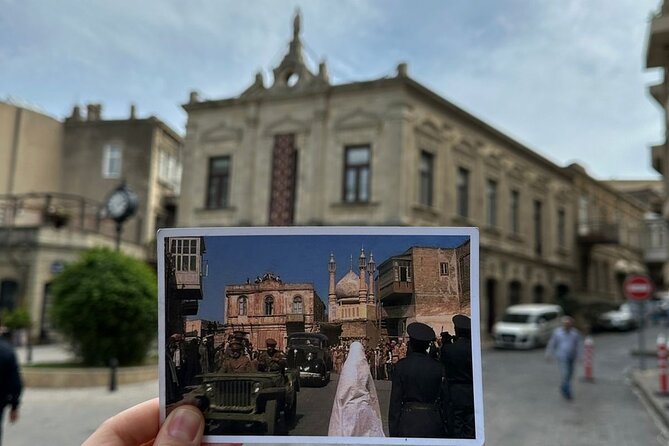
The Aptek Museum and bathhouse stop adds a bit of popular culture. Russian-speaking visitors may recognize the location from the 1968 Soviet comedy The Brilliant Hand, including the well-known scene connected with the phrase Damn it. The Old City’s bathhouse tradition also continues here, since one of the old bathhouses still operates as a hammam.
That combination of film history and living tradition is a strong feature of the walk. You are not looking only at ruins. You are also seeing places that continue to shape how people remember the city.
At the Absheron Sharab wine shop, you may have the option to taste pomegranate wine. Azerbaijan is known for this style of wine, and the stop can be a pleasant introduction to a local product. The tasting is optional, so you can simply continue if wine is not part of your plans.
The House Museum of Vagif Mustafazadeh brings the route into modern cultural history. Mustafazadeh had a short life but became known internationally for blending Azerbaijani Mugam with American jazz. This is a fine example of how local traditions can change without losing their identity.
The Old City’s mosques and changing religious history
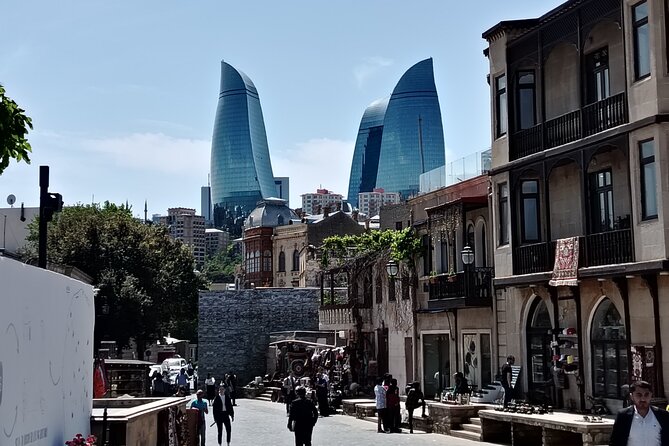
The Muhammad Mosque is described as the oldest mosque in the Old City, dating to the 11th century. It may have been built on the site of an older Zoroastrian fire temple, based on traces of fire and spiritual artifacts found beneath the prayer hall.
Locals call it the Broken Tower because of its damaged structure. The guide uses the nickname to explain both the building’s appearance and the stories surrounding it. This is a stop where the value comes from asking questions. The visible remains are only part of the story.
The Juma Mosque is the largest mosque in the Old City and dates to the 12th century, with restoration carried out in the early 20th century. It is also identified as the only mosque in the Old City where women are allowed to pray inside. That detail gives the building present-day importance, not just architectural interest.
The Lezgi Mosque was built in the 12th century by Ibrahim Ashur and is also known as the Lezgian Mosque. It is currently under reconstruction, so you may see less of the building than expected. Still, its presence points to the Old City’s former religious variety. The area once had 28 mosques, while only some remain visible or accessible today.
These final stops make a useful point: old cities change. Buildings are restored, damaged, repurposed, or lost. A good guide helps you notice what is no longer there as well as what survives.
What $25 includes, and what it does not
At $25 per person, the tour offers fair value if you want a guided introduction to Baku’s historic center. The fee covers the walking tour and a licensed English-speaking or Russian-speaking guide. It does not include tips or optional admission tickets, such as the Maiden Tower climb.
The value depends on how you use the two hours. If you want the city’s main stories, a route through many landmarks, and help understanding local legends, the price is reasonable. If you expect full interior visits at the palace, tower, museums, and bathhouses, it will feel too limited.
The maximum group size is 15 people. That is small enough for questions and conversation, though the experience may feel less personal if the group reaches its limit. Heydar’s strongest quality appears to be his flexibility. He is described as adjusting to a family’s pace, explaining things patiently, and making the walk feel like a conversation instead of a lecture.
One important timing note: the scheduled duration is about two hours, but Heydar has also led walks that lasted closer to four hours. That may reflect extra questions, a slower family pace, or an informal stop for lunch at a restaurant in the Old City. Do not build a tight onward connection around the shorter estimate.
Who will enjoy this walk most
I would choose this tour if you are visiting Baku for the first time and want the Old City explained rather than simply photographed. It suits families, since the guide has been praised for keeping teenagers interested, and it works well for anyone who likes history mixed with music, film, food, and local stories.
It is also a good choice if you have only part of a day. The start and finish are at the same meeting point, and the route stays in the historic center.
You may want a different plan if you need a fully accessible route, although service animals are allowed and most people can participate. The narrow tower staircase, cobblestones, old structures, and possible reconstruction at some sites may be inconvenient for some visitors. The tour data does not promise step-free access, so ask before booking if that is important to you.
The tour requires good weather and a minimum number of participants. You can cancel for a full refund up to 24 hours before the start time. Cancellations or changes within 24 hours are not refunded or accepted, and a weather or minimum-number cancellation offers either another date or a full refund.
Should you book Baku’s Ancient Heart?
Book it if you want a friendly, story-led introduction to Baku’s Old City, especially with Heydar as your guide. The best parts are the links between Silk Road trade, local rulers, religious buildings, Soviet cinema, Azerbaijani music, and everyday traditions such as the hammam.
Do not book it expecting a full museum-and-palace tour in two hours. Treat the walk as your orientation, then return to the Shirvanshah Palace, Maiden Tower, or miniature-book museum that catches your interest. At $25, that combination gives you both context and freedom, which is the sensible way to experience Baku’s ancient heart.
FAQ
How long does the Baku Old City tour last?
The scheduled duration is approximately two hours. Some walks with Heydar have lasted closer to four hours, so allow extra time if the group asks questions or takes additional stops.
What is included in the $25 price?
The price includes the walking tour and a licensed English-speaking or Russian-speaking guide. Tips and optional admission tickets are not included.
Can I climb the Maiden Tower?
Yes, you may buy a ticket separately and climb to the top. The stairs are narrow, and there is no elevator.
Does the tour enter the Palace of the Shirvanshahs?
No. The tour explains the palace from outside. A proper interior visit would require at least another hour and a separate admission.
Where does the tour start and finish?
It starts at meeting point 16 Asəf Zeynallı küç, Bakı, Azerbaijan, and ends back at the same meeting point.
What happens if the weather is poor or the minimum number is not met?
You will be offered a different date or experience, or a full refund. For your own cancellation, you must cancel at least 24 hours before the start time for a full refund.
Recently added around Baku
- Heartbeat of Baku: Old & Modern City Walk (Group or Private)★ 5.0 · 3 reviews
- Full Day Guided Tour of Shamakhi and Gabala★ 5.0 · 3 reviews
- Baku: Secret Tour with Surprise Activity★ 5.0 · 3 reviews
- From Baku: Shahdag Mountain Resort Day Trip★ 5.0 · 3 reviews
- Guba and Khinaligh Private Tour★ 5.0 · 3 reviews
- Guba and Shahdag Tour with Guide★ 5.0 · 3 reviews
- Lahij – village of masters★ 4.5 · 3 reviews
- Gobustan & Mud Volcano★ 4.5 · 3 reviews
Baku Tours, compared.
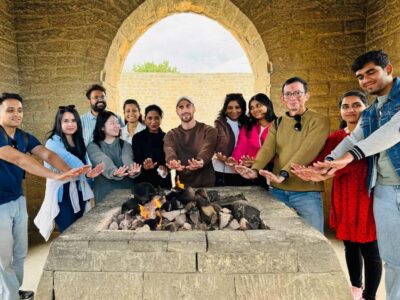
Gobustan, Mud Volcano, Fire Mount, Temple Lunch Entry
Read our review →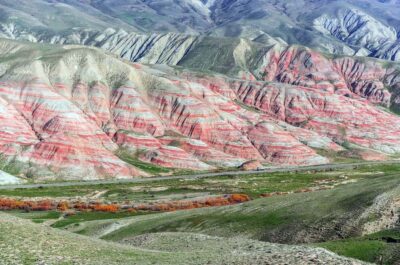
Guba, Shahdag, Laza & Lunch w/ Free City & Night Tour
Read our review →
BEST Gobustan, Volcanoes & Absheron Fire Tour (Group or Private)
Read our review →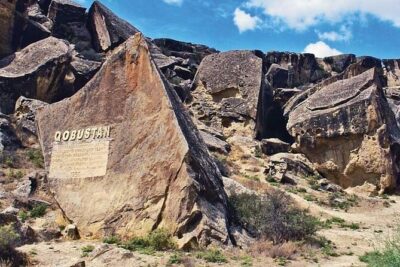
Candy Cane, Guba, Khinaliq village with Homemade Lunch
Read our review →