Reviewed · BAKU TOURS
Become a Baku resident in a day
Baku changes character every few streets. This 450-minute tour links the walled Old City, modern landmarks, Caspian views, and the strange mud volcanoes outside town. I like the strong mix of old and new, and I like that transport connects sights that would be awkward to cover alone. The main drawback is the number of stops and extra entrance fees, which can make the day feel long and cost more than the advertised $30.
The city portion gives you a useful first look at Baku without making you solve the transport puzzle yourself. You see ancient lanes, oil-boom landmarks, bold modern buildings, and religious sites, while guides such as Javid and Tim have earned praise for clear explanations and a calm, friendly manner.
Come ready for a full day, not a gentle stroll. Meeting-point changes have caused real confusion, and the rough road to the mud volcanoes may be uncomfortable, especially if the off-road vehicle is driven too quickly.
In This Review
- Key points to know before booking
- Why this tour works as a first day in Baku
- Icherisheher, where Baku begins behind stone walls
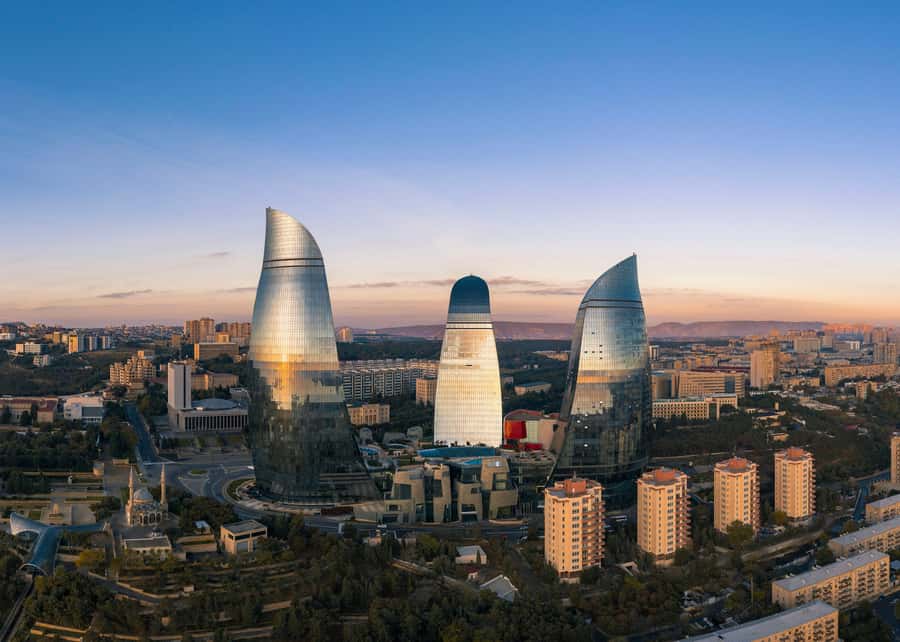
- Highland Park and Flame Towers above the Caspian
- Carpet Museum, Boulevard, and the oil story
- Philarmonia Garden and Bibi-Heybat Mosque
- Gobustan’s rock art and bubbling mud
- Ateshgah and Yanardagh, Azerbaijan’s fire country
- Military Trophy Park and the city’s recent past
- Heydar Aliyev Center, the final architectural statement
- What $30 really buys you
- Who should book this full-day route?
- Should you book it?
- FAQ
- How long does the Baku and Absheron tour last?
- What languages does the guide speak?
- Is hotel pickup included?
- Where can I be picked up?
- Where does the tour end?
- Is entry to the Heydar Aliyev Center included?
- How much does the mud-volcano vehicle cost?
- Are Gobustan, Ateshgah, and Yanardagh entrance fees included?
- Is the tour suitable for wheelchair users or young children?
Key points to know before booking
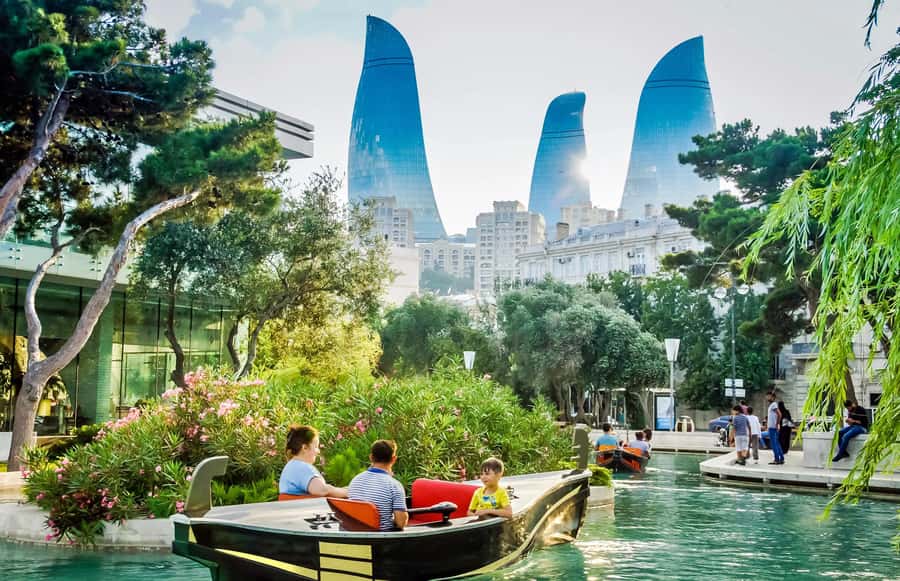
- A full day in two different Bakus: You move from Icherisheher’s stone walls to Flame Towers, the Heydar Aliyev Center, and the Caspian waterfront.
- Mud volcanoes require a cash payment: The off-road vehicle fee is 30 AZN per person, collected at the start, even if rain changes the exact mud-volcano stop.
- Several major admissions cost extra: Gobustan Rock Arts costs 10 AZN, while Ateshgah and Yanardagh together cost 15 AZN.
- The Heydar Aliyev Center is exterior-only: You stop for photos but do not enter the building because of time limits.
- The guide can make or break the day: Javid and Tim are praised by name for patient explanations, good organization, and a friendly approach.
- Comfort matters: Bring walking shoes, water, sun protection, and a hat. The tour is not suitable for children under five, wheelchair users, or people with mobility impairments.
Why this tour works as a first day in Baku
I see this experience as a broad introduction rather than a slow, specialist tour. It tries to answer the basic question every first-time visitor has: what is Baku really like?
The answer comes in several parts. Baku is an old walled city with palace courtyards and narrow lanes. It is also an oil-rich capital with broad boulevards, grand public spaces, and striking new architecture. Outside the center, the Absheron Peninsula adds fire temples, burning ground, and bubbling mud.
That range is the tour’s best feature. You are not stuck looking at one type of sight for seven and a half hours. The tradeoff is that some stops are brief, and the day has a packed rhythm.
Pickup is offered from Ahmad Rajabli, Baku Boulevard, Sahil metro station, or the Old City. The operator contacts you with the exact meeting point and hotel pickup details, so check your messages carefully. Because conflicting meeting instructions have caused stress for at least one booking, I would confirm the final location the day before and again on the morning of the tour.
Transport is by air-conditioned bus. That matters in Baku, where the city sights and Absheron stops cover a wide area. The tour ends at the Heydar Aliyev Center, with drop-off options at Ahmad Rajabli, Baku Boulevard, the Old City, or Sahil metro station.
A few more ways to spend a day out of Baku
- Baku: Gobustan, Mud Volcano, Fire Mount, Temple Lunch Entry
★ 4.9 · 3,246 reviews - Baku: Guba, Shahdag, Laza & Lunch w/ Free City & Night Tour
★ 4.8 · 1,455 reviews - BEST Gobustan, Volcanoes & Absheron Fire Tour (Group or Private)
★ 5.0 · 1,254 reviews
Icherisheher, where Baku begins behind stone walls
The Old City, known as Icherisheher, is the natural starting point for understanding Baku. Inside its historic walls, the pace changes. You walk through narrow alleyways past old stone buildings, palaces, and small cultural sites.
I like this part because it gives the city a human scale. Baku’s giant avenues and glass towers can be impressive, but the Old City shows how the capital worked before oil money transformed its shape.
The Aliagha Vahid Monument is one of the city stops. Aliagha Vahid was an Azerbaijani poet, and his monument adds a local cultural note to the route. The nearby Museum of Miniature Books is another compact stop, reached on foot with a guided visit.
The miniature book museum is especially useful for breaking up the larger outdoor sights. It is not a grand building or a long museum visit, but it offers something unusual and gives you a closer look at a small collection rather than another panoramic photo.
The Old City requires walking on uneven surfaces and through lanes that are not designed for wheeled access. Comfortable shoes are more important here than stylish ones.
Highland Park and Flame Towers above the Caspian
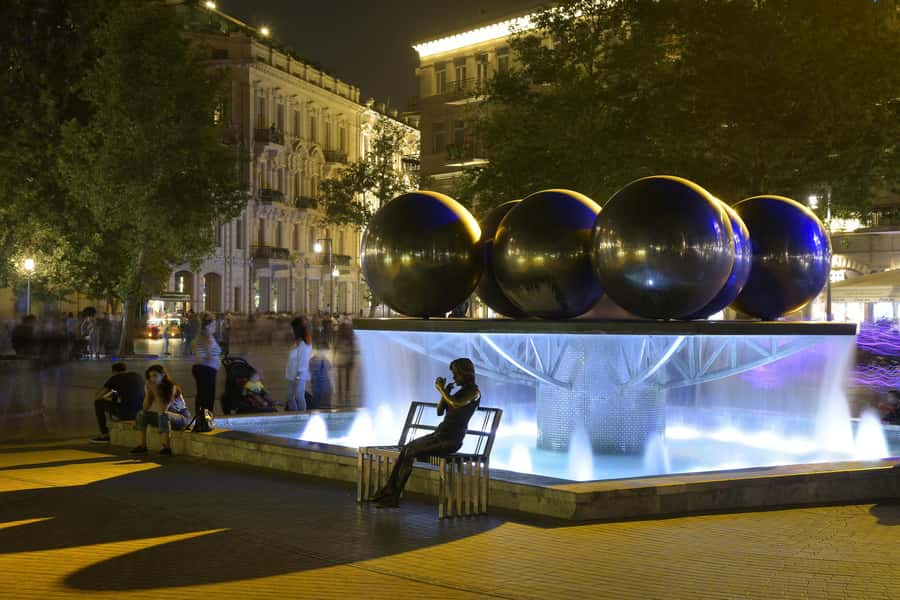
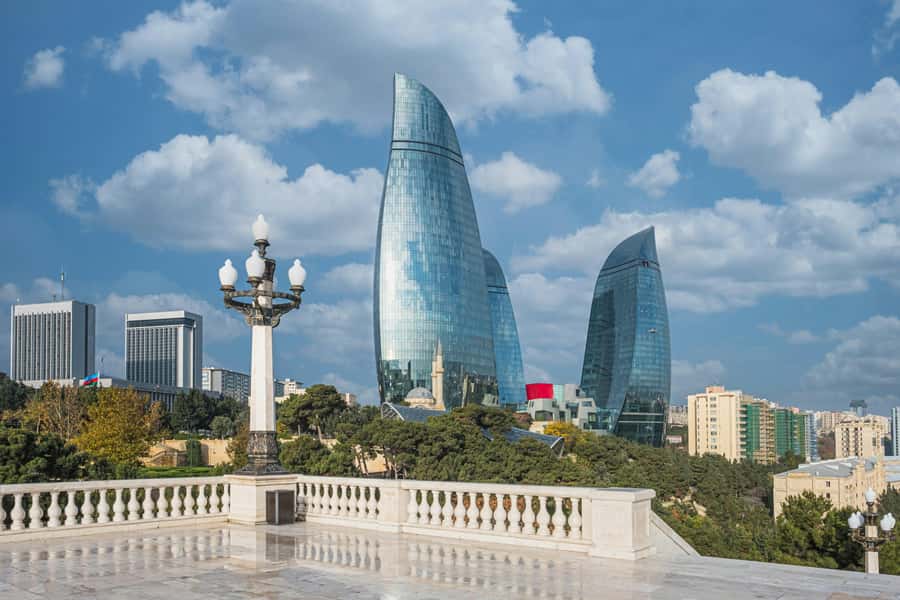
Highland Park is one of the strongest viewpoint stops. From above the city, you can take in Baku’s broad layout, the Caspian Sea, the waterfront, and the Flame Towers. The guided visit lasts about 30 minutes, enough for photographs and a short explanation without turning into a long hillside session.
I would pay attention to the contrast rather than only chasing the perfect picture. From this point, the old stone core, formal city spaces, modern towers, and sea-facing boulevard all appear in the same view. That single scene explains much about Baku’s identity.
The Flame Towers are among the city’s most recognizable modern buildings. You see them from Highland Park and receive a guided explanation, but the experience is about the exterior and the city view rather than an interior visit.
Highland Park is also a place where sun and wind can be strong. Bring a hat, sunscreen, and water. The stop is easy to enjoy if you are prepared, less so if you arrive in thin shoes and no protection from the weather.
Carpet Museum, Boulevard, and the oil story
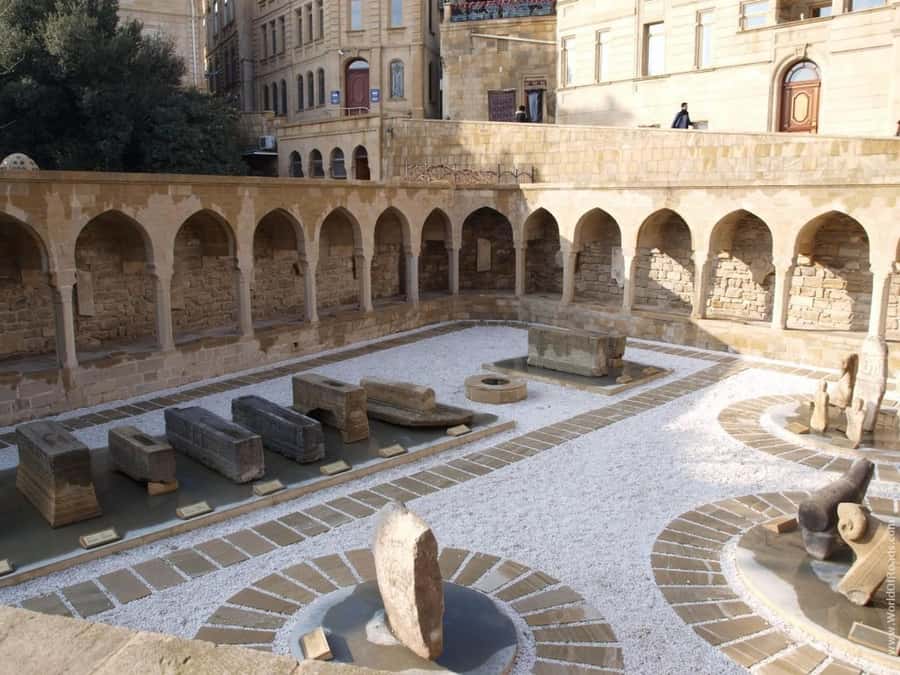
The Azerbaijan Carpet Museum is visited as a photo stop and walking stop. Its building is shaped like a rolled carpet, making it one of Baku’s more playful examples of modern architecture.
You may not have time for a full museum visit here. That is important if carpets are a major interest of yours. The stop gives you the building, the waterfront setting, and a quick cultural marker, but it is not a substitute for a dedicated museum tour.
Baku Boulevard provides a different view of the capital. The promenade opens the city toward the Caspian and gives you a chance to see the grand public spaces that grew around Baku’s oil wealth.
The tour also points out the site of the first oil well in the world, linking the modern city to the oil boom of the 19th century. That detail adds useful context. Baku’s grand buildings and wide streets did not appear by accident, and the oil story helps explain the city’s unusual mix of wealth, ambition, and architectural styles.
National Flag Square is included in the broader city experience as another large-scale waterfront landmark. I would treat these stops as visual history lessons: you see how the city presents itself today while learning why it developed this way.
A completely different sort of day out of Baku:
- Gobustan and Absheron tour (All inclusive)
★ 5.0 · 1,014 reviews - Shamakhi And Gabala Tour (All inclusive)
★ 5.0 · 815 reviews - From Baku: Gabala and Shamakhi Tour (Free Baku City Tour)
★ 4.8 · 695 reviews - Baku: Candy Cane, Guba, Khinaliq village with Homemade Lunch
★ 4.9 · 519 reviews
Philarmonia Garden and Bibi-Heybat Mosque
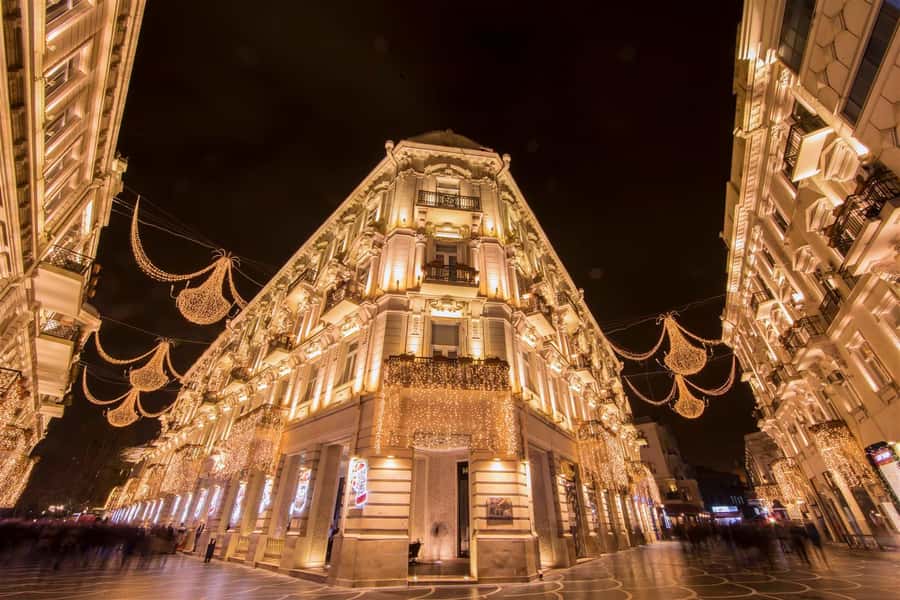
Philarmonia Garden brings greenery and a quieter setting into a day filled with stone, roads, and large buildings. The garden is visited with a guide, so you get more than a quick pass through the space.
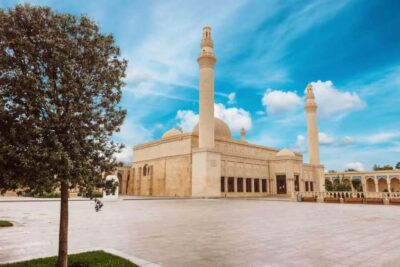
Bibi-Heybat Mosque adds a spiritual and historical layer. The current mosque is a reconstruction of a 13th-century place of worship, and it remains an important religious site.
The mosque is elegant, but you should approach it as an active place of faith rather than simply a photo stop. Dress and behavior should be respectful. The information provided does not set out a separate clothing rule, so modest clothing is the sensible choice.
This is one of the tour’s more valuable contrasts. A few hours earlier you may be looking at futuristic towers. Here, the focus turns to religious tradition and a building with roots in medieval Azerbaijan.
Gobustan’s rock art and bubbling mud
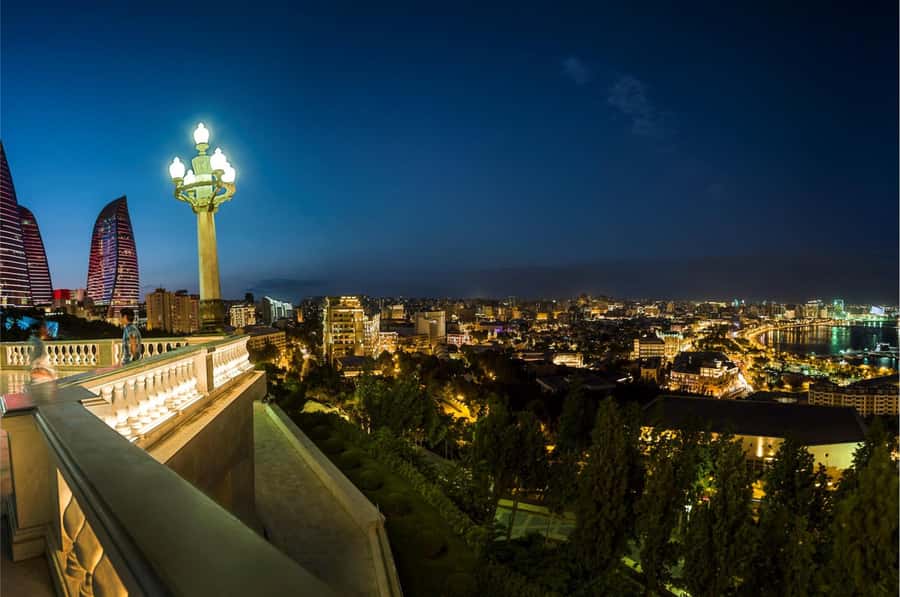
The Absheron portion reaches beyond central Baku to the unusual terrain around Gobustan. The mud volcanoes are the headline attraction for many people. Their small cones bubble and release gray mud, creating a stark, almost lunar scene.
The experience is not polished or theatrical. That is part of its appeal. You are looking at a natural oddity that feels very different from the city’s formal parks and monuments.
A 30 AZN cash fee per person is required for the off-road vehicle to the mud volcanoes. It is collected at the start to avoid delays, so you should arrive with the money ready. If it rains, the plan changes to the Mud Volcanoes Complex, but the same 30 AZN fee still applies.
This is also the part of the day where comfort and safety deserve attention. One account described a very fast ride over a rough, potholed dirt road and no seat belt. That is a serious concern, not a minor complaint. If the ride feels unsafe, speak up clearly to the guide or driver.
Gobustan Rock Arts costs an additional 10 AZN. The site adds human history to the mud-volcano stop, with ancient rock carvings and an archaeological setting. The combination works well: first you see a strange natural feature, then you encounter evidence of people living and making images in this wider region long ago.
Do not expect a large visitor center experience from the mud volcanoes. You are going for the setting and the bubbling earth. If you prefer museums, paved paths, and long indoor visits, this may be the least comfortable part of the day.
Ateshgah and Yanardagh, Azerbaijan’s fire country
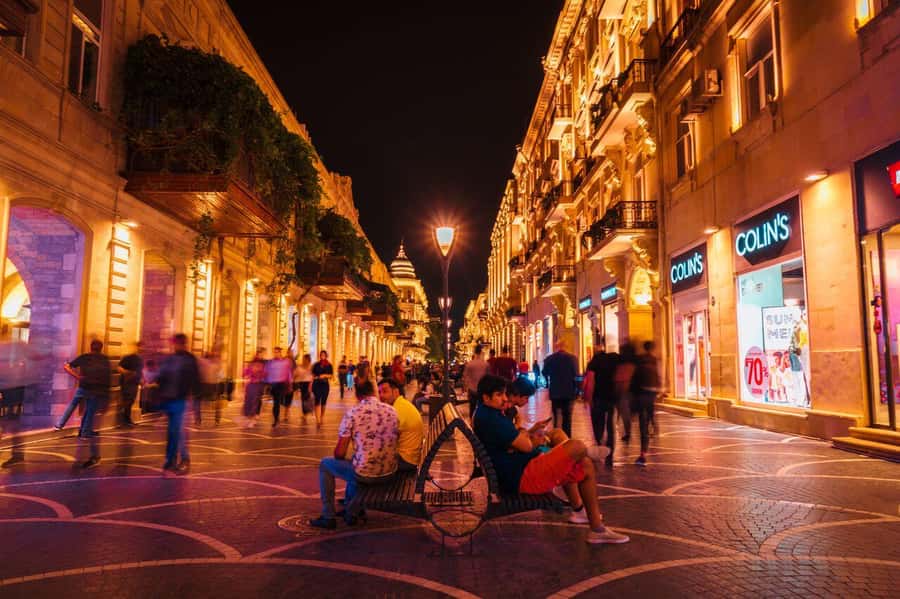
The fire-related stops connect to Azerbaijan’s long association with natural gas flames and Zoroastrian tradition. Ateshgah is the Fire Temple, a symbolic place tied to fire worship. Yanardagh, or Burning Mountain, is known for flames fed by underground gas.
Together, these sites help explain why Azerbaijan has been linked with fire for centuries. They also give the day a clear regional identity rather than making it only a standard capital-city tour.
Entrance fees for Ateshgah and Yanardagh total 15 AZN. Those costs are separate from the $30 tour price and the 30 AZN mud-volcano vehicle fee. You should calculate the full amount before booking, especially if you want every major stop.
One account found the Fire Temple particularly powerful for its symbolism but found the burning ground less impressive in person. That is a fair expectation to carry with you. Yanardagh is unusual, but it is not a dramatic volcano or a huge natural spectacle. Its interest comes from the idea of persistent natural flame and the cultural meaning built around it.
Military Trophy Park and the city’s recent past
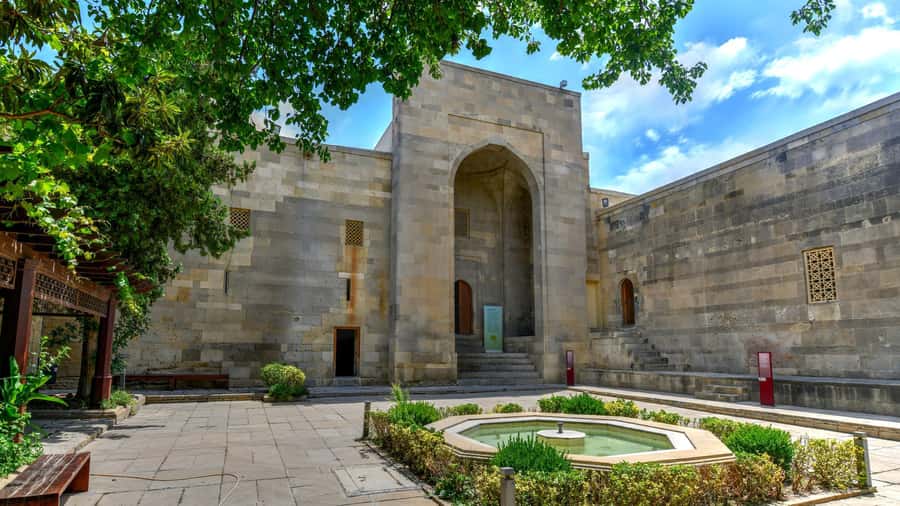
The Military Trophy Park presents equipment and exhibits connected with the 2020 Nagorno-Karabakh war. This is a very different kind of stop from the Old City, mosque, or mud volcanoes.
You should expect a political and emotional subject, not a light sightseeing break. The park reflects Azerbaijan’s official presentation of a recent conflict, so the displays are best approached with awareness of context and sensitivity.
Its inclusion gives the day a modern historical edge. Baku is not only medieval walls and glamorous architecture. It is also a capital shaped by recent events, national memory, and unresolved regional questions.
Because the full day includes many different sites, the exact amount of time at the park may vary. If this stop matters greatly to you, ask the guide how long is planned at the start of the day.
Heydar Aliyev Center, the final architectural statement
The Heydar Aliyev Center is the final point of the tour and one of Baku’s most famous buildings. Its flowing white form is a sharp contrast to the Old City’s heavy stone walls.
You stop for sightseeing and photographs, but the group does not enter the center because of time limits. This distinction matters. If you want to see the exhibitions inside, you will need to return independently and buy an entry ticket if required.
As a final stop, the center works well. It leaves you with the image of modern Baku rather than ending at a routine transport point. It also neatly completes the tour’s central theme: old walls, oil wealth, sacred places, natural fire, and ambitious new architecture.
What $30 really buys you
At $30 per person, the base price is attractive for a 450-minute outing with an English- or Russian-speaking guide and air-conditioned transportation. The value is strongest if you want a wide survey of Baku and Absheron without arranging several separate rides.
The headline price does not cover everything. Budget for:
- 30 AZN per person for the mud-volcano off-road vehicle
- 10 AZN for Gobustan Rock Arts
- 15 AZN for Ateshgah and Yanardagh
- Food, drinks, and personal expenses
The listed fees add 55 AZN per person before food and drinks. That does not make the tour poor value, but it changes the true cost. I would compare the full figure, not just the $30 starting price.
Meals are not included. One account described eating at an inexpensive place during the day, but no fixed meal arrangement is promised. Bring water and plan to pay for food separately.
Free cancellation is available up to 24 hours before departure, and you can reserve now and pay later. The tour is not suitable for children under five, wheelchair users, or people with mobility impairments.
Who should book this full-day route?
I would choose this tour if you have limited time in Azerbaijan and want the widest possible first impression. It suits you if you enjoy moving between cultural sites, viewpoints, unusual natural features, and modern architecture.
It also suits independent visitors who do not want to arrange transport to Gobustan, the fire sites, and the city landmarks separately. The guide adds value when explaining why Baku looks the way it does, and the strongest praise has gone to calm, helpful guides such as Tim and Javid.
I would hesitate if you want a slow Old City walk, long museum visits, or plenty of unplanned time. I would also think twice if rough roads, long vehicle time, or a packed schedule are hard for you.
Confirm the pickup point, carry cash in AZN, wear sturdy shoes, and ask how the day will be paced. Those four steps will prevent most avoidable trouble.
Should you book it?
Book this tour if you want Baku in broad strokes: medieval lanes, Caspian views, oil history, fire sites, mud volcanoes, religious architecture, and futuristic buildings in one long day.
Skip it if you prefer depth over range or if the extra fees push the total beyond your budget. For most first-time visitors who value convenience and variety, the $30 base fare is a useful starting point, provided you budget for the required add-ons and prepare for a demanding day.
FAQ
How long does the Baku and Absheron tour last?
The tour lasts 450 minutes, or seven and a half hours.
What languages does the guide speak?
Live guiding is available in English and Russian.
Is hotel pickup included?
Pickup is included. The operator contacts you to confirm the exact location and hotel pickup details.
Where can I be picked up?
Pickup options include Ahmad Rajabli, Baku Boulevard, Sahil metro station, and the Old City.
Where does the tour end?
Drop-off options include Ahmad Rajabli, Baku Boulevard, the Old City, and Sahil metro station. The Heydar Aliyev Center is the final sightseeing point.
Is entry to the Heydar Aliyev Center included?
The tour only visits the exterior for sightseeing and photographs. Groups do not enter the interior because of time limits.
How much does the mud-volcano vehicle cost?
The off-road vehicle costs 30 AZN per person in cash. The fee is collected at the start, and it remains payable if rain changes the stop to the Mud Volcanoes Complex.
Are Gobustan, Ateshgah, and Yanardagh entrance fees included?
No. Gobustan Rock Arts costs 10 AZN. Ateshgah and Yanardagh cost 15 AZN together.
Is the tour suitable for wheelchair users or young children?
The tour is not suitable for wheelchair users, people with mobility impairments, or children under five.
Recently added around Baku
- Heartbeat of Baku: Old & Modern City Walk (Group or Private)★ 5.0 · 3 reviews
- Baku: Secret Tour with Surprise Activity★ 5.0 · 3 reviews
- From Baku: Shahdag Mountain Resort Day Trip★ 5.0 · 3 reviews
- Full Day Guided Tour of Shamakhi and Gabala★ 5.0 · 3 reviews
- Guba and Khinaligh Private Tour★ 5.0 · 3 reviews
- Guba and Shahdag Tour with Guide★ 5.0 · 3 reviews
- Lahij – village of masters★ 4.5 · 3 reviews
- Gobustan & Mud Volcano★ 4.5 · 3 reviews
Baku Tours, compared.
Gobustan, Mud Volcano, Fire Mount, Temple Lunch Entry
Read our review →
Guba, Shahdag, Laza & Lunch w/ Free City & Night Tour
Read our review →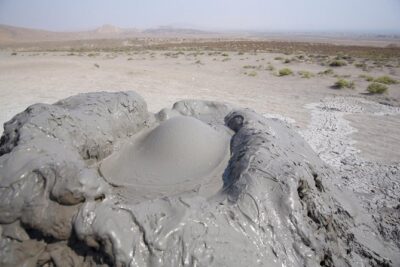
BEST Gobustan, Volcanoes & Absheron Fire Tour (Group or Private)
Read our review →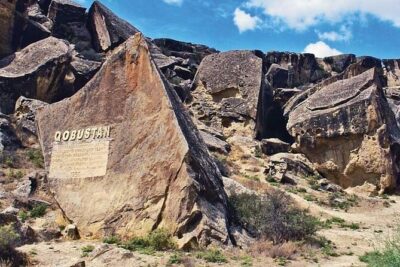
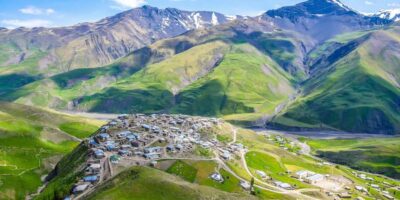
Candy Cane, Guba, Khinaliq village with Homemade Lunch
Read our review →