
Reviewed · WALKING TOURS
Coolest Baku Walking Tour
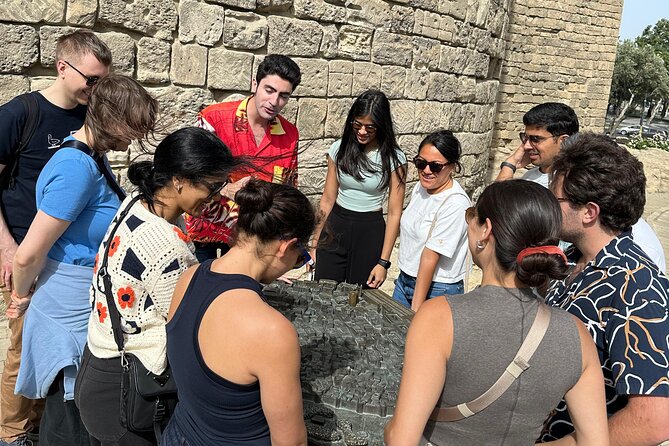
Baku rewards curious walkers. This three-and-a-half-hour route moves from metro history to palace courtyards, mosques, literary monuments, and modern Nizami Street. I like the way it connects old Baku with its changing present, and I like the guide’s storytelling, which brings in shahs, tsars, Lenin, Stalin, Frida, Christopher Columbus, Formula 1, and underground city life.
Abdullah is the guide behind the experience, and his strongest asset is his ability to explain complicated history in clear, lively English. He also offers French and Arabic. The main consideration is the free-tour payment model: the $5 booking price is only the website commission, and you are invited to pay the guide $30 or 50 AZN in person if you enjoyed the tour.
In This Review
- Key points to know before walking
- Starting beneath Icherisheher
- Palace of Happiness and the city’s personal stories
- Huseyn Javid and Azerbaijan’s independence story
- The House of Baku Khans and the feel of Old Baku
- The Maiden Tower, Baku’s most famous puzzle
- Juma Mosque and a first look at Shia practice
- The Shirvanshahs’ palace and medieval Baku
- Miniature books and an unexpected change of pace
- Aliagha Vahid, poetry, and the weight of a monument
- Nizami Street and modern Baku
- Abdullah’s guiding style and language options
- What the $5 price really means
- Who should book this Baku walk?
- Is the Coolest Baku Walking Tour worth booking?
- FAQ
- Where does the Coolest Baku Walking Tour start?
- How long does the tour last?
- How much does the tour cost?
- Are entry tickets included?
- What languages are available?
- Can I cancel the tour for a refund?
Key points to know before walking
- The route starts and ends at Icherisheher Metro Station, making it easy to reach by public transport.
- The $5 price is not the full guide fee. Plan for an additional $30 or 50 AZN payment at the end if you had a good experience.
- Optional entry tickets cost 15 AZN each for the Maiden Tower and Palace of the Shirvanshahs.
- Abdullah’s storytelling is the main attraction, with strong praise for his historical explanations, humor, language skills, and personal help.
- The tour covers both famous sights and less obvious corners, including the Wall of Kisses, caravansarai stories, miniature books, and alternative cafes and bars.
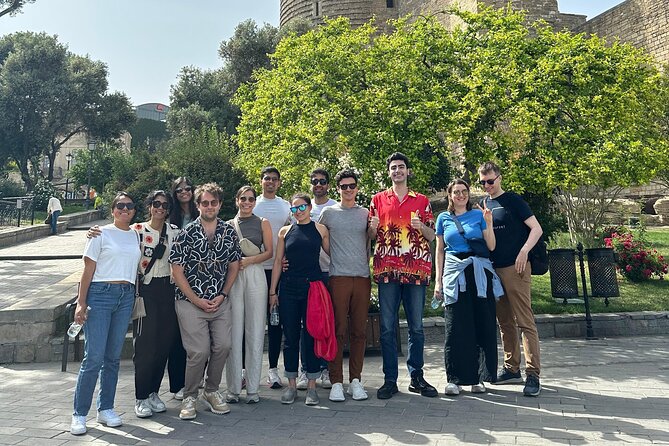
- The group can reach 20 people, so expect a social walking tour rather than a private visit.
Starting beneath Icherisheher
The tour begins at Icherisheher Metro Station, the first stop on a route built around Baku’s Old City. The station is described as the oldest metro station in the Islamic world, giving Abdullah an immediate way to connect modern transport with the older city above.
That opening matters because Baku can feel like several cities placed side by side. Oil wealth, Soviet planning, medieval walls, grand stone buildings, and new international projects all sit close together. A guide who can explain those layers helps you read the streets instead of simply photographing them.
From the metro station, the walk enters the historic center. The pace is likely to be steady but not rushed, with frequent stops for stories and questions. At roughly three and a half hours, this is long enough to build a useful picture of Baku, but short enough to fit into a first full day in the city.
The group limit of 20 is reasonable for a walking tour, though it is not the same as having a private guide. If you prefer constant conversation and personal attention, a smaller group would be better. If you enjoy meeting other people and hearing questions from different points of view, the group format should work well.
More walks:
- Baku: Stunning Walking Tour of Historical and Modern City
★ 4.9 · 270 reviews - Baku Oil Heritage & Old Town Walking Tour
★ 5.0 · 232 reviews - Baku Walking Tour (Old City)
★ 5.0 · 127 reviews
Palace of Happiness and the city’s personal stories
The brief stop at the Palace of Happiness lasts only about five minutes, but its purpose is larger than the clock suggests. The building provides a way to talk about the people, ambitions, and social changes behind Baku’s grand architecture.
The tour is not limited to dates and rulers. Its description promises stories about charming alleys, meeting places, and the people connected to them. That focus is one of the reasons I find the route appealing. A city becomes easier to remember when its buildings are tied to human choices, romance, ambition, conflict, or odd local customs.
You should not expect a long interior visit here. The stop is a quick exterior explanation, so think of it as a piece of the larger story rather than a major attraction on its own.
Huseyn Javid and Azerbaijan’s independence story
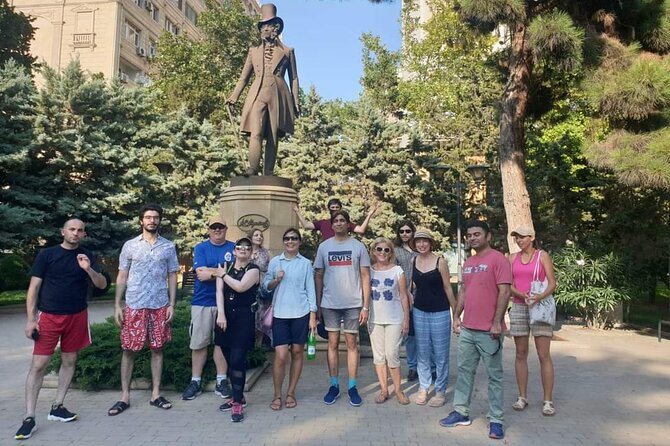
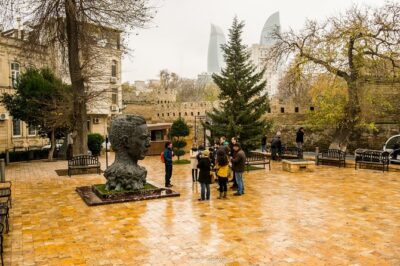
The monument to Huseyn Javid receives around 25 minutes, making it one of the longer stops early in the walk. It is paired with the Independence Declaration Monument, giving Abdullah room to explain both a major cultural figure and Azerbaijan’s path toward independence.
This is a useful part of the tour for anyone who wants more than a medieval sightseeing circuit. Azerbaijan’s past includes Persian influence, Russian imperial rule, the Soviet period, and the modern republic. The route uses monuments and public spaces to show how those periods overlap.
Abdullah’s strength, according to the available feedback, is placing Azerbaijan within a wider regional setting. He connects the country with India, Persia, Eastern Europe, and major figures such as Lenin and Stalin. That broader frame can help you understand why Baku’s identity feels different from the image suggested by its stone walls alone.
The subject matter can be complicated, especially when political and cultural history meet. The guide’s clear presentation is important here. Several comments specifically praise his ability to explain difficult subjects naturally and answer questions without making the walk feel like a lecture.
The House of Baku Khans and the feel of Old Baku
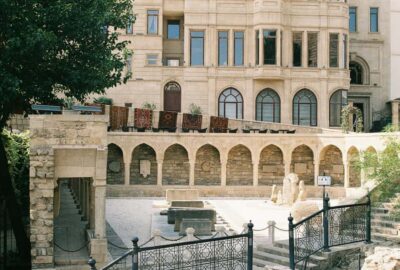
The House of Baku Khans gets about 10 minutes. The phrase heaven on earth is used in connection with this stop, suggesting a chance to discuss the city’s ruling families, domestic life, and the contrast between public power and private spaces.
The Old City is best enjoyed slowly. Look up at the stonework, watch how narrow lanes open into wider areas, and notice how the route shifts from formal monuments to smaller corners. This is where a local guide adds real value. Without explanation, you may see attractive walls and doorways. With context, they can become part of a story about Baku’s families, trade, religion, and changing fortunes.
The itinerary also includes a stop without a fixed number: a discussion of caravansarais and their connection to a city in Pakistan. A caravansarai was a roadside inn used by merchants and travelers along trade routes. The unusual naming link gives the guide a chance to explain how Baku was connected to places far beyond the Caspian region.
That kind of detour is a good sign for people who enjoy connections and side stories. It may be less satisfying if you want every minute devoted to major monuments.
A few more ways to spend a day out of Baku
- Baku: Gobustan, Mud Volcano, Fire Mount, Temple Lunch Entry
★ 4.9 · 3,246 reviews - Baku: Guba, Shahdag, Laza & Lunch w/ Free City & Night Tour
★ 4.8 · 1,455 reviews - BEST Gobustan, Volcanoes & Absheron Fire Tour (Group or Private)
★ 5.0 · 1,254 reviews - Gobustan and Absheron tour (All inclusive)
★ 5.0 · 1,014 reviews
The Maiden Tower, Baku’s most famous puzzle
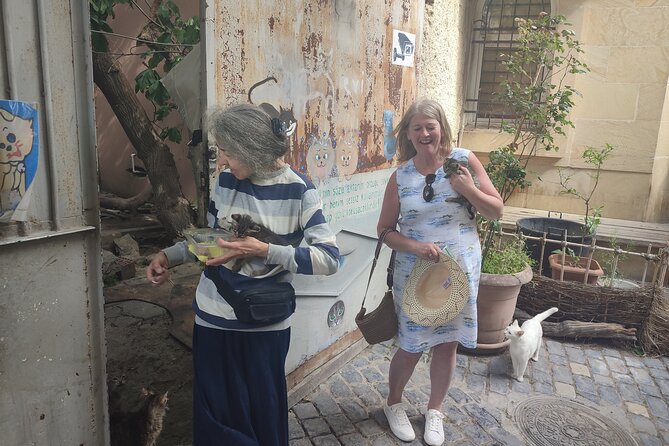
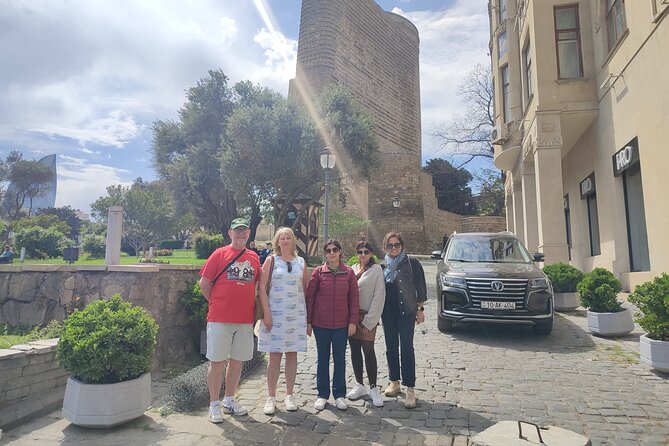
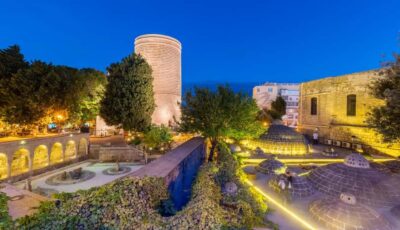
The Maiden Tower is the central landmark of the Old City, and the tour spends about 30 minutes here. Abdullah presents what he calls the real story of the tower, which suggests a careful look at the legends and explanations surrounding it.
The tower’s appeal comes partly from uncertainty. It has attracted stories, theories, and different interpretations over time. A guide can help separate local legend from historical explanation, while also showing how the tower fits into the Old City’s defenses and identity.
Entry is optional and costs 15 AZN. If you go inside, the visit adds another layer to the stop, but you should budget for it separately. The supplied information does not promise a particular view or interior exhibit, so choose based on your interest in the tower rather than assuming the ticket is essential.
I would make this decision on the day. If the guide’s explanation has caught your attention and you want to see the tower from within, 15 AZN is a manageable extra. If you are watching costs or already plan to visit several paid sights, the exterior discussion still gives you the main interpretive benefit.
Juma Mosque and a first look at Shia practice
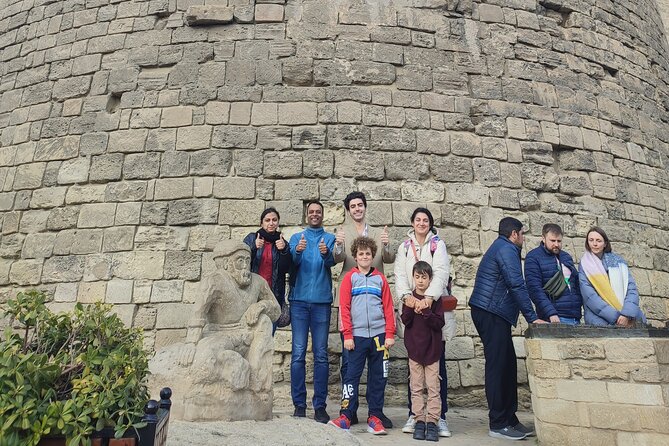
The Juma Mosque receives about 15 minutes and is presented as an introduction to a Shia mosque. For many visitors, this may be their first close look at Shia religious architecture and practice.
The value here is not simply architectural. The stop offers a chance to ask respectful questions and understand one part of Azerbaijan’s religious identity. The country’s history includes Persian, Turkic, Russian, Soviet, and Islamic influences, and the mosque helps place religion within that wider picture.
Admission is listed as free. You should still dress and behave respectfully at any active religious site. The tour information does not specify a dress code or prayer schedule, so listen to the guide’s instructions on the day.
The 15-minute timing keeps the stop focused. You are not getting an extended religious tour, but you are getting a useful introduction within a broader city walk.
The Shirvanshahs’ palace and medieval Baku
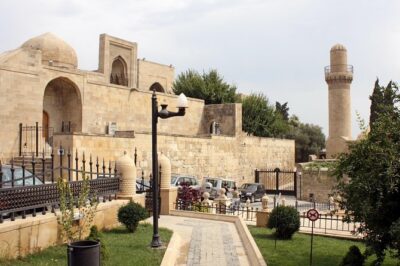
The Palace of the Shirvanshahs is called the jewel of the Old City and the palace of the shah. It receives about 15 minutes on the walking route, with optional entry for 15 AZN.
This is one of the most important stops for understanding medieval Baku. The palace gives physical form to the city’s political past, while the surrounding Old City shows how power, religion, trade, and daily life occupied the same compact area.
The short scheduled stop deserves a practical note. Fifteen minutes is enough for an outside explanation and orientation, but not enough for a thorough self-guided visit if you enter. If you want time to study the complex, take photos, and read displays, you may need to return later or continue on your own after the tour.
That is not a flaw in the route. A city walk has to balance many stops. It simply means you should decide whether this tour is your main palace visit or an introduction before a longer return visit.
Miniature books and an unexpected change of pace
The Baku Museum of Miniature Books is one of the route’s most unusual stops. It is described as having the world’s largest collection of miniature books, and admission is free.
This visit breaks up the sequence of towers, palaces, and religious buildings. Small books require close attention, so the stop changes the rhythm of the walk. It also gives you a distinctive memory of Baku that you are unlikely to get from a standard monument-only route.
The visit lasts about 10 minutes. That should be enough for a quick look, but not an extended museum session. If miniature books are a special interest, you may want to return independently and allow yourself more time.
Aliagha Vahid, poetry, and the weight of a monument
The Aliagha Vahid Monument in the Old City receives about 10 minutes. The description refers to him as the man who carried the weight of the world on his shoulders, pointing toward a discussion of his importance and the symbolism of the monument.
This stop adds literature and public memory to the tour. Baku is not only a city of rulers and buildings. Poets, writers, and cultural figures also shape how people understand their home, and a monument can reveal what a city chooses to honor.
The stop is short, but it adds balance. After the political and religious sites, you get a cultural figure and a more reflective part of the city’s story.
Nizami Street and modern Baku
The final major stop is Nizami Street, described as the street that never sleeps. The route spends around 30 minutes here, giving you a strong contrast with the Old City.
Nizami Street is where the tour can connect Baku’s past to its current ambitions. The experience promises discussion of Formula 1, international events, the changing city, and the country’s goals for the future. It also brings in underground bars, co-working cafes, and alternative cultures, which gives the modern section more personality than a simple shopping-street walk.
The route’s wider themes include the way Baku is changing. New events and new businesses sit alongside older traditions and historic stone. That contrast is one of the most useful things a guide can point out because it helps you understand the city as a place still being shaped, not as a museum frozen in time.
You may find Nizami Street louder and busier than the Old City. That is part of the point. The tour ends by showing you a Baku that looks forward, after beginning with the city’s oldest layers.
Abdullah’s guiding style and language options
The guide, Abdullah, is the main reason to book this particular walk. The available feedback repeatedly praises his passion, humor, clear English, and ability to connect small details with regional history. He is also described as a medical student in his final year, though you should treat that as background rather than a feature of the route itself.
The strongest praise focuses on presentation. Abdullah is described as engaging, easy to follow, and able to explain complicated Azerbaijani history in a natural way. He has also helped with local taxi questions after tours, which suggests a friendly and useful approach beyond the formal route.
The experience is offered in English, French, and Arabic. If language matters to you, confirm your preferred option when booking. The tour has a maximum of 20 people, so the quality of the experience will also depend on group size and how much time the guide can give to individual questions.
What the $5 price really means
The advertised $5 amount needs careful reading. This is a free-walking-tour model, and the $5 is the website commission. You are invited to pay Abdullah $30 or 50 AZN in person if you had a good time.
That makes the likely cost closer to a tip-based guide fee than to a $5 sightseeing activity. The final amount is still attractive for a three-and-a-half-hour guided walk, especially if the storytelling is as strong as the available feedback suggests. But you should not arrive assuming the experience costs only five dollars.
There are two optional paid entries:
- Maiden Tower: 15 AZN
- Palace of the Shirvanshahs: 15 AZN
If you visit both, add 30 AZN to the guide payment and booking commission. The walk itself does not include all fees and taxes, so carry enough local currency for these choices.
Who should book this Baku walk?
I would choose this experience if you want a broad introduction to Baku rather than a narrow tour of one building. It suits first-time visitors, history fans, curious walkers, and people who enjoy a guide who talks about politics, literature, religion, architecture, and modern culture in the same afternoon.
It should also work well for visitors with a short stay. The start and finish at Icherisheher Metro Station make it practical, and the route covers many central sights without requiring a separate transport plan.
You may want a different option if you dislike tip-based pricing, prefer a private guide, or want long interior visits at the Maiden Tower and Palace of the Shirvanshahs. The route gives you orientation and stories, but it cannot provide a full museum visit at every stop in three and a half hours.
Wear comfortable shoes and allow room for pauses. The tour uses city streets and historic lanes, and its value comes from walking, listening, and asking questions rather than rushing from one ticketed attraction to another.
Is the Coolest Baku Walking Tour worth booking?
Yes, with one clear condition: understand the payment model before you go. The $5 booking charge is only the commission, and you should plan to pay Abdullah 30 USD or 50 AZN if the tour delivers a good experience.
I would book it for Abdullah’s storytelling and the route’s range. You get the Old City, the Maiden Tower, the Shirvanshahs’ palace, a mosque, miniature books, poetry, Nizami Street, and a useful link between ancient Baku and its modern ambitions. If you want an entertaining first orientation with real historical context, this is a strong value.
FAQ
Where does the Coolest Baku Walking Tour start?
The tour starts at Icherisheher Metro Station in Baku and ends back at the same meeting point.
How long does the tour last?
The walking tour lasts approximately three hours and 30 minutes.
How much does the tour cost?
The booking price is $5 per person, but that amount is the website commission. The free-tour model invites you to pay the guide $30 or 50 AZN in person if you had a good time.
Are entry tickets included?
Entry to the Maiden Tower and Palace of the Shirvanshahs is not included. Each optional ticket costs 15 AZN.
What languages are available?
Guidance is available in English, French, and Arabic.
Can I cancel the tour for a refund?
You can cancel at least 24 hours before the local start time for a full refund. If poor weather causes the tour to be canceled, you will be offered another date or a full refund.
Recently added around Baku
- Heartbeat of Baku: Old & Modern City Walk (Group or Private)★ 5.0 · 3 reviews
- Baku: Secret Tour with Surprise Activity★ 5.0 · 3 reviews
- From Baku: Shahdag Mountain Resort Day Trip★ 5.0 · 3 reviews
- Full Day Guided Tour of Shamakhi and Gabala★ 5.0 · 3 reviews
- Lahij – village of masters★ 4.5 · 3 reviews
- Guba and Shahdag Tour with Guide★ 5.0 · 3 reviews
- Guba and Khinaligh Private Tour★ 5.0 · 3 reviews
- Gobustan & Mud Volcano★ 4.5 · 3 reviews
Walking Tours, compared.
Baku Old City Wonders: A Walking Tour Through Time
Read our review →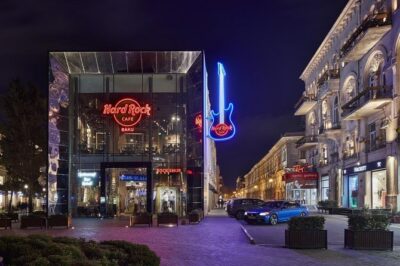
Gobustan & Absheron Tour with Free Old City Walking Tour
Read our review →
Browse the lists this tour appears in