Reviewed · FULL-DAY
Full Day Sightseeing Tour of the main Attractions around Baku
Fire, mud, oil, and ancient carvings. This nine-hour Baku day tour packs the Absheron Peninsula and Gobustan into one busy outing, with hotel pickup, entrance fees, lunch, and a small group included. I like the efficient route and the chance to reach places that are awkward to visit without a car. I also like the strong guides, especially Reza and Riad, who are praised for clear English, good humor, and detailed explanations. The main drawback is the pace: several stops are brief, and the rough ride toward the mud volcanoes may bother you if you get motion sick.
At $60 per person, this is a practical way to cover far-flung sights in one day. You get an air-conditioned vehicle, guide, tickets, lunch, and local taxes in the price. The group can reach 18 people, though the small-group format is intended to give your guide time to answer questions. The tour starts at 9:00 a.m. and returns to the meeting point after the final stop.
In This Review
- Key things to know before booking
- Why this route works in one long day
- The world’s first oil well: a quick stop with big meaning
- Bibi-Heybat Mosque and the living side of local religion
- Mud volcanoes: the most unusual stop on the route
- Gobustan Rock Art: the day’s strongest history stop
- Lunch gives the middle of the day a needed pause
- Ateshgah Fire Temple and the old religion of fire
- Yanardag: flames rising from the Absheron soil
- The Heydar Aliyev Cultural Center is a visual finale
- Transport, group size, and what the $60 buys you
- Who should book this Baku day trip?
- Should you book it?
- FAQ
- How long does the Baku sightseeing tour last?
- What attractions are included?
- Is lunch included?
- Are entrance tickets included?
- Is hotel pickup available?
- How many people can join the tour?
- Can I cancel for a refund?
Key things to know before booking
- Gobustan combines outdoor scenery and ancient art: You get about an hour to see one of Azerbaijan’s most important archaeological areas.
- The mud volcanoes are the tour’s wild card: Bubbling mud and gas are fascinating, but the drive can be rough and conditions can affect what you see.
- Ateshgah explains Azerbaijan’s fire-worshipping past: The temple gives useful context for the country’s old Zoroastrian traditions.
- Yanardag is a natural gas fire, not a volcano: Flames rise from a mountainside and may be especially striking later in the day.
- Reza and Riad receive repeated praise: Your guide may be one of these hosts, both noted for strong English and lively explanations.
- The price covers most major costs: Lunch, admission tickets, transport, and selected hotel pickup are included, so extra spending is limited to personal purchases.
Why this route works in one long day
Baku’s headline sights sit in different directions. Gobustan lies southwest of the city, while the fire temple and Yanardag are on the Absheron Peninsula to the east and north. Trying to connect all of them by public transport would take planning, patience, and more time than most short visits allow.
This tour solves that problem with a full-day loop. You begin with oil and religion near Baku, head toward the mud volcanoes and rock art, then return toward the peninsula for Ateshgah and Yanardag. The order may vary, but the idea is sound: use one vehicle to link sites that do not form a simple walking route.
You should expect a full day rather than a relaxed half-day. The listed stops total several hours, and the remaining time goes to driving, lunch, pickup, and short pauses. That makes this best for your first visit, when seeing the broad picture matters more than lingering at one site.
The group limit is 18 people. That is not a private tour, but it is more manageable than a large coach excursion. The strongest part of the experience is likely to be the guide’s commentary between stops. Reza, Riad, Riyadh, Rza, and other similar spellings appear in the feedback, so the exact guide is not guaranteed. Still, the repeated praise points to a company strength: guides who explain history, religion, and local culture in accessible English.
A few more ways to spend a day out of Baku
- Sheki – Full Day Tour to Five Regions of Azerbaijan
★ 4.5 · 279 reviews - Full Day Trip in Baku (Gobustan & Absheron)
★ 5.0 · 72 reviews - Khizi Candy Mountains, Shahdagh Full Day Guided Tour
★ 4.5 · 61 reviews
The world’s first oil well: a quick stop with big meaning
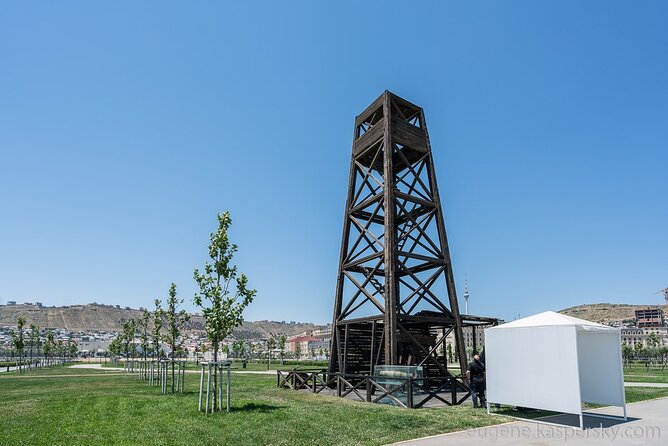
The first stop takes about 10 minutes and has no admission charge. It marks the Bibi-Heybat oil field, where Azerbaijani historians say a well was drilled in 1846. Documents found in Russian archives support the claim that this predates commercial oil production in the United States by 13 years.
Do not expect a large museum visit here. This is a short roadside-style stop, useful mainly as an introduction to Baku’s oil story. The point is not the length of the visit but the connection between the ground beneath you and the city’s later wealth.
That context helps explain Baku. Oil shaped its growth, architecture, industry, and place in regional politics. Without this stop, the later religious and natural attractions can feel disconnected. With it, you begin to see Azerbaijan as a country shaped by both ancient traditions and modern energy.
Bibi-Heybat Mosque and the living side of local religion
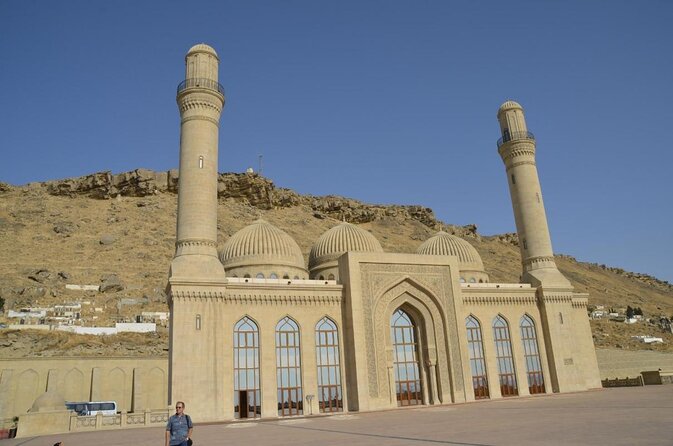
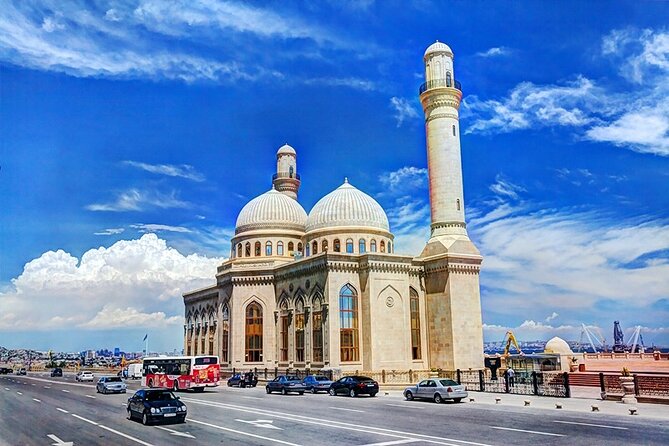
The visit to Bibi-Heybat Mosque lasts about 20 minutes and is free. The mosque sits near the mountains of Baku beside a large cemetery, and its shrine is associated with Bibi-Heybet, described as a relative of the Prophet Muhammad.
This is not just an old building placed on a sightseeing route. It remains a place of devotion, and many Muslims wish to be buried nearby. The shrine is also linked with healing, which helps explain its importance to worshippers.
Your guide should help you understand the mosque as a living religious site rather than a photo stop. Because the visit is short, you will not have much time to study every detail. Dress and behave respectfully, and follow any instructions given at the entrance. The tour information does not specify a dress code, so your guide is the best source of current advice.
The mosque adds balance to the day. Ateshgah presents an older fire-worshipping tradition, while Bibi-Heybat shows the continuing role of Islam in Azerbaijan. Those two stops together offer a more useful picture than either one alone.
Mud volcanoes: the most unusual stop on the route
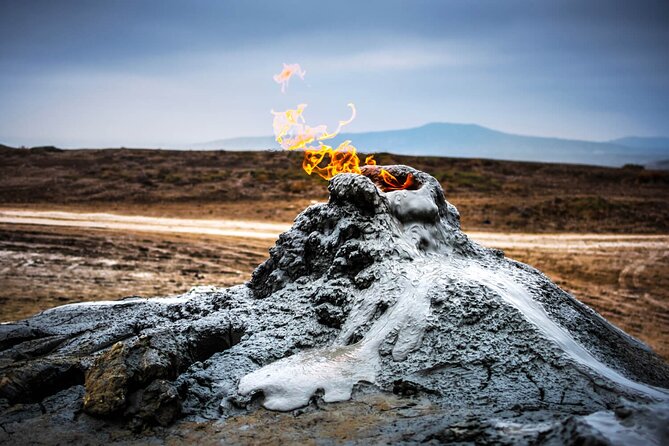
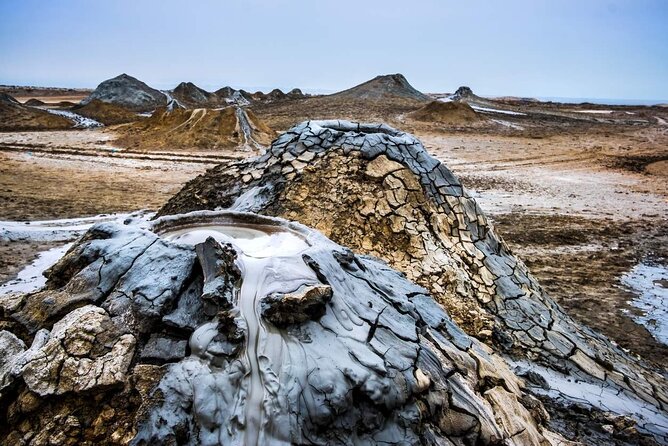
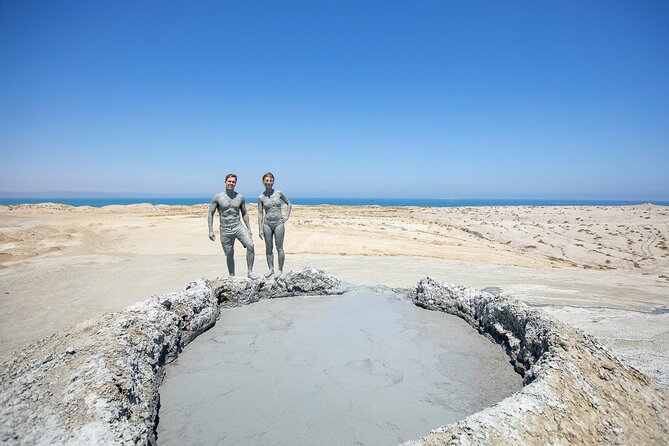
The mud volcanoes receive about 25 minutes, with admission included. These formations are not volcanoes filled with molten rock. They are cones or openings where mud and gases rise from the earth, often in areas linked with oil and underground pressure.
You may see bubbles breaking through gray mud, small eruptions, and gas escaping from the surface. The scene is strange in the best way. It feels less like a polished attraction and more like the ground is quietly misbehaving.
This stop also comes with the clearest practical warning. The road can be uncomfortable, and one disappointed customer specifically advised people prone to motion sickness to skip or reconsider the mud volcano section. The tour description does not explain whether skipping is possible once the group has left, so ask before booking if this is a serious concern.
Conditions matter, too. In one account, strong wind prevented the guide from lighting a small fire demonstration, though the bubbling mud remained interesting. That detail is worth remembering: this is a natural site, not a timed show. You may see more or less activity than expected.
I would treat the mud volcanoes as a bonus rather than the sole reason to book. If you enjoy geology and odd natural features, they could be a highlight. If you prefer polished monuments and comfortable roads, this is the stop most likely to test your patience.
A completely different sort of day out of Baku:
- Baku: Gobustan, Mud Volcano, Fire Mount, Temple Lunch Entry
★ 4.9 · 3,246 reviews - Baku: Guba, Shahdag, Laza & Lunch w/ Free City & Night Tour
★ 4.8 · 1,455 reviews - BEST Gobustan, Volcanoes & Absheron Fire Tour (Group or Private)
★ 5.0 · 1,254 reviews - Gobustan and Absheron tour (All inclusive)
★ 5.0 · 1,014 reviews
Gobustan Rock Art: the day’s strongest history stop
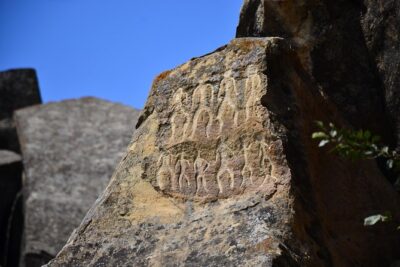
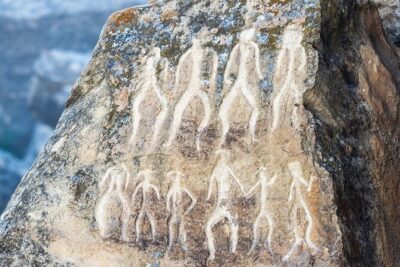
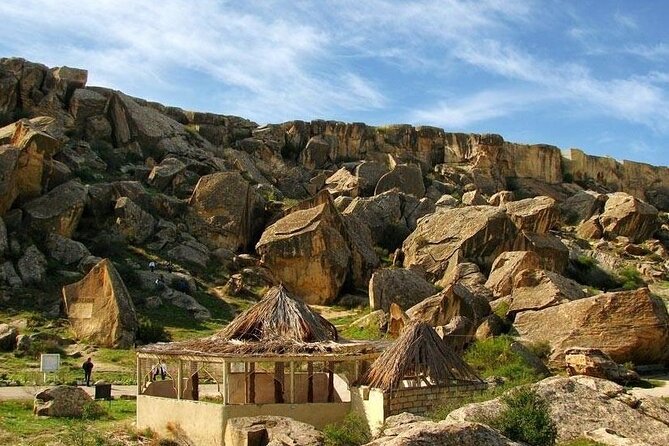
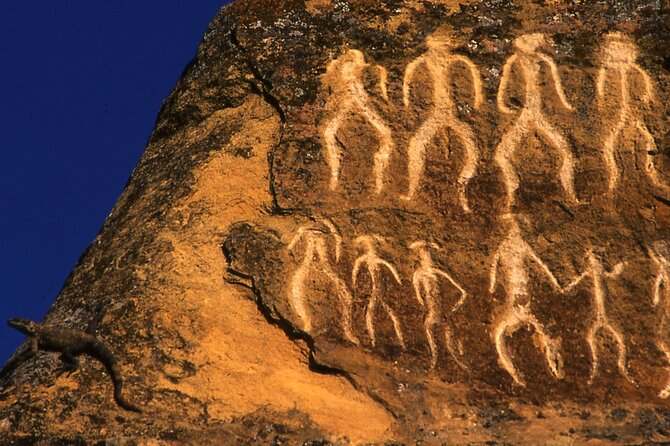
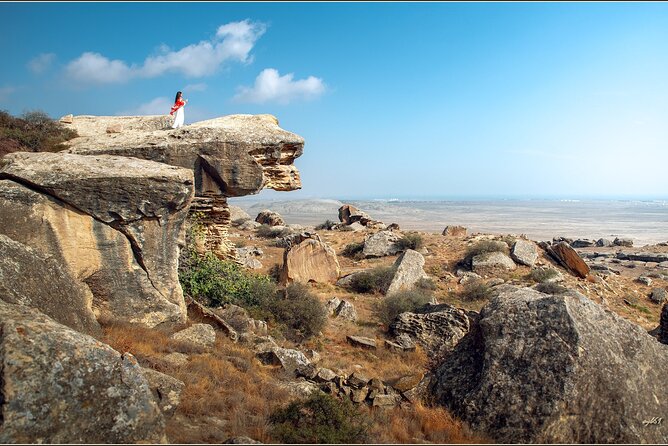
Gobustan receives about an hour and includes admission. The reserve is an open-air archaeological site with a large collection of ancient rock carvings and other historic remains.
This is where the tour gains real depth. The carvings connect the dry hills around Baku with people who lived, hunted, traveled, and made images here long before the modern oil city appeared. The setting matters as much as the carvings. You are seeing the marks in the same broad environment where they were created, rather than only viewing them behind glass.
An hour is enough for an introduction, but not for every corner of the reserve. Stay close to your guide so you do not miss the explanations that turn simple-looking marks into meaningful evidence. The exact amount of walking is not stated, but you should be ready to spend time outside on uneven ground.
Gobustan is one of the places where a good guide makes a major difference. Several guides on this tour are praised for explaining history in detail without making the day feel like a lecture. Ask questions here, especially if you want help understanding the age, purpose, or symbols of the carvings.
For many visitors, this is the most substantial stop. The mud volcanoes are unusual, and the flames at Yanardag are memorable, but Gobustan gives the day its strongest link to Azerbaijan’s distant past.
Lunch gives the middle of the day a needed pause
Lunch is included, which improves the value of the $60 price. Several accounts praise the meal as delicious or typical, though the exact menu is not provided, so do not book based on a particular dish.
The timing of lunch is not stated either. That matters on a nine-hour trip, since the morning includes several outdoor stops and driving. Bring water and a small snack if you prefer to eat at set times, but the provided meal should cover the main break.
A shared meal also helps the small group feel less like a series of separate pickups. One guide, Riad, is praised for offering local tea and helping people from different countries connect during the day. That kind of hosting can turn a functional sightseeing trip into a more pleasant social experience.
Ateshgah Fire Temple and the old religion of fire
Ateshgah Fire Temple takes about an hour and includes admission. The site introduces Zoroastrianism and the fire-worshipping traditions once associated with Azerbaijan.
The temple’s earliest structures are dated in the tour material to the second and third centuries. It functioned until the seventh century, when Islam had been adopted in Azerbaijan. That long religious timeline gives your guide plenty to explain, particularly how beliefs and sacred places changed over time.
The temple is especially useful after Bibi-Heybat. At Bibi-Heybat, you see a Muslim shrine that remains important today. At Ateshgah, you learn about an earlier religious tradition tied to natural flames and the presence of gas beneath the Absheron Peninsula.
Do not expect the site to feel like an untouched ancient sanctuary. Its value is in the story, layout, and symbolism. The guide’s explanation is central, especially for understanding why fire mattered and how Azerbaijan became associated with the idea of a land of flames.
One hour should give you enough time to see the main areas without rushing too badly. If religious history interests you, this may be one of the most rewarding parts of the tour. If you prefer dramatic natural scenery, Yanardag may have more immediate impact.
Yanardag: flames rising from the Absheron soil
Yanardag is the final major attraction and takes about 30 minutes, with admission included. Here, natural gas escapes through the upper layers of soil and catches fire when it meets oxygen. The result is a flaming slope that can continue burning in rain or wind.
The name is often translated as burning mountain, though you should picture a fire-fed hillside rather than a towering peak. The flames are direct, elemental, and easy to understand without a long museum visit. You arrive, watch the fire, take photographs, and listen to the explanation.
The timing at the end of the day works well. After ancient carvings, religious sites, and mud, Yanardag gives you a simple final image to carry away. It also ties together the day’s main themes: oil, gas, ancient worship, and the geology of the peninsula.
Thirty minutes is probably enough for this stop. The attraction is compact, so a longer visit might feel repetitive unless you want extra photographs. Wind can affect small fire demonstrations, as one account makes clear, but the natural flames remain the main point.
The Heydar Aliyev Cultural Center is a visual finale
The tour summary says the day concludes with a stop at the Heydar Aliyev Cultural Center, although the detailed stop list does not give a visit length or confirm whether interior admission is included. Treat this as an exterior photo opportunity unless your guide tells you otherwise.
The center’s sweeping white curves provide a sharp contrast to Gobustan’s stone carvings, Ateshgah’s religious architecture, and Yanardag’s raw fire. It is an efficient way to add one of Baku’s best-known modern buildings to a day otherwise focused on archaeology, religion, and geology.
Because no specific time is supplied, do not count on a full museum visit. If the center is a priority, ask the operator before departure how much time is planned and whether entrance is covered.
Transport, group size, and what the $60 buys you
The tour includes an air-conditioned vehicle and hotel pickup from selected hotels. Pickup is a real convenience because the route covers distant sites and the group returns to the meeting point at the end. The vehicle quality may vary. One person called the vehicle unsuitable, while others found the van clean, comfortable, or excellent.
That mixed experience suggests a sensible approach: view the transport as practical rather than luxurious. The day is about reaching the sights, not enjoying a premium coach.
At $60, the package offers solid value if you want the full route. You would otherwise need to arrange transport to several separate locations, pay entrance fees, find lunch, and manage the timing yourself. The price is less attractive if you plan to visit only Gobustan and one fire site, but strong for a first-time overview.
The tour is free to cancel up to 24 hours before the start time for a full refund. Poor weather or failure to reach the minimum number of participants can lead to a new date, another experience, or a refund. Confirmation arrives when you book, and the experience is listed as suitable for most people.
Who should book this Baku day trip?
I would choose this tour if you have limited time in Baku and want to see the area’s main themes in one sweep. It suits curious first-time visitors, history fans, people interested in religion, and anyone who does not want to arrange several long taxi rides.
It is also a good match if you value explanation. The guides praised by name, including Reza and Riad, are repeatedly described as friendly, clear, and strong in English. Their role matters most at Gobustan, Bibi-Heybat, and Ateshgah, where background changes a quick stop into a meaningful visit.
I would think twice if you dislike long days, rough roads, or short visits. Anyone with motion sickness should pay special attention to the mud volcano drive. The route covers a lot, but that means you will not have unlimited time at any one site.
Should you book it?
Book it if your goal is to understand Baku beyond the city center. For $60, you get transport, lunch, admissions, and a guide who can connect ancient rock art, Islamic practice, fire worship, oil, gas, and modern architecture into one readable story.
Skip it if you want a slow, private day or if the mud volcano road is likely to make you ill. For most first visits, though, this is an efficient and good-value introduction to the unusual world around Baku.
FAQ
How long does the Baku sightseeing tour last?
The tour lasts approximately nine hours. It begins at 9:00 a.m. and ends back at the meeting point.
What attractions are included?
The route includes the World’s First Oil Well site, Bibi-Heybat Mosque, the mud volcanoes, Gobustan Rock Art, Ateshgah Fire Temple, Yanardag, and a stop at the Heydar Aliyev Cultural Center.
Is lunch included?
Yes. Lunch is included in the tour price.
Are entrance tickets included?
Yes. Entry tickets for the included attractions are covered. The detailed information does not specify the admission arrangement for the Heydar Aliyev Cultural Center stop.
Is hotel pickup available?
Hotel pickup is offered from selected hotels. The activity returns to the meeting point at the end.
How many people can join the tour?
The maximum group size is 18 people.
Can I cancel for a refund?
Yes. You can cancel at least 24 hours before the start time for a full refund. Cancellations or changes made less than 24 hours before the start time are not refunded or accepted.
Recently added around Baku
- Heartbeat of Baku: Old & Modern City Walk (Group or Private)★ 5.0 · 3 reviews
- Baku: Secret Tour with Surprise Activity★ 5.0 · 3 reviews
- From Baku: Shahdag Mountain Resort Day Trip★ 5.0 · 3 reviews
- Full Day Guided Tour of Shamakhi and Gabala★ 5.0 · 3 reviews
- Guba and Khinaligh Private Tour★ 5.0 · 3 reviews
- Guba and Shahdag Tour with Guide★ 5.0 · 3 reviews
- Lahij – village of masters★ 4.5 · 3 reviews
- Gobustan & Mud Volcano★ 4.5 · 3 reviews
Full-Day, compared.
Full day Tour to Sheki: 4 regions of Azerbaijan in 1 day
Read our review →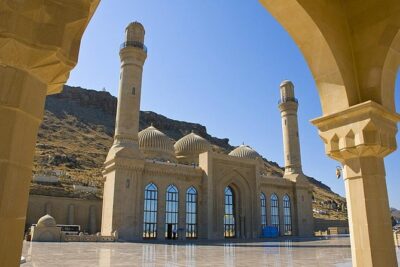
Khizi Candy Mountains, Shahdagh Full Day Guided Tour
Read our review →
Gobustan,Mud Volcanoes & Absheron Peninsula full day tour
Read our review →