
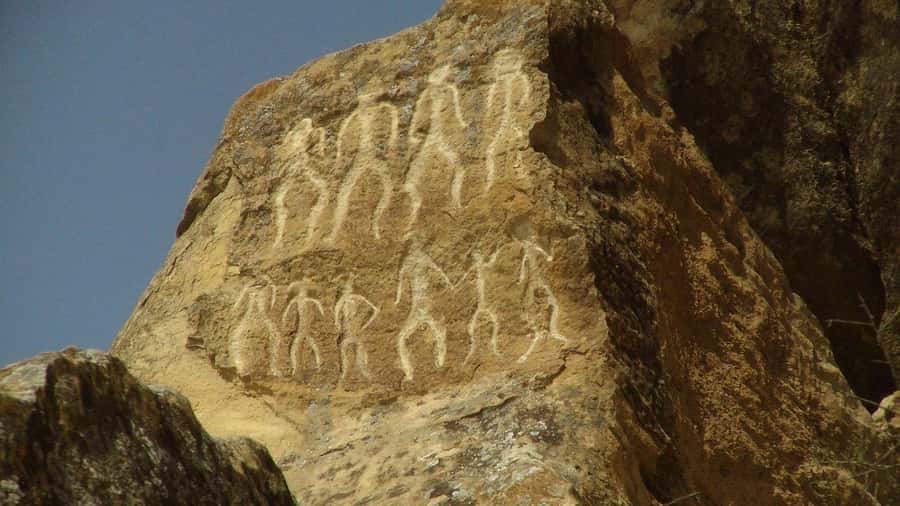
Reviewed · GOBUSTAN & MUD VOLCANO TOURS
Baku: Gobustan & Absheron Trip
Fire, mud, and ancient marks on stone. This $30 full-day outing links Azerbaijan’s strangest natural sights with its oldest places of worship. I like the wide range, from Qobustan’s prehistoric rock drawings to the burning hillside of Yanar Dag, and I like that hotel pickup and a guide are included. The main concern is pace: a nine-hour schedule covers a lot of ground, and one poor experience involved rushed stops and a long wait for lunch.
The tour earns a strong overall rating, with particular praise for polite guides, clear English, good organization, and route planning. Guide Sabuhi is singled out for making the day entertaining and informative. Still, the trip can vary sharply by day, so you should arrive ready for a busy schedule rather than a slow museum visit.
In This Review
- Key points to know before booking
- What this Baku day trip is really about
- Bibiheybat Mosque gives the day a spiritual opening
- Qobustan’s rock art is the tour’s strongest historical stop
- Mud volcanoes show Azerbaijan at its most unusual
- Long drives make lunch timing important
- Yanar Dag explains the land of eternal flames
- Absheron adds a medieval castle to the fire story
- Ateshgah brings three fire traditions together
- Guides, transport, and the pace of the day
- What the $30 price really includes
- Who should book this experience?
- Should you book the Gobustan and Absheron trip?
- FAQ
- Where does the tour start and finish?
- How long does the tour last?
- What languages are available?
- Is lunch included?
- Which entrance fees are extra?
- Is hotel pickup included?
- What should I bring?
- Can I cancel or pay later?
Key points to know before booking
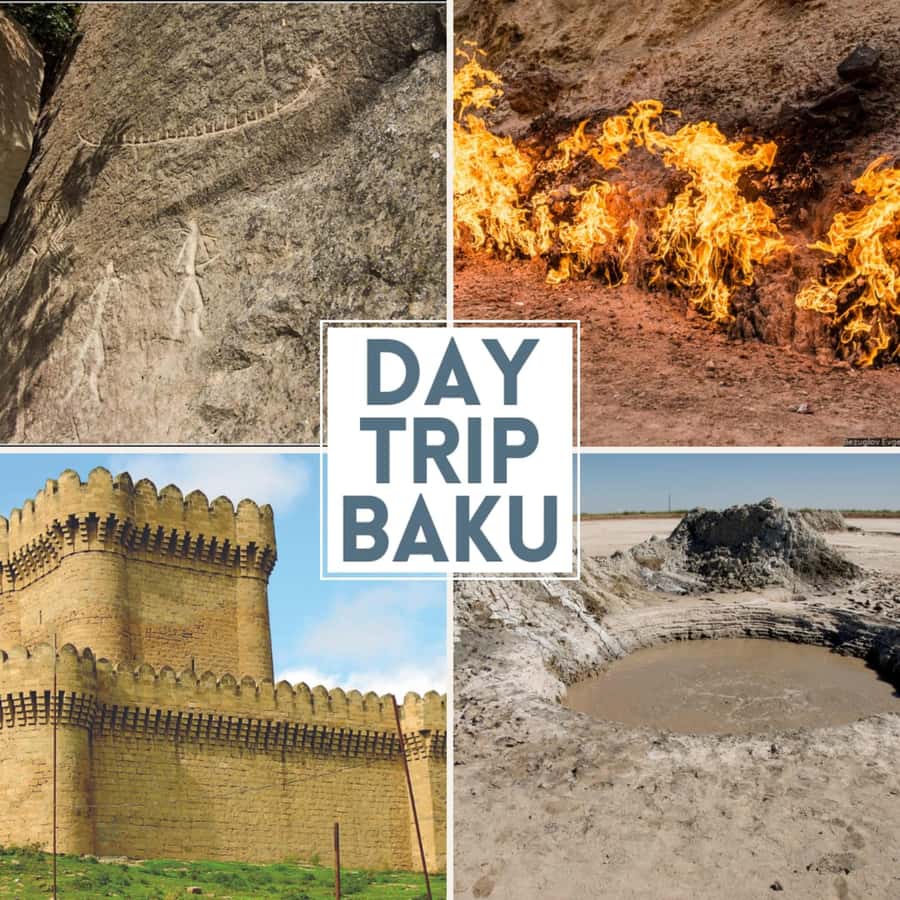
- Qobustan combines UNESCO-listed rock art with caves, prehistoric life, and scenic views.
- A vintage car carries you toward the mud volcanoes, adding a memorable change from the main coach.
- The $30 price does not cover three major entrance charges or lunch, so budget for extras.
- Yanar Dag and Ateshgah explain Azerbaijan’s long connection with fire worship, Novruz, Zoroastrianism, and Hindu traditions.
- Bibiheybat Mosque provides a religious and architectural stop near the start of the day.
- The schedule is ambitious, with several stops lasting only 20 to 50 minutes.
What this Baku day trip is really about
This is not a single-site excursion. It is a broad introduction to the Absheron Peninsula, where ancient human art, unusual geology, Islam, medieval fortifications, and fire-based religious traditions all appear in one day.
You leave Baku in the morning and return near the Double Gates of the Old City, known as Icherisheher. Pickup is available from hotels within the city area, generally within a 6 to 7 kilometer radius of the center or near Nizami Street.
The route is designed for variety. You see a mosque, prehistoric carvings, mud volcanoes, a restaurant, a burning mountain, an Absheron site, and the Ateshgah Fire Temple. That variety is the strongest reason to book it. You will not spend the whole day looking at similar monuments.
The tradeoff is time. The schedule includes long drives, short visits, and several changes in pace. If you like seeing many major sights in one day, this works well. If you want to read every museum panel or linger over rock art, it may feel hurried.
More Gobustan and mud volcano runs:
- Baku: Gobustan, Mud Volcano, Fire Mount, Temple Lunch Entry
★ 4.9 · 3,246 reviews - BEST Gobustan, Volcanoes & Absheron Fire Tour (Group or Private)
★ 5.0 · 1,254 reviews - Gobustan and Absheron tour (All inclusive)
★ 5.0 · 1,014 reviews
Bibiheybat Mosque gives the day a spiritual opening
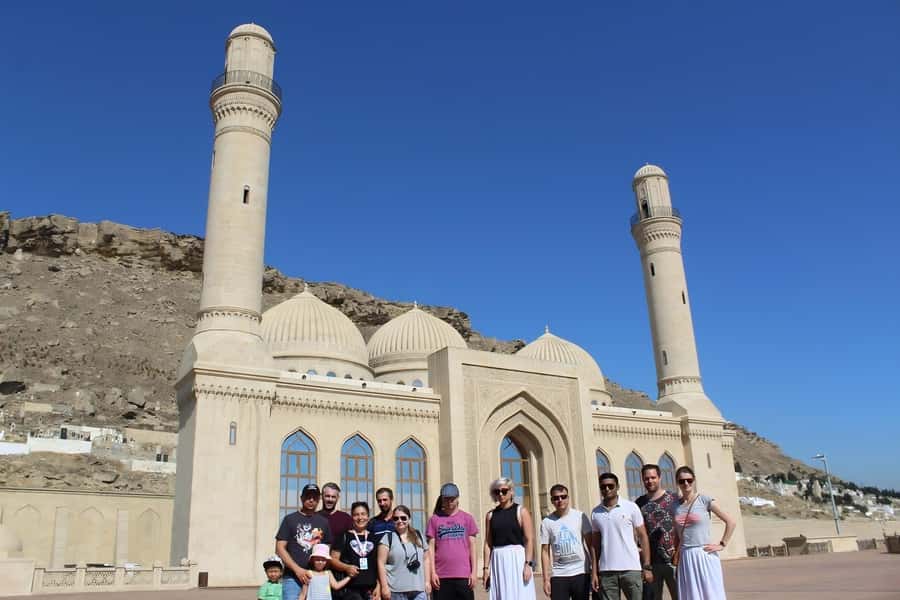
The first stop is Bibiheybat Mosque, reached after a short ride from Baku. The visit lasts about 20 minutes and includes a photo stop, guided sightseeing, and time to look around.
The mosque is important because it contains the tomb of relatives of the Prophet Muhammad. That gives the stop more weight than a quick architectural photo. You begin the day by seeing how Islamic belief remains part of Azerbaijan’s living culture, before later visiting places tied to older fire traditions.
You should bring a headscarf if needed for religious visiting. Wear respectful, comfortable clothing, since the tour later includes religious sites as well.
The stop is brief, so expect an introduction rather than a long visit. I like its position in the route because it gives useful context: Azerbaijan’s religious story did not begin with fire worship, nor did it end there.
Qobustan’s rock art is the tour’s strongest historical stop
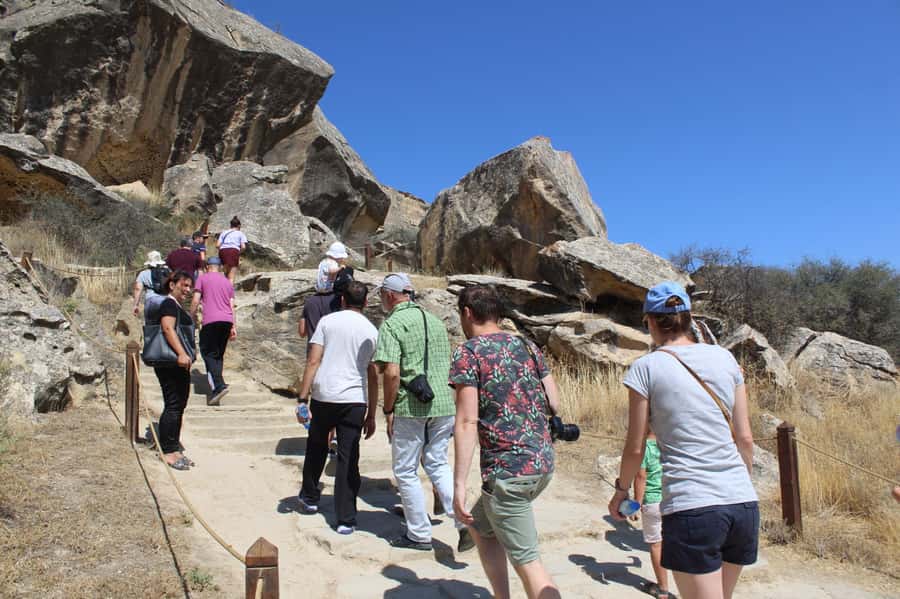
After roughly 50 minutes on the road, you reach Qobustan. The visit lasts around 80 minutes and includes walking, a guided tour, free time, scenic views, caves, and rock paintings.
Qobustan is a State Historical and Artistic Reserve and one of Azerbaijan’s UNESCO-protected places, added to the list in 2007. The carvings offer a direct link to people who lived here long before written records. You see images cut into stone, along with caves and traces of daily life.
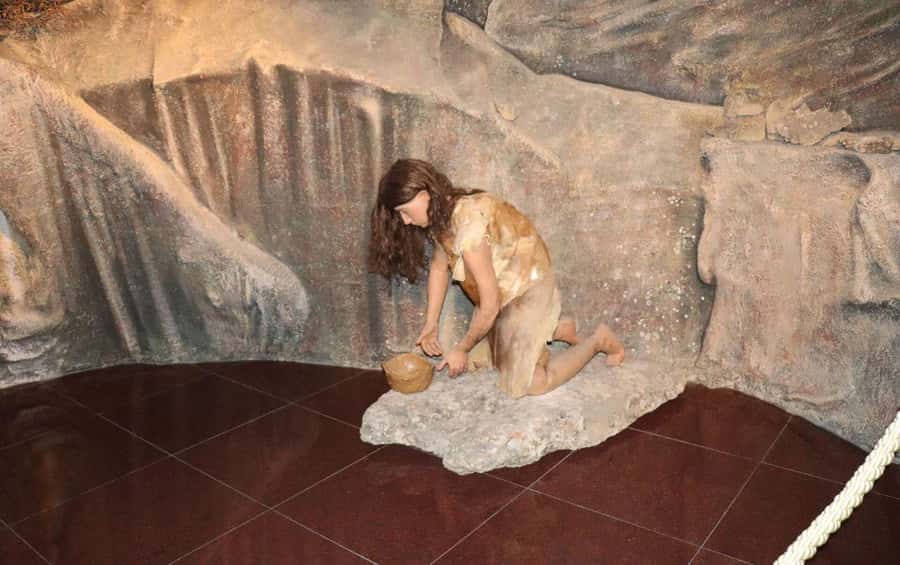
The tour also presents ancient cooking and the way primitive communities used the area. That helps turn the rock drawings from simple marks into evidence of food, shelter, movement, and social life.
This is the point where comfortable shoes matter most. The visit involves walking through a rocky area, and the experience is more rewarding when you can focus on the carvings instead of your feet.
Qobustan has a museum entrance fee of 10 AZN, not included in the tour price. That extra cost is worth factoring in because the museum helps explain what you see outside. The schedule gives you a useful visit, but not unlimited reading time, so listen closely to the guide and save the free time for the parts you most want to inspect.
Mud volcanoes show Azerbaijan at its most unusual
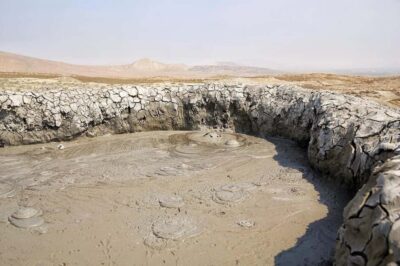
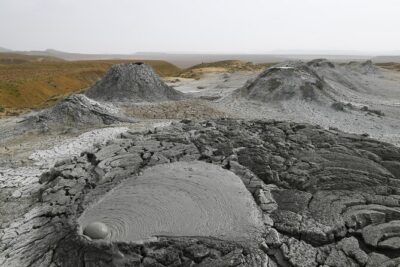
Azerbaijan has about 800 mud volcanoes across the country, with 354 of them located in Azerbaijan. That is roughly 40 percent of the world total, making this an unusually fitting place to see them.
You travel for about 20 minutes in a vintage car before reaching the mud volcano area. The stop itself lasts about 20 minutes, with time for photos and sightseeing. The change from coach to vintage car adds character, although the short visit means you should not expect a long geology lesson or a relaxed walk.
The mud is described as useful for skin, joints, and bones. You should treat that as part of the local appeal rather than a medical promise. The main value is seeing the bubbling, uneven ground and understanding that this is a natural feature linked to gases and pressure beneath the surface.
The Mud Volcanoes Tourism Complex charges 15 AZN, also paid separately. The complex may be a better fit for you than the open area alone if you want additional interpretation and facilities, but the available schedule still keeps this as a short stop.
I like this section because it is hard to duplicate elsewhere in a standard city break. Qobustan shows what people left behind. The volcanoes show the ground still changing beneath you.
More Absheron peninsula circuits:
- Baku: Gobustan Absheron Tour Entry Tickets included
★ 4.9 · 329 reviews - Baku: Gobustan-Absheron Tour with Hotel PICK UP and DROP OFF
★ 4.8 · 170 reviews - Baku: Gobustan/Absheron guided tour with lunch and tickets
★ 4.8 · 158 reviews - Gobustan and Absheron peninsula ( Group or Private ) TOUR ( All inclusive )
★ 5.0 · 130 reviews
Long drives make lunch timing important
After the volcanoes, the route includes about 80 minutes by coach before a one-hour restaurant break. Lunch is not included. You choose from the restaurant or fast-food menu and pay according to what you order.
This is where you need to plan ahead. One especially poor day involved lunch arriving as late as 3:30 p.m., with more than an hour spent waiting for food. That is not guaranteed to happen, but it shows why an early breakfast and a small snack in your bag are sensible.
The schedule’s one-hour break sounds generous, but the actual time available to eat depends on the restaurant and service. Keep your order simple if the group must leave on time. The guide may be helpful, but restaurant delays can affect the final stops.
The long road sections are part of the price of seeing both Qobustan and Absheron in one day. Comfortable clothing, water, and shoes will make the coach time easier. Smoking is not allowed in the vehicle, and strong fragrances, speakers, alcohol, and drugs are prohibited.
Yanar Dag explains the land of eternal flames
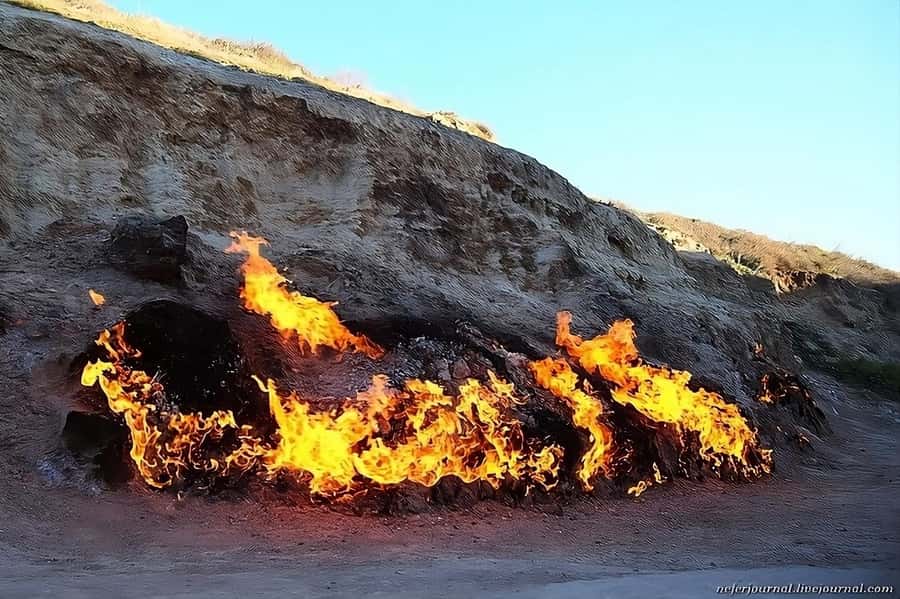
Yanar Dag, or Fire Mountain, follows the lunch stop. The coach ride takes about 30 minutes, and the visit lasts roughly 25 minutes.
Natural gas rises through the ground here and burns at the surface. The flames help explain why fire became such a powerful symbol in Azerbaijan. Ancient accounts connected the area with eternal lights, and the holy hearth is dated by scientists to roughly 4,000 to 5,000 years old.
The tour links this fire tradition with Novruz, now a national holiday that survived through the centuries. You also hear that the flames were mentioned in accounts associated with Atilla, the Great Hun Emperor, and Marco Polo.
The stop is short but visually memorable. You get a guided visit, scenic views, free time, and photos. The entrance cost is included in the combined 15 AZN charge listed for Fire Temple and Burning Mountain, though you should confirm the exact ticket arrangement on the day.
Yanar Dag is not a huge site. Its value comes from the setting and the ideas it represents. If you expect a large temple complex, you may be surprised by its size. If you see it as a natural flame with a long religious story, the stop makes more sense.
Absheron adds a medieval castle to the fire story
The next Absheron Peninsula stop lasts about 20 minutes and includes a guided visit, walking, photos, and free time. The description presents a castle that has kept its original strength from medieval times.
This stop gives the day a useful change of mood. After the exposed rock art and active mud, you turn to fortified stone and the military history of the peninsula. The limited time means you will likely get the main explanation and photographs rather than a detailed examination of every wall.
I would treat this as a short heritage stop that helps connect the sites. The peninsula was not only a place of religious pilgrimage and unusual geology. It was also a strategic area with castles built to withstand danger.
Ateshgah brings three fire traditions together
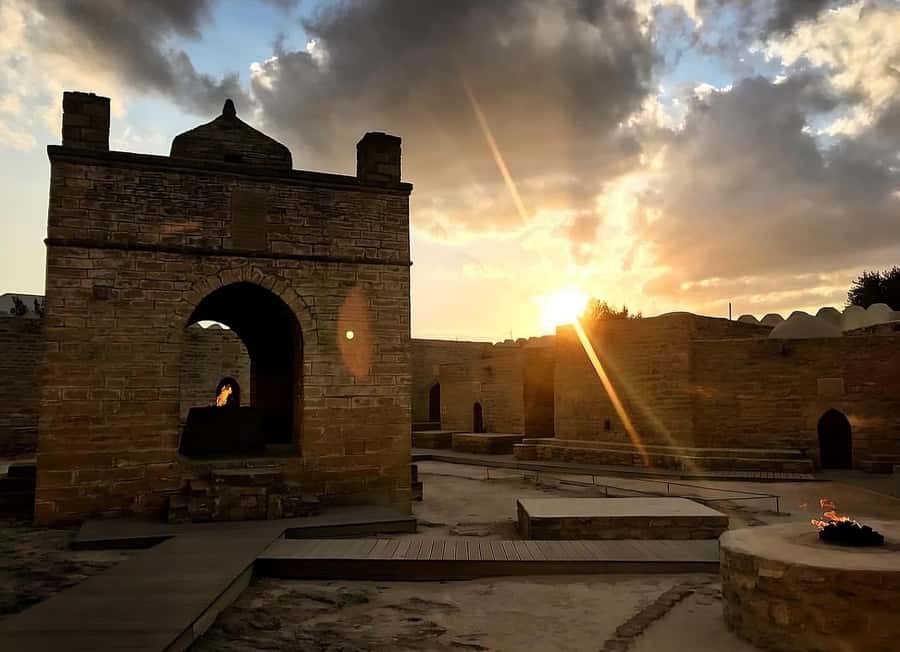
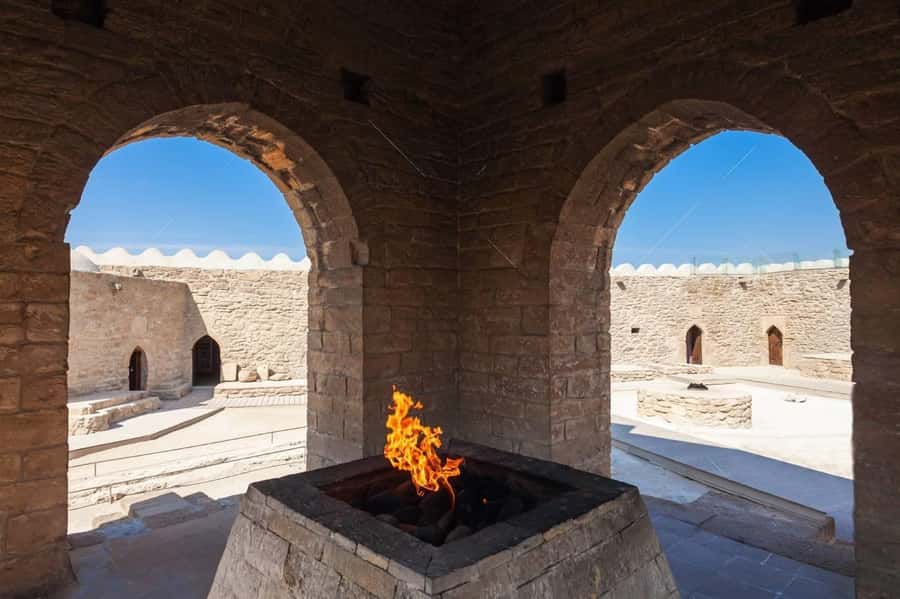
The final major stop is Ateshgah of Baku, reached after a 10-minute coach ride from the Absheron visit. You have about 50 minutes for a guided tour, photographs, free time, and walking.
Ateshgah is described as a meeting place of three traditions: fire worship, Zoroastrianism, and Hinduism. The guide’s job here is especially important, since the site’s meaning is not obvious from its stone walls alone. You learn what these teachings shared and how fire shaped religious practice on the peninsula.
The temple is more than an attractive building. It helps explain why natural flames were treated as sacred and why this part of Azerbaijan attracted different communities. The connection between the temple, the natural gas fires, and Novruz gives the whole day a clear thread.
The temple entrance is included in the same 15 AZN ticket grouping as Yanar Dag and Burning Mountain. Add that fee to the $30 tour cost when comparing this trip with other day excursions.
Ateshgah is a good final stop because it gathers the day’s themes in one place. Qobustan showed early human life. The volcanoes showed the forces below the ground. Yanar Dag showed fire in nature. Ateshgah shows how people gave that fire religious meaning.
Guides, transport, and the pace of the day
The experience includes a professional guide, comfortable transport, and hotel pickup. Tours are offered in English, Russian, and Turkish. The route finishes at the Double Gates of the Old City rather than returning to every hotel.
Guide quality matters here because many stops are short. Sabuhi received especially warm praise for being entertaining, polite, engaging, and well informed about Azerbaijan. Other strong comments also focus on good organization, a comfortable route, helpful service, and clear explanations.
There is one serious caution. A bad day involved a 75-minute delay while people tried to get onto the correct bus, rushed museum visits, repeated instructions to keep moving, and a driver using a handheld phone while driving. That is a major safety and organization concern. Most available feedback is strongly positive, but you should understand that the operation may not feel identical every day.
The schedule lists a 10-minute ride to Bibiheybat, 50 minutes to Qobustan, 80 minutes to the lunch area, 30 minutes to Yanar Dag, 30 minutes to Absheron, and 10 minutes to Ateshgah. Add the visits and you have a full day with little spare time. Ask the meeting staff which vehicle is yours at pickup, and keep your guide’s contact details available if provided.
What the $30 price really includes
At $30 per person, this is an inexpensive way to reach sites scattered well beyond central Baku. Hotel pickup, transport, and a live guide are included, which removes the hassle of arranging several separate trips.
But $30 is only the starting price. You should allow for:
- Qobustan Museum: 10 AZN
- Mud Volcanoes Tourism Complex: 15 AZN
- Fire Temple and Burning Mountain: 15 AZN
- Lunch, paid from the restaurant or fast-food menu
That adds 40 AZN in listed admission charges before food. The value remains good if you want a wide survey of the peninsula and do not mind paying the entrance fees. It is less attractive if you plan to skip several paid sites or prefer a quiet, specialized visit.
The included discount card offers special discounts at a sweets shop. Consider it a small extra, not a reason to choose the tour.
Who should book this experience?
I would recommend it for a first visit to Baku when you want the main sights outside the city in one day. It suits you if you enjoy contrasts, broad historical context, unusual geology, and a guide who keeps the day moving.
It is also useful for people without a rental car. The distances between Baku, Qobustan, the volcanoes, Yanar Dag, and Ateshgah make independent transport more complicated.
I would be cautious if you have heart problems, haemophilia, or are over 70. The stated restrictions also exclude babies under one year and people over 95. The tour is wheelchair accessible, but the program includes walking at outdoor and historic sites, so ask for practical details before booking if mobility is a concern.
Bring comfortable shoes, a credit card, comfortable clothes, a flashlight, and a headscarf. Pets, non-folding strollers, smoking, alcohol, drugs, strong fragrances, and speakers are not allowed.
Should you book the Gobustan and Absheron trip?
Book it if you want a big-picture day that covers rock art, mud volcanoes, Islamic heritage, medieval defenses, burning ground, and a fire temple for a low base price. The best parts are the range of sights, the unusual geology, and guides such as Sabuhi who make the information lively.
Do not book it expecting a slow, scholarly tour. The schedule is tight, lunch service may be unpredictable, and the quality of organization can vary. Eat breakfast, bring a snack, budget for 40 AZN in listed entrance fees plus lunch, and confirm your bus at pickup.
With those expectations, this is a strong-value introduction to the many sides of the Absheron Peninsula.
FAQ
Where does the tour start and finish?
Pickup is from Baku, with the meeting point at the Double Gates of the Old City, Icherisheher. Hotel pickup is available within the city area, generally within a 6 to 7 kilometer radius of the city center or near Nizami Street. The tour finishes at Qoşa Qala Qapısı.
How long does the tour last?
The scheduled duration is nine hours. Starting times depend on availability.
What languages are available?
The tour is offered with a live guide in English, Russian, or Turkish.
Is lunch included?
No. The tour allows one hour for lunch, but you pay for your own food according to the restaurant or fast-food menu.
Which entrance fees are extra?
The Qobustan Museum costs 10 AZN. The Mud Volcanoes Tourism Complex costs 15 AZN. Fire Temple and Burning Mountain tickets cost 15 AZN. These fees are not included in the $30 tour price.
Is hotel pickup included?
Yes. Pickup is included for hotels within the stated Baku city area, including locations within approximately 6 to 7 kilometers of the center or near Nizami Street.
What should I bring?
Bring comfortable shoes, comfortable clothing, a credit card, a flashlight, and a headscarf.
Can I cancel or pay later?
You can cancel up to 24 hours before the tour for a full refund. You can also reserve now and pay later, keeping your plans flexible.
Recently added around Baku
- Heartbeat of Baku: Old & Modern City Walk (Group or Private)★ 5.0 · 3 reviews
- Baku: Secret Tour with Surprise Activity★ 5.0 · 3 reviews
- From Baku: Shahdag Mountain Resort Day Trip★ 5.0 · 3 reviews
- Full Day Guided Tour of Shamakhi and Gabala★ 5.0 · 3 reviews
- Guba and Khinaligh Private Tour★ 5.0 · 3 reviews
- Guba and Shahdag Tour with Guide★ 5.0 · 3 reviews
- Lahij – village of masters★ 4.5 · 3 reviews
- Gobustan & Mud Volcano★ 4.5 · 3 reviews
Gobustan & Mud Volcano Tours, compared.
Gobustan, Mud Volcano, Fire Mount, Temple Lunch Entry
Read our review →
BEST Gobustan, Volcanoes & Absheron Fire Tour (Group or Private)
Read our review →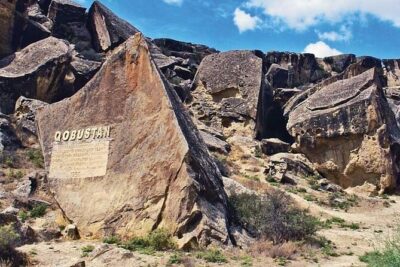
Gobustan, Volcanoes, Fire Temple and Yanardag Day Trip
Read our review →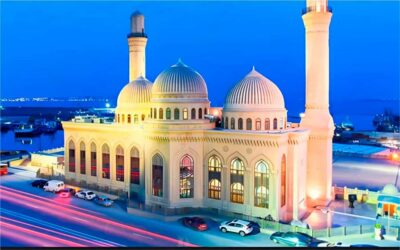
Gobustan-Mud Volcan-Fire Temple and Mountain Tour/Entrance inc
Read our review →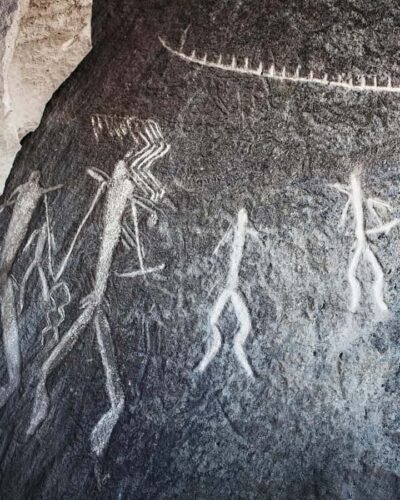
Gobustan Mud Volcanoes Temple & Entry tickets included
Read our review →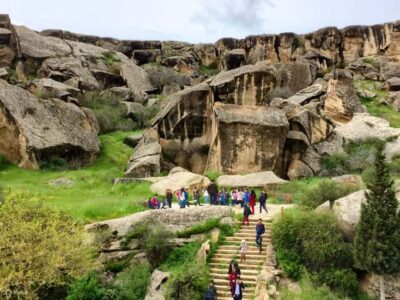
Gobustan-Absheron Tour with Hotel PICK UP and DROP OFF
Read our review →Browse the lists this tour appears in