
Reviewed · GOBUSTAN & MUD VOLCANO TOURS
Baku: Gobustan, Volcanoes, Fire Temple and Yanardag Day Trip
Fire and mud make Baku’s outskirts unforgettable. This $29 day trip links Gobustan’s prehistoric carvings with Azerbaijan’s famous mud volcanoes, oil heritage, Zoroastrian fire temple, and continuously burning hillside. I like the no-shopping policy and the wide range of sights packed into six to eight hours. The main drawback is a tight schedule, and muddy weather can cancel the volcano stop.
I also like that hotel pickup, transport, a guide, and selected entrance fees are handled together. Guides such as Sayed, Leyla, Mahabat, Elcan, and Musa have been praised for clear explanations, good English, patience, and helping with photos. Lunch costs extra, and the buffet stop may not suit anyone seeking a more personal local meal.
In This Review
- Key points to know before booking
- Why this day trip works so well from Baku
- Bibi-Heybat and the first oil well
- Gobustan’s stone record of early life
- Mud volcanoes and the roughest ride of the day
- Lunch at a buffet-style Azerbaijani restaurant
- Yanardag, where the hillside keeps burning
- Ateshgah, the former fire-worshippers’ temple
- Guides, vehicles, and the human side of the day
- Timing, cost, and who should book
- Should you book this Baku day trip?
- FAQ
- How long does the Baku day trip last?
- What is the tour price?
- Is hotel pickup included?
- Which languages are available?
- Are entrance fees included?
- Is lunch included?
- Can the mud volcano visit be canceled?
- What happens at Gobustan?
- Does the tour include Yanardag and Ateshgah?
- Can I cancel the booking?
Key points to know before booking
- Gobustan combines archaeology and geology: You see prehistoric rock art at the museum, then visit bubbling mud volcanoes nearby.
- The mud volcano ride can be the wildest part: Access may involve an off-road Soviet-era Lada, adding a rough but memorable touch.
- Baku’s oil story begins early: The Bibi-Heybat stop introduces the region’s long connection with petroleum and includes an industrialized oil well.
- Ateshgah and Yanardag explain the land of fire: One is a former Zoroastrian worship site, while the other burns naturally from underground gas.
- There are no shopping stops: Your time is aimed at historical and geological sights rather than carpet, spice, or souvenir stores.
- Plan for a full outing: The route lasts six to eight hours, with pickup and drop-off at listed hotels and meeting points around Baku.
Why this day trip works so well from Baku
Baku itself can keep you busy for several days, but its most unusual sights sit outside the center. Gobustan is about 70 kilometers from Baku, and the Absheron Peninsula adds a separate group of fire-related sites. Seeing them independently means arranging several rides and figuring out entrance points. This tour gives you one vehicle, one guide, and a single long day.
I see the route as a lesson in three layers of Azerbaijan. First comes prehistoric life, recorded in stone. Then comes oil and mud, reminders of the country’s active geology and petroleum economy. Finally, you reach sacred and natural fires that explain why this area became known as a land of fire.
The listed price of $29 per person is strong value if your priority is coverage. Transport alone over this distance can make a self-planned day expensive, and the guide adds context that signs cannot provide. Just check which booking option includes entrance fees, since the activity information says museum tickets and admissions are included if that option is selected.
The tradeoff is pace. You cover several locations in one day, so this is not a slow, wandering excursion. If you want long photography sessions or extended time at each museum, a private tour may suit you better.
More Yanar Dag burning mountain trips:
- Baku: Gobustan, Mud Volcano, Fire Mount, Temple Lunch Entry
★ 4.9 · 3,246 reviews - Gobustan & Mud, Fire Temple, Burning Mountain (Group & Private)
★ 4.5 · 418 reviews - Gobustan, Mud volcanoes, Fire temple, Fire mountain PRIVATE TOUR
★ 5.0 · 47 reviews
Bibi-Heybat and the first oil well
The morning begins with pickup from one of 13 listed locations, including several central hotels, SAHIL Hostel & Hotel, Shafa Stadium, and Restaurant Cilantro at Hilton Baku. You meet the guide in your hotel lobby, and the provider contacts you the day before to confirm the pickup time.
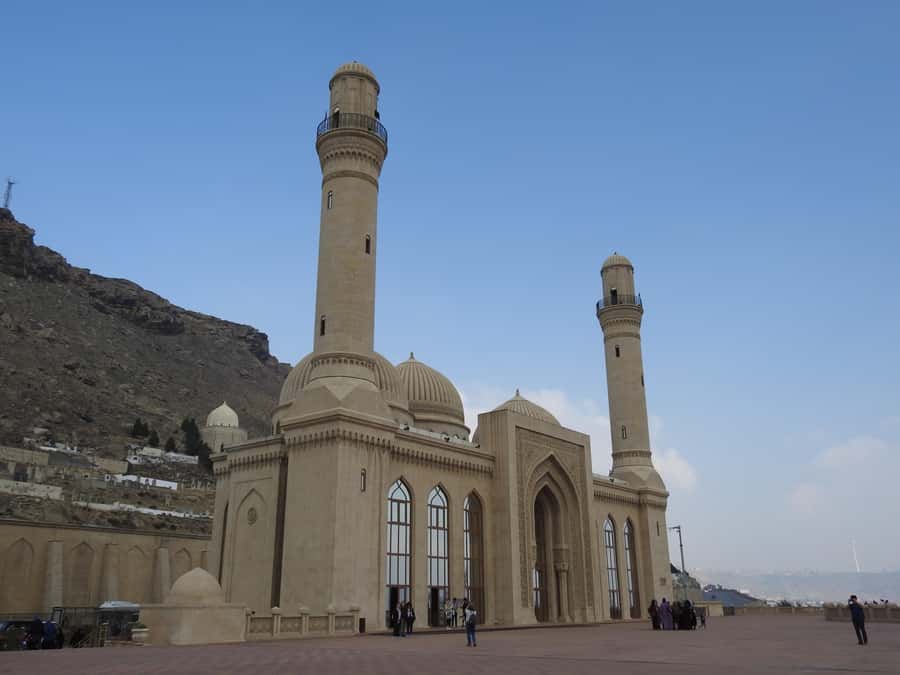
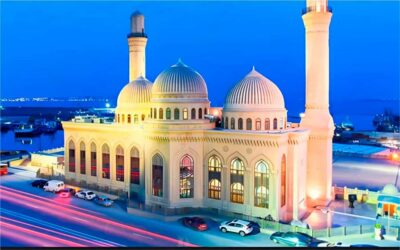
The first stop is Bibi-Heybat, close to the Bibi-Heybat Mosque. The guided visit lasts about 30 minutes and focuses on Azerbaijan’s oil story, including what is described as the first industrialized oil well in the world.
This is a useful opening because it places the rest of the trip in context. Baku’s wealth did not appear by magic. Oil shaped the city’s growth, and the industrial well gives you a physical link to that transformation before you head toward older traces of human life.
Do not expect a long museum visit here. Thirty minutes is enough for an introduction and some photographs, but not enough for a detailed study of the mosque, oil industry, and surrounding area. The value comes from the guide’s explanation and from seeing how quickly the city gives way to open country.
Gobustan’s stone record of early life
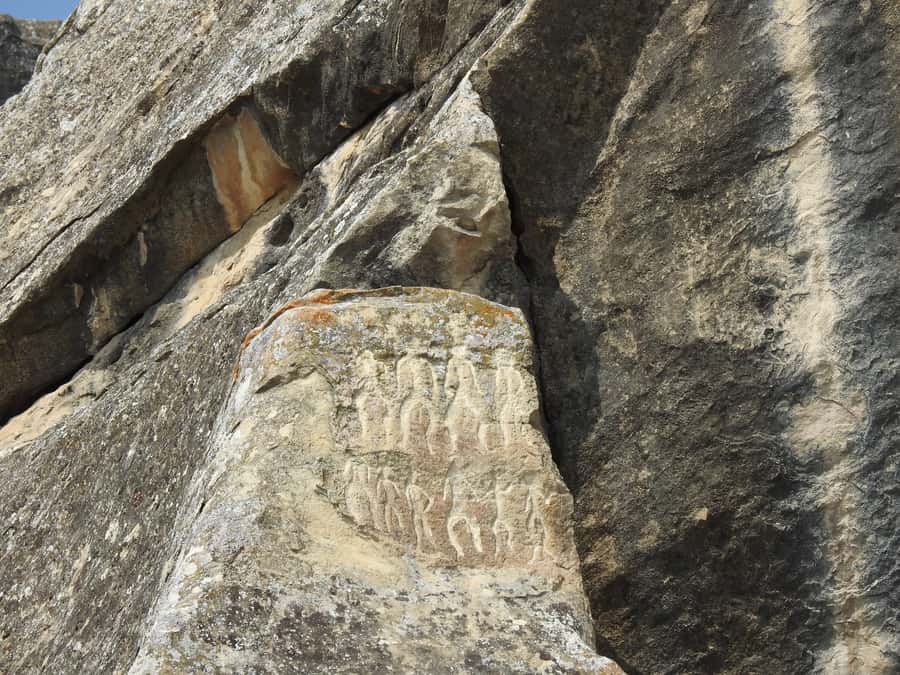
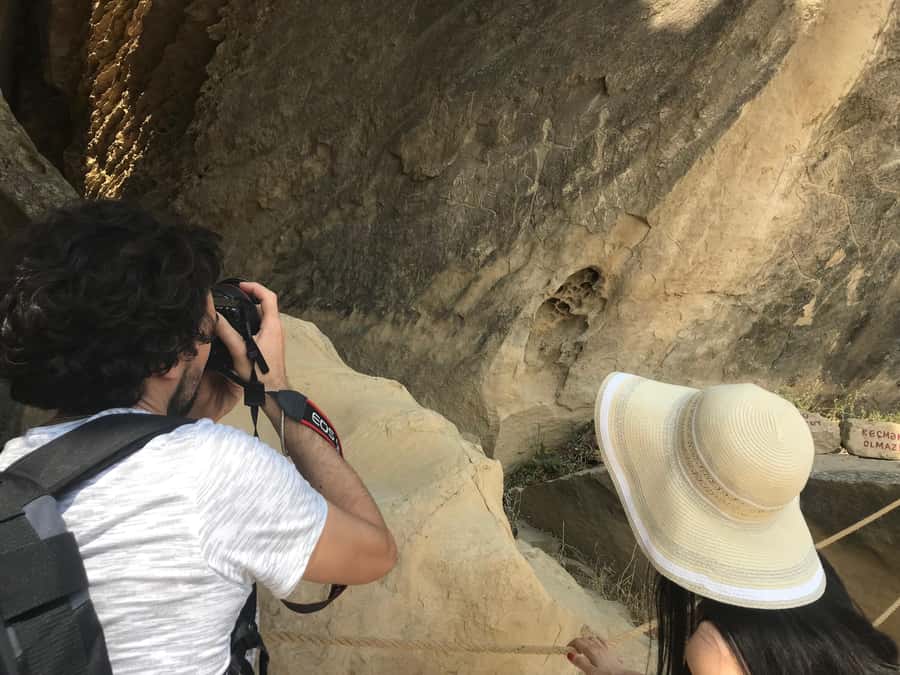
Gobustan National Park Museum is the day’s main archaeological stop. The visit lasts about an hour and includes indoor and outdoor areas. You see prehistoric drawings carved into cave walls and exposed rock, with scenes that reflect the economy, culture, and beliefs of ancient people in this part of Azerbaijan.
I like the way Gobustan changes the tone of the outing. The fire sites are dramatic, but the petroglyphs require you to slow down and look carefully. A carved animal, human figure, or hunting scene may appear simple at first. With a guide pointing out the details, the rocks become a record of how people lived and what mattered to them.
The indoor museum helps explain the carvings before or after you see the outdoor sites. That combination matters. Without context, rock art can become a quick photo stop. With the museum and a guide, you get a clearer sense of why these markings are important.
Give yourself practical comfort here. You may walk between indoor and outdoor areas, and the site is not simply a vehicle stop. Wear shoes suitable for uneven ground, bring water, and protect yourself from strong sun in warm months. One summer booking specifically called for water in the car, so it is sensible to carry your own supply.
Gobustan can also be crowded. A guide who manages timing well makes a real difference, especially when several groups gather around the same carvings. The hour is useful, but anyone who loves archaeology may wish for more time.
Mud volcanoes and the roughest ride of the day
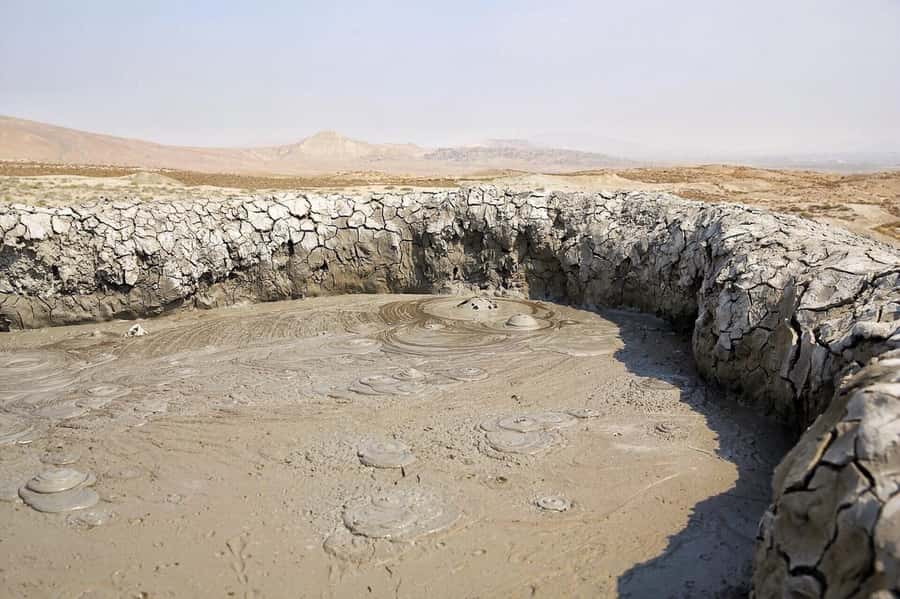
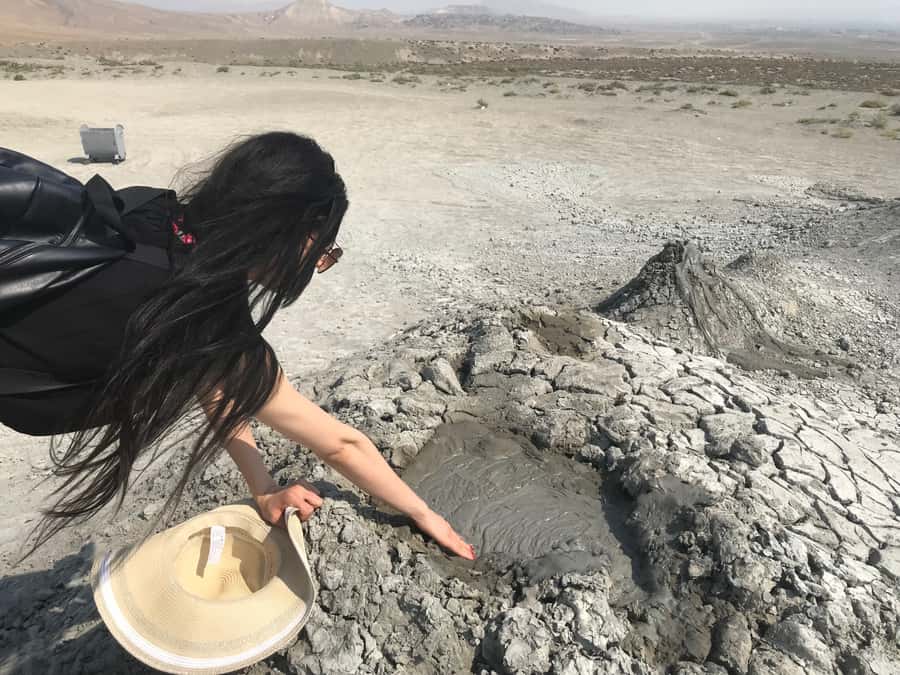
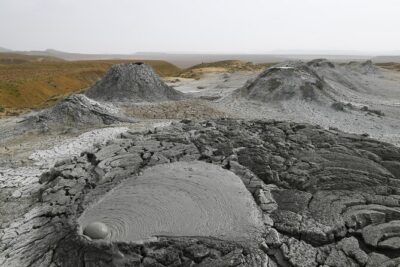
After Gobustan, the route heads toward the coastal area of Azerbaijan, home to hundreds of mud volcanoes. The stated figure is about 400, which gives you an idea of how unusual this part of the country is. These are not lava volcanoes. They push cool mud and gases from below the ground, creating a strange, active surface.
The planned sightseeing stop lasts about 20 minutes. For many people, this will be the most unusual part of the day because it feels far removed from ordinary sightseeing. The ground, cones, and occasional bubbling activity offer a sharp contrast with the neat museum displays at Gobustan.
Access can be part of the fun. One particularly praised feature is the off-road ride in a Soviet-era Lada to reach the volcanoes. That vehicle is not luxury transport, but it gives the stop a local, practical character. You should expect a bumpier experience than the main touring vehicle, not a polished theme-park attraction.
Weather matters here. On rainy days, the mud volcano visit is skipped for safety reasons. Heavy rain has caused this section to be missed before, and that is a genuine limitation rather than a failure of the tour. Muddy access roads can become unsafe, so keep your expectations flexible if the forecast is poor.
The short stop also means you will not spend hours studying the formations. I consider that a fair compromise in a packed day. You get to see one of Azerbaijan’s strangest natural features, then continue before the route becomes tiring.
More Ateshgah fire temple trips:
- Gobustan-Mud Volcan-Fire Temple and Mountain Tour/Entrance inc
★ 5.0 · 267 reviews - Gobustan & Mud, Fire Temple, Burning Mountain, H.A. Center
★ 4.6 · 46 reviews - Ateshgah Fire temple and Burning mountain tour
★ 4.5 · 42 reviews - Baku: Gobustan, Mud Volcanoes, Fire Temple, & Yanar Dag Tour
★ 4.8 · 36 reviews
Lunch at a buffet-style Azerbaijani restaurant
Lunch is not included. The group stops at a buffet-style restaurant where you can buy a meal for about $8 to $12. The food selection has been described as good, with plenty of Azerbaijani dishes to choose from.
This arrangement keeps the advertised tour price low and gives you some choice. You can select what appeals to you rather than accept a fixed plate. It also makes the stop efficient for a group moving on to several afternoon sights.
The compromise is that this is a practical group lunch, not necessarily a carefully chosen culinary experience. A few people would prefer an upgraded lunch venue, while others appreciate the range and speed of a buffet. Bring extra money for the meal, since it is outside the $29 price.
Lunch timing can affect the afternoon. This is a long day with several stops still ahead, so do not expect a leisurely restaurant visit. If you enjoy trying local food, take the chance to sample Azerbaijani dishes, but keep the focus on the wider route.
Yanardag, where the hillside keeps burning
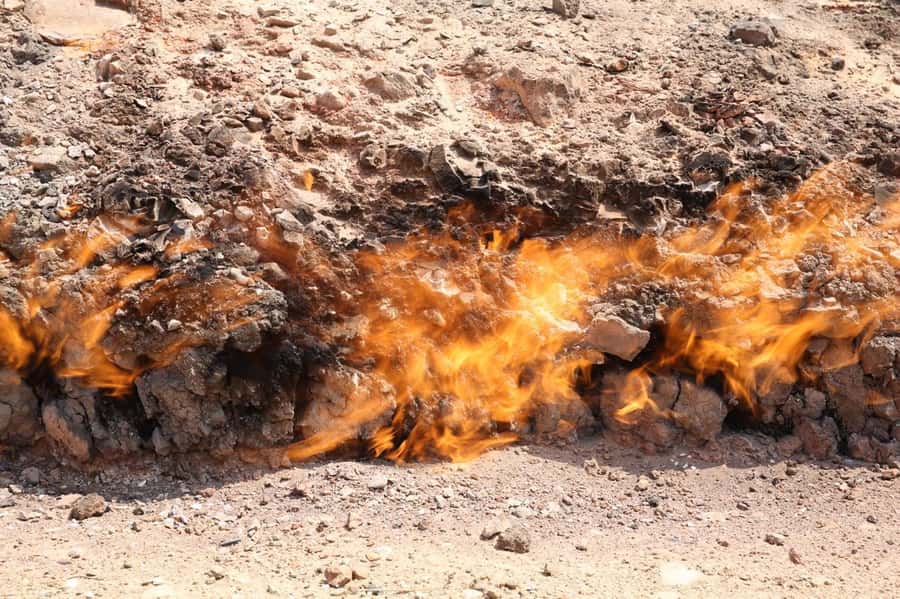
Yanardag is a natural gas fire that burns continuously on a hillside of the Absheron Peninsula. The guided visit lasts about 30 minutes. It is a simple sight, but the effect is powerful: flames rise from the ground rather than from a lamp, brazier, or carefully arranged display.
The fire makes more sense after Gobustan and the mud volcanoes. By this point, you have seen evidence of an active underground world. Yanardag turns that geology into a steady flame, helping explain why fire became so important in local religious tradition and regional identity.
The stop is also easy to understand without a long explanation. You walk up, see the burning hillside, listen to the guide, and take photographs. The short visit works well because Yanardag is a focused attraction rather than a large complex.
Still, keep your expectations realistic. This is not a vast natural park or an all-day hike. Its appeal is the oddity of fire emerging from the earth and the link between nature, belief, and Azerbaijan’s public identity.
Ateshgah, the former fire-worshippers’ temple
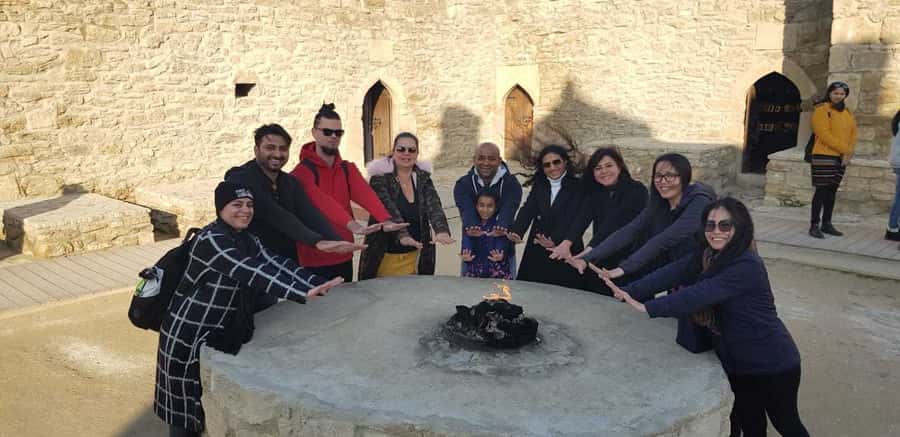
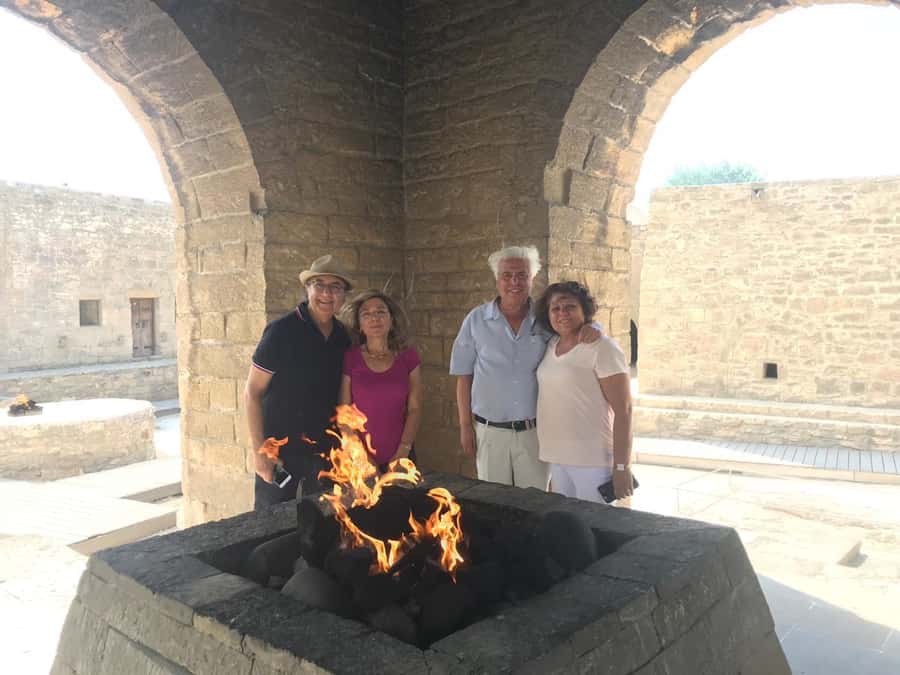
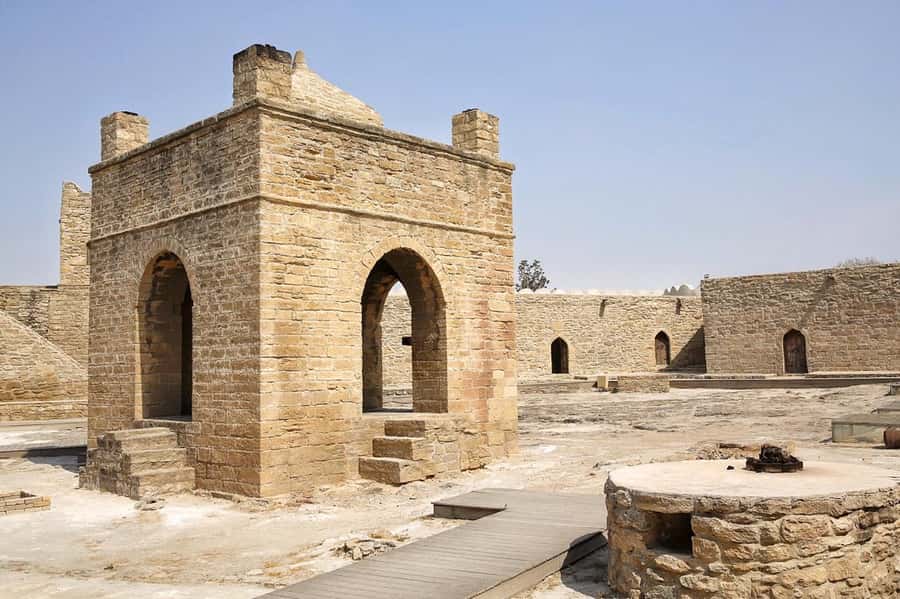
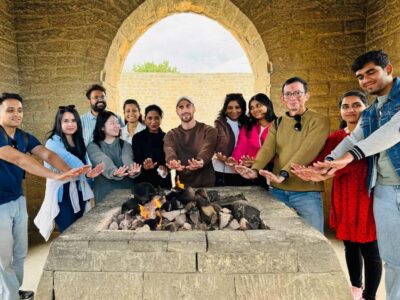
Ateshgah of Baku is the day’s strongest cultural stop for many people. The visit lasts about 40 minutes and introduces an ancient Zoroastrian temple, once used as a holy place by fire worshippers.
The temple gives meaning to the flames you have already seen. At Yanardag, fire is natural and continuous. At Ateshgah, fire became part of worship and pilgrimage. The setting helps you understand how natural gas vents could shape religious practice and attract visitors from far beyond the immediate area.
A guide adds real value here. The structure alone may look like a compact stone courtyard, but the stories of worship, travel, and ritual turn it into more than a photo stop. Guides such as Sayed have been praised for explaining the history in detail while keeping the visit friendly and easy to follow.
The 40-minute visit is enough for a guided introduction and photographs. If religious architecture is your main interest, you may want more time. The tour is designed to connect several major sights, so it favors breadth over a slow examination of every room.
The order of Yanardag and Ateshgah may vary by the day’s operation, but both are part of the afternoon route. Together they provide the clearest explanation of the phrase land of fire.
Guides, vehicles, and the human side of the day
The strongest part of this experience is often the guide. Sayed is repeatedly praised for warmth, clear explanations, humor, and a willingness to answer questions. Leyla is described as organized, caring, informative, and helpful with photographs. Mahabat, Elcan, Musa, Ughur, Aqil, Asaf, Nazir, Irana, Samir, Yashar, and others have also been praised for their personal attention and command of the subject.
That range of names matters because the guide assigned to you can shape the day. The best guides do more than recite dates. They explain why oil changed Baku, how the petroglyphs reflect early life, why mud volcanoes form, and how fire influenced religious tradition.
Group size can vary. Small groups of four have operated, while private and small-group options are available. A smaller group usually makes it easier to ask questions, move through stops, and get help with photographs. A larger group may feel less personal, though a strong guide can still keep things moving.
Transport is included, along with hotel pickup and drop-off. The main vehicle has been described as comfortable, but the volcano section may involve the more rugged Lada ride. This mix is part of the character of the outing, so do not book it expecting a luxury coach from start to finish.
Timing, cost, and who should book
The tour lasts six to eight hours, depending on traffic, pickup arrangements, group movement, and the day’s conditions. That is a substantial outing, but the schedule gives you a broad picture of Baku’s surroundings in one go.
At $29, it is particularly good for a first visit, a short stay, or anyone who wants the major out-of-town sights without arranging several separate trips. The no-shopping format is a major plus. Your time goes to Gobustan, geology, oil, fire, and lunch rather than commercial stops.
I would choose this tour if you want variety and practical transport. It suits couples, families, and first-time visitors who want a guide to connect the sites. It also works well for people who enjoy unusual geology as much as formal monuments.
I would hesitate if you dislike long road days, short visits, or group dining. You may also prefer a private option if you want to set your own pace. And if the mud volcanoes are your main reason for booking, remember that rain can remove that stop.
Should you book this Baku day trip?
Book it if you want the widest mix of Baku-area history and natural sights for a low price. Gobustan and Ateshgah are the anchors, while the oil well, mud volcanoes, Yanardag, and local lunch fill out a day that feels varied rather than repetitive.
I would book with three expectations: the schedule is busy, the lunch costs extra, and the volcano visit depends on safe weather. If you can accept those limits, the combination of capable guides, hotel transport, no shopping stops, and unusual sights makes this one of the better-value excursions from Baku.
FAQ
How long does the Baku day trip last?
The tour lasts approximately six to eight hours, including pickup, sightseeing, lunch, and drop-off.
What is the tour price?
The listed price is $29 per person. Check the selected booking option to confirm whether entrance fees are included.
Is hotel pickup included?
Yes. Hotel pickup and drop-off are included, with pickup from listed hotels and meeting points around Baku.
Which languages are available?
Live guiding is available in English and Russian.
Are entrance fees included?
Museum tickets and entrance fees are included if that option is selected when booking.
Is lunch included?
No. Lunch is purchased separately at a buffet-style restaurant. The expected cost is about $8 to $12.
Can the mud volcano visit be canceled?
Yes. The mud volcano stop is skipped on rainy days for safety reasons.
What happens at Gobustan?
You visit the Gobustan National Park Museum, an indoor and outdoor site with prehistoric rock drawings and petroglyphs. The guided visit lasts about one hour.
Does the tour include Yanardag and Ateshgah?
Yes. The route includes a visit to Yanardag, a continuously burning natural gas fire, and Ateshgah, a former Zoroastrian fire-worship site.
Can I cancel the booking?
You can cancel up to 24 hours in advance for a full refund. A reserve-now, pay-later option is also available.
More 1-Day Tours
- Baku: Guided Day Trip to Gabala with Hotel Pickup & Drop-off
★ 4.7 · 139 reviews - Baku : Gobustan, Absheron Sights Guided Day Trip Lunch included
★ 5.0 · 120 reviews - Full Day Trip in Baku (Gobustan & Absheron)
★ 5.0 · 72 reviews - Lankaran – Lerik Day Trip
★ 5.0 · 30 reviews
More Gobustan & Mud Volcano Tours
- BEST Gobustan, Volcanoes & Absheron Fire Tour (Group or Private)
★ 5.0 · 1,254 reviews - Gobustan and Absheron tour (All inclusive)
★ 5.0 · 1,014 reviews - Baku: Gobustan Absheron Tour Entry Tickets included
★ 4.9 · 329 reviews - Baku:Gobustan Mud Volcanoes Temple & Entry tickets included
★ 4.8 · 178 reviews
Recently added around Baku
- Heartbeat of Baku: Old & Modern City Walk (Group or Private)★ 5.0 · 3 reviews
- Baku: Secret Tour with Surprise Activity★ 5.0 · 3 reviews
- From Baku: Shahdag Mountain Resort Day Trip★ 5.0 · 3 reviews
- Full Day Guided Tour of Shamakhi and Gabala★ 5.0 · 3 reviews
- Guba and Shahdag Tour with Guide★ 5.0 · 3 reviews
- Lahij – village of masters★ 4.5 · 3 reviews
- Guba and Khinaligh Private Tour★ 5.0 · 3 reviews
- Gobustan & Mud Volcano★ 4.5 · 3 reviews
Gobustan & Mud Volcano Tours, compared.
Gobustan, Mud Volcano, Fire Mount, Temple Lunch Entry
Read our review →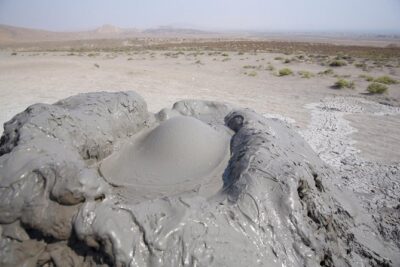
BEST Gobustan, Volcanoes & Absheron Fire Tour (Group or Private)
Read our review →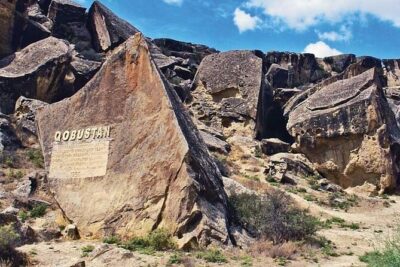
Gobustan-Mud Volcan-Fire Temple and Mountain Tour/Entrance inc
Read our review →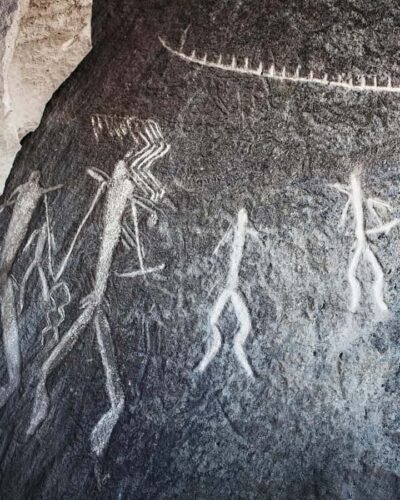
Gobustan Mud Volcanoes Temple & Entry tickets included
Read our review →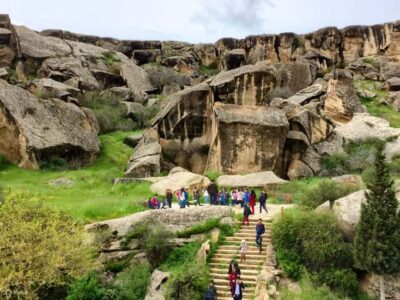
Gobustan-Absheron Tour with Hotel PICK UP and DROP OFF
Read our review →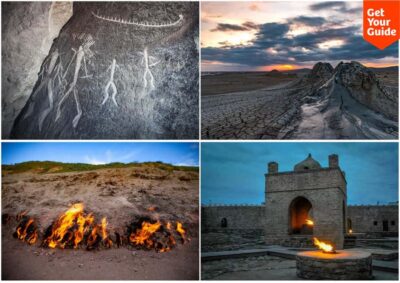
Gobustan/Absheron guided tour with lunch and tickets
Read our review →Browse the lists this tour appears in