
Reviewed · GOBUSTAN & MUD VOLCANO TOURS
Baku: Gobustan, Mud Volcanoes, Ateshgah, and Yanardag Tour
Baku’s strangest sights lie outside the city. This 9-hour private tour links Gobustan’s prehistoric rock art with bubbling mud volcanoes, the Ateshgah Fire Temple, and Yanardag’s natural flame. I like the way it combines archaeology, geology, and religion in one day, and I especially like that private transport and hotel pickup keep a long route simple. The main drawback is cost: at $99 per person, you still pay about $24 more for entrance tickets, plus lunch and personal expenses.
The day covers a lot of ground, so the pace is active rather than leisurely. A strong English-speaking guide matters here, since the sites are spread across the Absheron region and much of their value comes from explanation. Mushfiq received especially warm praise for his passion and for helping with dinner suggestions in Baku after the tour, though your assigned guide may be someone else.
In This Review
- Key points at a glance
- Why this route tells Azerbaijan’s story well
- Gobustan Museum makes the rock art easier to read
- Reading 6,000 rock drawings among the Gobustan hills
- Mud volcanoes: strange craters and useful clay
- Lunch is your own expense and your own choice
- Ateshgah Fire Temple and the story of sacred fire
- Yanardag’s burning hillside near Baku
- What $99 really buys you
- How the day feels in practice
- Who should book this Baku day trip?
- Should you book this tour?
- FAQ
- How long does the Baku tour last?
- Where does the tour start?
- Where does the tour end?
- Is transportation private?
- Is an English-speaking guide included?
- Are entrance tickets included in the price?
- Is lunch included?
- What should I bring?
- Is the tour suitable for wheelchair users?
Key points at a glance
- Gobustan pairs an interactive museum with open-air petroglyphs, giving you context before you see the ancient carvings.
- More than 6,000 rock drawings and caves reveal scenes and symbols linked to people who lived here thousands of years ago.
- Azerbaijan has about 350 of the world’s 800 mud volcanoes, making the crater visit more than a quick photo stop.
- Ateshgah connects Azerbaijan with Hindu and Zoroastrian worship, including fire-worshippers’ cells and archaeological finds.
- Yanardag is a natural gas flame on a hillside, still burning on the Absheron Peninsula.
- Private transportation and hotel pickup in Baku make this easier than arranging four separate out-of-town visits.
Why this route tells Azerbaijan’s story well
I like this tour because the stops are not random. They build a picture of Azerbaijan from several angles.
Gobustan shows how early people recorded their lives in stone. The mud volcanoes explain a dramatic part of the region’s geology. Ateshgah shows how fire shaped religious practice, while Yanardag brings that fire into the present. You finish the day with a better sense of why fire appears so often in Azerbaijan’s past and identity.
The route also gives you a useful break from Baku’s urban sights. The capital has grand buildings, seaside promenades, and a well-preserved old town, but the country’s older story is easier to grasp outside the center. This tour takes you to places that would be awkward to link by ordinary public transport in a single day.
The private format is another plus. You are not sharing the vehicle with a large group, and hotel pickup is included. That matters on a 9-hour outing with several separate stops. You can focus on the guide instead of bus schedules, transfers, or finding the next entrance.
More Yanar Dag burning mountain trips:
- Baku: Gobustan, Mud Volcano, Fire Mount, Temple Lunch Entry
★ 4.9 · 3,246 reviews - Baku: Gobustan, Volcanoes, Fire Temple and Yanardag Day Trip
★ 4.7 · 433 reviews - Gobustan & Mud, Fire Temple, Burning Mountain (Group & Private)
★ 4.5 · 418 reviews
Gobustan Museum makes the rock art easier to read
The first major stop is the Gobustan Museum, with about two hours devoted to the Gobustan area. This is a smart starting point because the museum gives you a framework before you walk among the rocks.
Interactive displays explain the petroglyphs, the natural setting, local populations, cultural development, and archaeological work. Touch screens and 3D panoramas show how people may have lived between roughly 5,000 and 20,000 years ago. Historical objects in the museum date from about the fourth to the second millennium BC.
I value this part because prehistoric carvings can be hard to interpret on your own. A scratched or faded figure may look simple until you understand its age and setting. The museum helps turn scattered marks into evidence of customs, beliefs, work, and daily life.
It is also a useful stop if you are visiting with children or with someone who prefers displays to outdoor walking. The interactive features offer a clear introduction before the more physical part of Gobustan.
Reading 6,000 rock drawings among the Gobustan hills
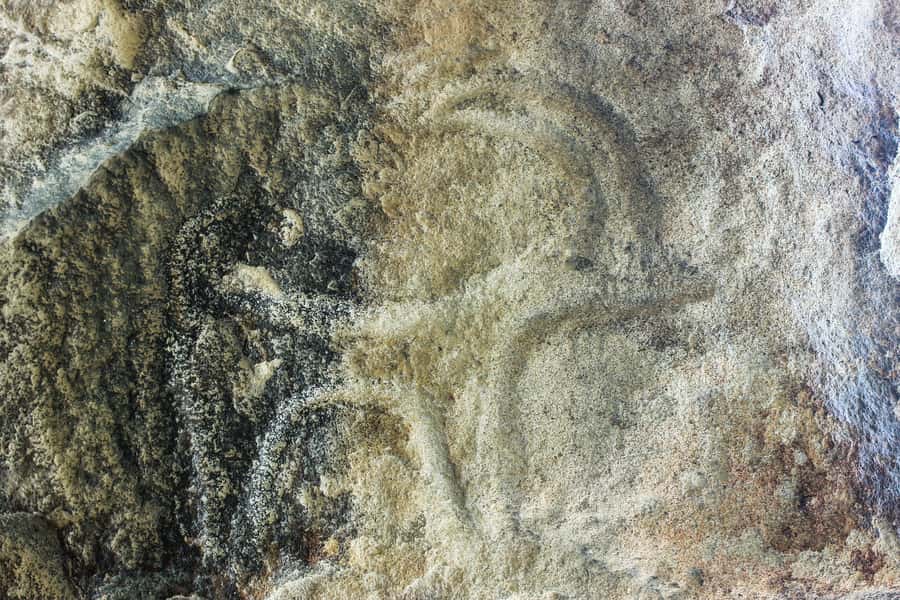
After the museum, you continue to the Gobustan rocks. More than 6,000 drawings and caves are spread through the area, with carvings from different periods. Scientists began studying them in the 1930s, and the site has helped explain how early people viewed their surroundings.
You will see petroglyphs cut into the rock rather than a single grand monument. That is part of the appeal. The experience asks you to slow down and notice details, with your guide pointing out images and explaining what they reveal about ancient customs and traditions.
The open-air setting adds meaning. These are not objects removed from their original surroundings and placed behind glass. You are seeing the marks where people made them, among the rocks that shaped their daily world.
Bring comfortable shoes, water, sunscreen, and a camera. The day includes outdoor stops, and Gobustan is not a polished indoor attraction from start to finish. The tour is not suitable for wheelchair users, so mobility is an important consideration before booking.
Do not expect every carving to be immediately clear. Weather, age, and the surrounding stone can make some images difficult to spot. That is why the guide is central to this stop. The better the explanation, the more rewarding the site becomes.
Mud volcanoes: strange craters and useful clay
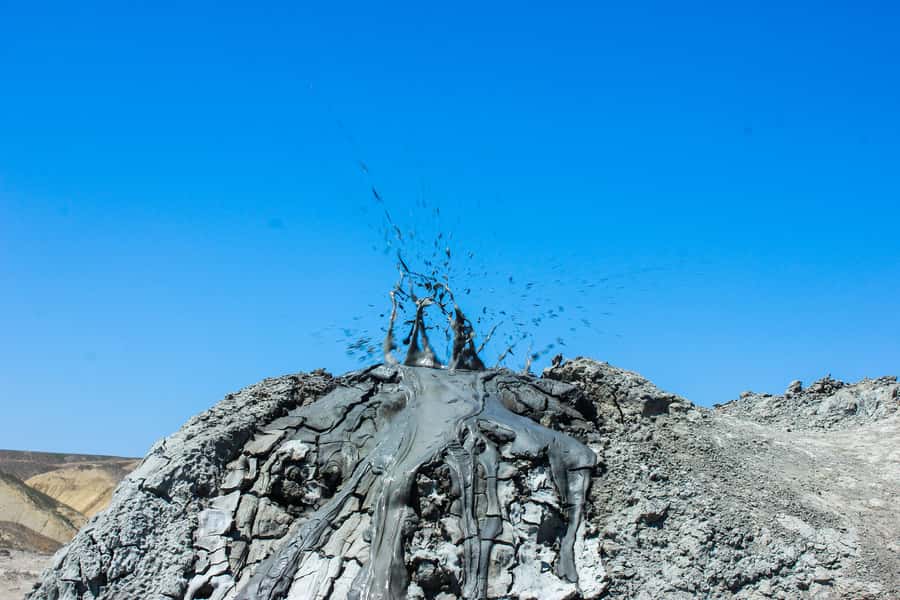
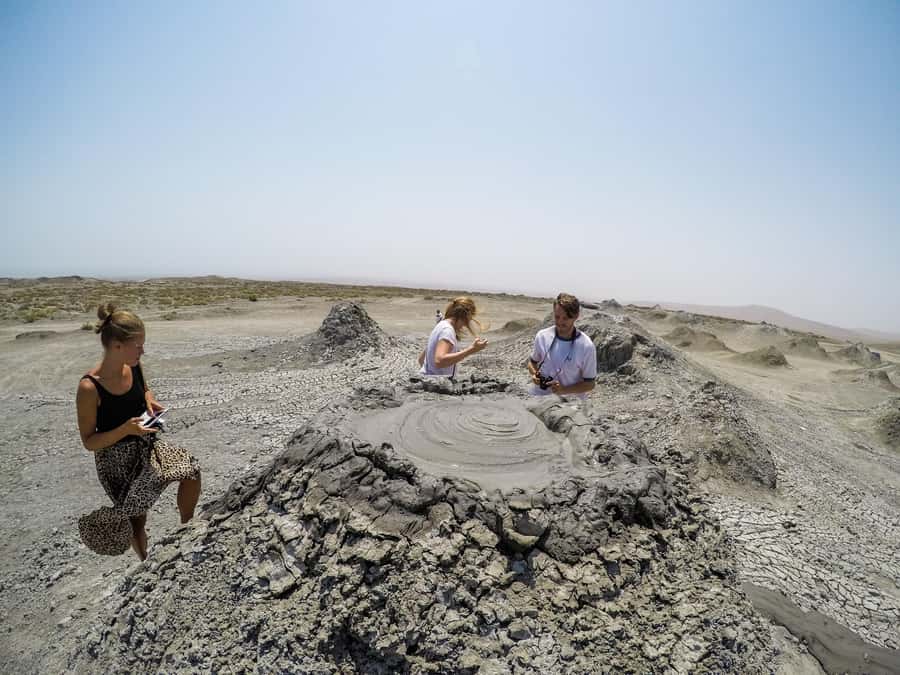
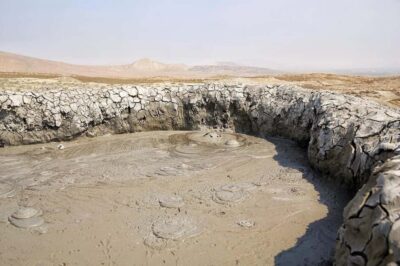
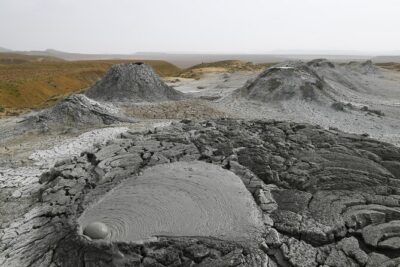
The mud volcanoes are one of the tour’s most unusual stops, lasting about 40 minutes. Azerbaijan has roughly 350 of the world’s 800 mud volcanoes, so this is not a minor geological footnote. The country is famous for the number of these formations found within its borders.
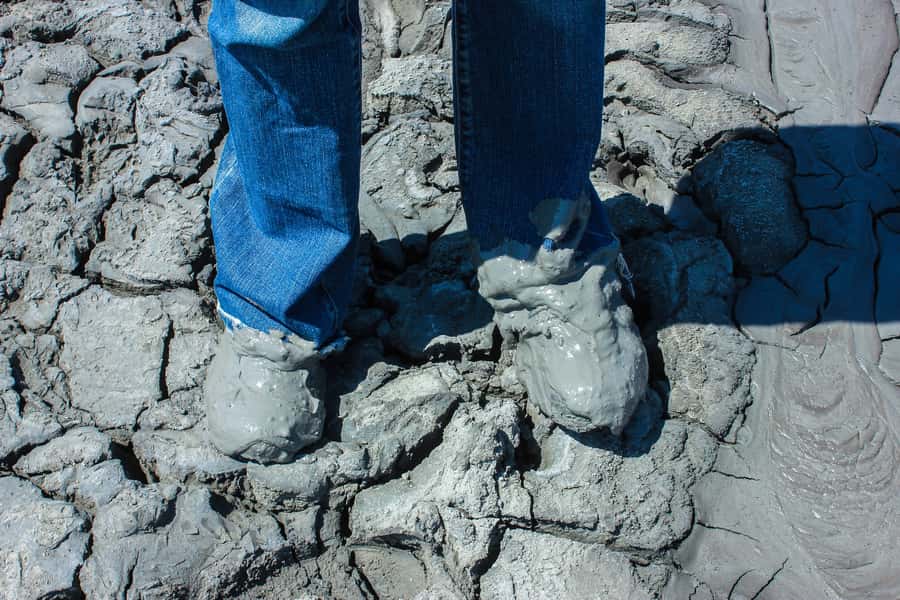
These are not the same as lava volcanoes. Mud, gases, and underground pressure create the craters, producing a raw and unusual setting. You can climb active mud volcanoes and look closely at the crater areas. The tour also explains how the mud has been used.
Volcanic material has applications in the chemical and construction industries and in pharmacology. Volcanic clay and mud are also used in treatments connected with the nervous system, skin conditions, and rheumatism. That does not mean you should apply mud to yourself during the visit. It means the stop has a practical connection to local medicine and industry, not just a visual one.
The short visit is enough to see the formations and hear the main explanation, but it is not a long geology field trip. Conditions can feel basic, and the ground around active craters may be uneven. Wear shoes you can walk in and follow the guide closely.
I see this as a memorable middle stop because it breaks up the historical sites. After looking at ancient carvings, you get something alive and bubbling underfoot. It is a little odd, a little messy, and very different from the usual Baku day trip.
More Ateshgah fire temple trips:
- Gobustan-Mud Volcan-Fire Temple and Mountain Tour/Entrance inc
★ 5.0 · 267 reviews - Gobustan, Mud volcanoes, Fire temple, Fire mountain PRIVATE TOUR
★ 5.0 · 47 reviews - Gobustan & Mud, Fire Temple, Burning Mountain, H.A. Center
★ 4.6 · 46 reviews - Ateshgah Fire temple and Burning mountain tour
★ 4.5 · 42 reviews
Lunch is your own expense and your own choice
After the first part of the tour, you take a lunch break in the city center. Lunch is not included in the $99 price, so plan for that extra expense.
The supplied details do not specify a restaurant or a set menu. That gives the day some flexibility, but it also means you should not expect lunch to be part of the organized tour price. Ask your guide about the available options and allow enough time to eat before the afternoon visits.
This break is useful after the outdoor Gobustan and mud volcano stops. It also divides the day into two clear parts: prehistoric and geological sights first, then the fire-related sites near Baku.
Ateshgah Fire Temple and the story of sacred fire
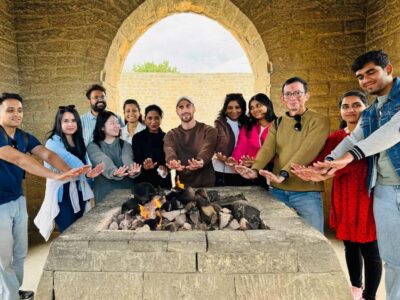
Ateshgah, the Fire Temple of Baku, receives about an hour. The site was used as both a Hindu and Zoroastrian place of worship, with the first recorded mention dating to the seventh century AD.
The temple complex includes cells where fire worshippers stayed, along with historical objects found during archaeological excavations. Those small rooms help you picture the site as a working place of worship rather than a bare monument.
Ateshgah is especially useful for understanding why fire became such a strong symbol in this region. The temple connects local religious traditions with pilgrims and worshippers from farther east. Your guide can explain the relationship between Zoroastrian practice, Hindu worship, and the movement of people across the region.
Do not confuse the temple with Yanardag. Ateshgah is a built religious complex, while Yanardag is a natural gas flame on a hillside. Seeing both on the same day lets you compare human use of fire with fire produced by the earth itself.
The one-hour visit gives you time to see the cells and exhibits without making the stop feel rushed. If religious history interests you, this may be the most layered stop of the day. If you prefer dramatic scenery, Yanardag will likely leave the stronger visual impression.
Yanardag’s burning hillside near Baku
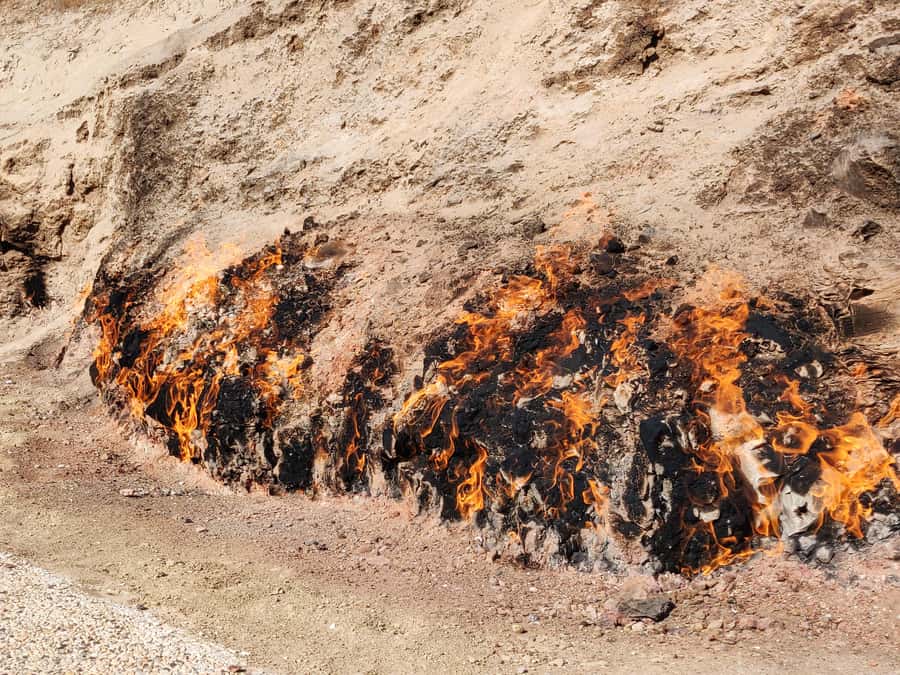
The final major sight is Yanardag, meaning Burning Mountain. It is a natural gas flame that has burned on a hillside of the Absheron Peninsula near Baku since ancient times.
The flame is not a ceremonial fire maintained by attendants. It is a natural gas fire, and that makes the visit feel quite different from Ateshgah. The stop lasts about 40 minutes, enough to see the hillside and hear about its religious importance.
Pilgrims from Iran and India still come to the site because of its sacred connection. That continuing link gives Yanardag more weight than a quick natural oddity. You are seeing a place where geology, faith, and regional travel have overlapped for centuries.
Yanardag is best understood as the final piece of the tour’s fire theme. Gobustan shows human marks on stone, the mud volcanoes show pressure beneath the ground, Ateshgah shows a temple built around fire, and Yanardag shows gas burning naturally from the earth.
The flame itself is the star, so photography is worthwhile. Bring your camera, but also listen to the guide. Without the background, the site could be reduced to a brief look at a hillside fire.
What $99 really buys you
The price is $99 per person, with a private group, private transportation, an accredited English-speaking guide, hotel or other pickup in Baku, and visits to all four main attractions.
That is a fair value if you want the full route in one day and do not want to manage transport yourself. The journey covers several separated sites, and the private format gives you a more direct experience than a large coach excursion.
Still, the advertised price is not the final sightseeing cost. Entrance fees listed separately add up to about $24:
- Gobustan: $6
- Mud volcanoes: $9
- Ateshgah and Yanardag: $9
That brings the known total to about $123 per person before lunch and personal spending. For a private 9-hour tour with transport and a guide, that can make sense, especially for couples or small groups who value convenience. If you are watching every dollar, the extra ticket costs should be part of your decision from the start.
The tour includes free cancellation up to 24 hours before departure and lets you reserve without paying immediately. Those terms are helpful if your Baku schedule is still changing, but the main value question remains simple: do you want four out-of-town sights explained and connected in one day?
How the day feels in practice
Nine hours is a long day, but the route has enough variety to keep it from becoming repetitive. Gobustan requires attention and some walking, the mud volcanoes provide a short outdoor change, lunch gives you a reset, and the two fire sites return to history and religion.
The private vehicle is important because the day includes Baku pickup, Gobustan, the mud volcanoes, Ateshgah, Yanardag, and a return to Baku. The final drop-off is at Fountain Square, which is handy if you want to continue into central Baku afterward.
One especially thoughtful touch came from the guide experience associated with Mushfiq. After the formal tour, he escorted a visitor toward Baku’s old town and suggested good places for dinner. That kind of help is not guaranteed with every guide, but it shows the difference a personable local guide can make when the official sightseeing ends.
The English-language guiding is another key factor. One five-star assessment specifically praised the guide’s English and the fact that the day followed the planned schedule. You should still confirm the starting time when booking, since the activity page asks you to check availability.
Who should book this Baku day trip?
I would recommend it most strongly to first-time visitors who want a broad introduction to Azerbaijan beyond Baku. It suits anyone interested in archaeology, ancient religion, geology, or unusual natural sights.
It is also a good choice for couples, families with older children, and small private groups who want control over the day. The museum’s touch screens and 3D displays may help younger visitors, while the mud volcanoes add an element that feels less like a standard museum visit.
You should think twice if you want a slow day with long meals and extended time at each site. The tour covers four major stops, so it is designed for range rather than extended study. It is also not suitable for wheelchair users, and anyone with difficulty walking on uneven outdoor ground should ask detailed questions before booking.
Bring the basics: walking shoes, water, sunscreen, and a camera. Add room in your budget for the $24 in listed entrance fees, lunch, and personal expenses.
Should you book this tour?
Book it if you want the easiest way to connect Gobustan’s petroglyphs, mud volcanoes, Ateshgah, and Yanardag in one well-filled day. The private vehicle, Baku pickup, English guide, and strong praise for guides such as Mushfiq give the experience a practical edge.
Skip it if your priority is a relaxed schedule or the lowest possible cost. The day is long, admission is extra, and the outdoor sites call for comfortable movement.
For most first-time visitors with nine hours to spare, this is a worthwhile route. It shows you an Azerbaijan that cannot be understood from Baku’s center alone: ancient people carving stories into stone, mud pushing up from below, worshippers gathering around fire, and a natural flame still burning on a hillside.
FAQ
How long does the Baku tour last?
The tour lasts 9 hours, including the visits outside Baku and the return to the city.
Where does the tour start?
Pickup is provided in Baku from your hotel or another agreed location.
Where does the tour end?
The tour returns to Baku and ends with drop-off at Fountain Square.
Is transportation private?
Yes. Private transportation is included, and the group type is private.
Is an English-speaking guide included?
Yes. An accredited live guide in English is included.
Are entrance tickets included in the price?
No. The listed fees are $6 for Gobustan, $9 for the mud volcanoes, and $9 for Ateshgah and Yanardag.
Is lunch included?
No. Lunch and personal expenses are not included.
What should I bring?
Bring comfortable shoes, water, sunscreen, and a camera.
Is the tour suitable for wheelchair users?
No. The experience is listed as not suitable for wheelchair users.
More Gobustan & Mud Volcano Tours
- BEST Gobustan, Volcanoes & Absheron Fire Tour (Group or Private)
★ 5.0 · 1,254 reviews - Gobustan and Absheron tour (All inclusive)
★ 5.0 · 1,014 reviews - Baku: Gobustan Absheron Tour Entry Tickets included
★ 4.9 · 329 reviews - Baku:Gobustan Mud Volcanoes Temple & Entry tickets included
★ 4.8 · 178 reviews
Recently added around Baku
- Heartbeat of Baku: Old & Modern City Walk (Group or Private)★ 5.0 · 3 reviews
- Baku: Secret Tour with Surprise Activity★ 5.0 · 3 reviews
- From Baku: Shahdag Mountain Resort Day Trip★ 5.0 · 3 reviews
- Full Day Guided Tour of Shamakhi and Gabala★ 5.0 · 3 reviews
- Lahij – village of masters★ 4.5 · 3 reviews
- Guba and Shahdag Tour with Guide★ 5.0 · 3 reviews
- Guba and Khinaligh Private Tour★ 5.0 · 3 reviews
- Gobustan & Mud Volcano★ 4.5 · 3 reviews
Gobustan & Mud Volcano Tours, compared.
Gobustan, Mud Volcano, Fire Mount, Temple Lunch Entry
Read our review →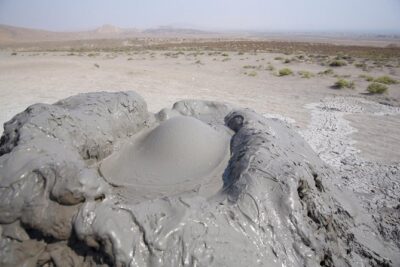
BEST Gobustan, Volcanoes & Absheron Fire Tour (Group or Private)
Read our review →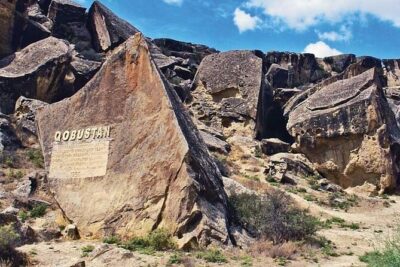
Gobustan, Volcanoes, Fire Temple and Yanardag Day Trip
Read our review →
Gobustan-Mud Volcan-Fire Temple and Mountain Tour/Entrance inc
Read our review →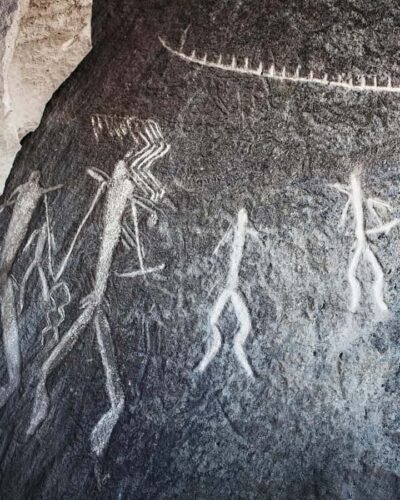
Gobustan Mud Volcanoes Temple & Entry tickets included
Read our review →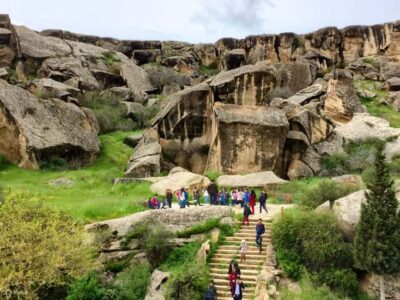
Gobustan-Absheron Tour with Hotel PICK UP and DROP OFF
Read our review →Browse the lists this tour appears in