
Reviewed · GOBUSTAN & MUD VOLCANO TOURS
Gobustan Magic of Mud Volcanoes and Ancient Petroglyphs
Ancient carvings meet bubbling volcanoes. This five-hour private outing from Baku brings together Gobustan’s prehistoric rock art and the strange mud cones that make this corner of Azerbaijan so unusual. I like the mix of ancient culture and odd natural scenery, and I like that the route also includes Bibi-Heybat Mosque and the site of the world’s first oil well.
The main thing to consider is the uneven value of the inclusions. Gobustan museum tickets and the off-road vehicle payment are covered, but the mud-volcano stop lists admission as extra, and lunch is not included. The tour begins at 9:00 am from Nizami Garden and returns there, so the schedule is tidy, but you should allow extra time if you plan to eat afterward.
In This Review
- Key points to know before booking
- Why this half-day route works from Baku
- Gobustan Rock Art: reading thousands of years in stone
- Mud volcanoes: Azerbaijan’s bubbling clay country
- Bibi-Heybat Mosque and the old oil field
- The guide’s role: stories matter here
- What the $65.55 price includes
- Timing, pickup, and cancellation details
- Who will like this Gobustan tour
- Final verdict: should you book it?
- FAQ
- How long does the tour last?
- What time does the tour begin?
- Where does the tour start and finish?
- Is pickup offered?
- Is this a private tour?
- Is Gobustan museum admission included?
- Is transportation to the mud volcanoes included?
- Is mud-volcano admission included?
- Is lunch included?
- Can I cancel for a full refund?
Key points to know before booking
- Gobustan’s rock art covers thousands of years: See scenes of hunting, fishing, rituals, dancing, and other traces of early life carved into the stone.
- The ancient Gavaldash is part of the story: Your guide explains the stone instrument, said to be more than 10,000 years old.
- The mud volcanoes require an off-road ride: The payment for that vehicle is included, which matters on the rougher approach to the cones.
- Roman and Arabic inscriptions add later layers: Near Boyuk-Dash, a Roman centurion left an inscription in the first century AD.
- Bibi-Heybat and oil history broaden the day: The mosque and old oil field connect religion, architecture, industry, and modern Azerbaijan.
- Jabrail is praised for warmth and care: Feedback highlights his friendly manner, clear communication, and effort to make the day feel personal.
Why this half-day route works from Baku
Gobustan is close enough to visit from Baku without giving up a full day. The route lasts about five hours, beginning at 9:00 am and ending back at Nizami Garden in the Sabayil area. Pickup is offered, and the experience uses an air-conditioned vehicle, a useful comfort point when the day includes exposed outdoor sites.
I like the route because it does not treat Gobustan as a single stop. You get prehistoric art, unusual geology, Islamic architecture, and oil history in one compact outing. These subjects may seem unrelated at first, but together they explain several important sides of Azerbaijan: its early human past, religious traditions, natural features, and petroleum economy.
This is a private activity, so only your group participates. That gives you more freedom to ask questions or spend a little longer with a carving that interests you. It also means the price of $65.55 per person should be judged against the size of your group. For one or two people, a private vehicle and personal guiding can be a fair deal. For a larger group, the per-person price may feel more attractive.
The guide presents the day as more than a drive between sights. Jabrail is praised for being warm, caring, professional, and easy to communicate with. Those details matter here because the sites need explanation. Without context, a carved figure or a mud cone can feel like a quick photo stop. A guide who can connect the pieces makes the outing more rewarding.
More Gobustan and mud volcano runs:
- Baku: Gobustan, Mud Volcano, Fire Mount, Temple Lunch Entry
★ 4.9 · 3,246 reviews - BEST Gobustan, Volcanoes & Absheron Fire Tour (Group or Private)
★ 5.0 · 1,254 reviews - Gobustan and Absheron tour (All inclusive)
★ 5.0 · 1,014 reviews
Gobustan Rock Art: reading thousands of years in stone
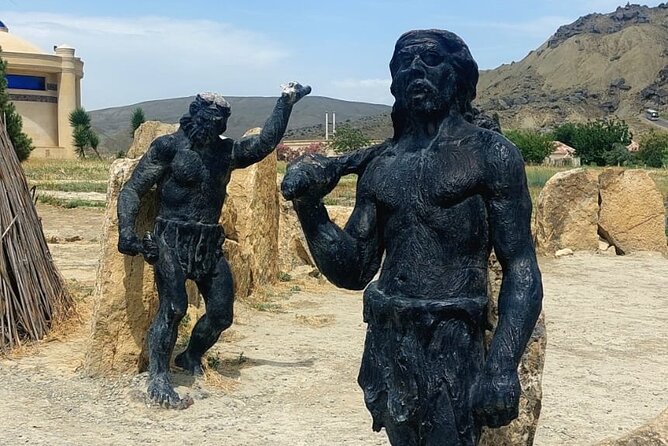
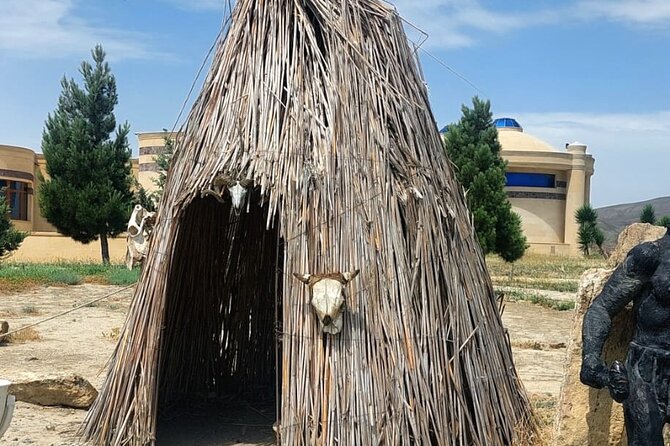
The Gobustan Reserve is the central stop, with about two hours set aside for the rock art and museum. This is the part of the day that gives the tour its strongest cultural value.
The petroglyphs record scenes from long stretches of early human life. You can expect to hear about hunting, fishing, bride kidnapping, rituals, and dances involving much of a tribe. These carvings are not just decorative marks. They offer clues about what people valued, feared, celebrated, and depended on.
I would give this stop your closest attention. The drawings are old, and some are easy to overlook if you are moving quickly. The meaning of a hunting scene or a group dance becomes clearer when your guide points out the figures and explains how the images fit into the wider story of the area.
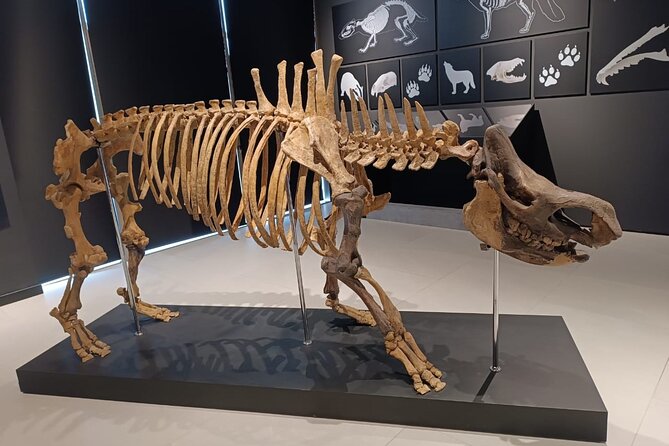
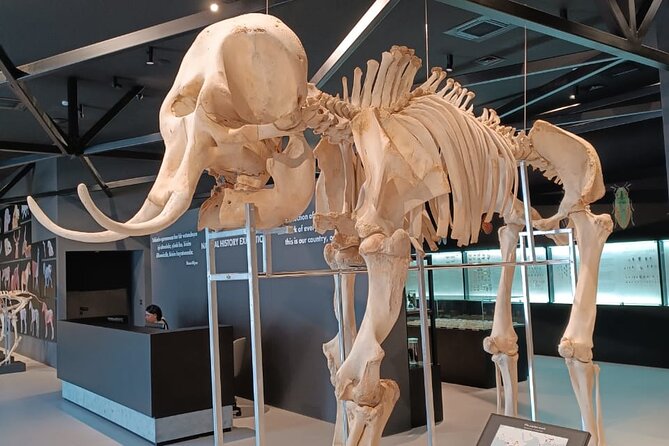
The included Gobustan museum ticket is a practical advantage. It gives the outdoor carvings some context before or after you see them, rather than leaving you to interpret every mark on your own. The supplied details do not specify the museum’s exact exhibits or how much time is spent inside, so your guide’s pacing will shape that part of the visit.
One especially unusual object is the stone called Gavaldash. It is described as more than 10,000 years old and is an important part of Gobustan’s story. Its presence gives the site a sound-related and cultural dimension beyond the carved panels. Ask your guide to explain how it was used and why it matters, since this is one of the more distinctive details of the visit.
Gobustan also contains evidence from later periods. At the foot of Boyuk-Dash, Livus Maximus, a centurion of the XII Lightning Legion, left an inscription in the first century AD. The tour presents it as the easternmost Roman inscription of its kind. That single mark changes the way you see the reserve. It is not only a record of prehistoric life, but also a place where later travelers and armies left their own trace.
You may also see short Arabic sayings, including one translated as came, prayed, left, along with images of men wearing turbans. These later inscriptions and figures make the site feel layered rather than frozen in one era. I like that contrast: early hunters and dancers share the same rock surfaces with Roman and Islamic-era marks.
Allow for sun, open ground, and walking on uneven surfaces. The supplied information says most people can participate, but it does not give a detailed accessibility description. If you need specific assistance with steps, paths, or walking distances, ask before booking.
Mud volcanoes: Azerbaijan’s bubbling clay country
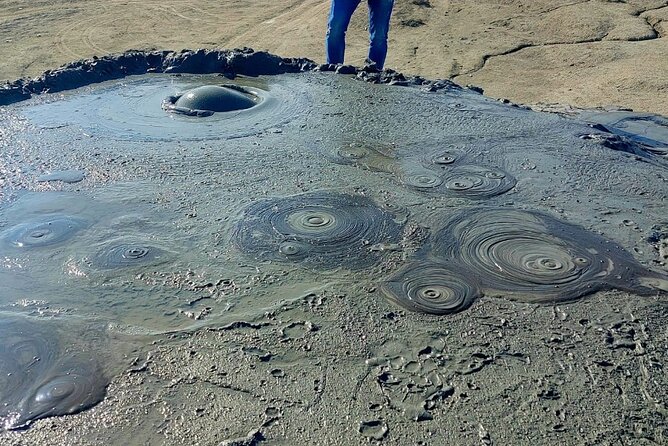
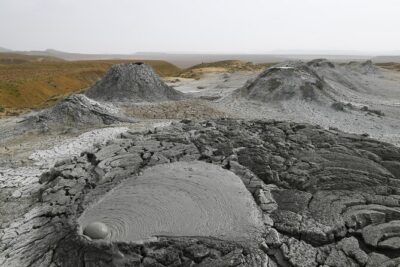
The mud-volcano stop lasts about an hour. Along the approach, you may notice small volcanic cones, and sometimes smoke or bubbling clay can be seen from a distance. The scenery is very different from the rock-art reserve, which is exactly why the pairing works.
These are mud volcanoes, not hot lava volcanoes. The spectacle comes from clay and gases pushing up through the ground, creating cones and pools with an unusual, often unsettled appearance. The supplied information does not promise a particular level of bubbling on the day you visit, so keep expectations sensible. You might see active bubbling or smoke, but natural activity can vary.
The route includes payment for an off-road car, an important detail. The mud volcanoes are reached by a rougher approach, and the dedicated vehicle makes the stop possible without asking the main tour vehicle to handle every part of the road. The listing also says admission to the mud-volcano stop is not included, while all fees and taxes are separately excluded. Confirm the exact extra charge before departure.
I would treat this as a short, visual stop rather than a full nature walk. You get time to look at the cones, take photographs, and hear about the region’s geology. The hour is enough for a taste, but not so long that the unusual terrain takes over the entire day.
Wear shoes you do not mind using outdoors. No special clothing advice is supplied, so I would simply choose practical footwear and avoid anything precious. Keep a respectful distance from bubbling mud and follow your guide’s instructions around the cones.
The mud volcanoes are the tour’s most playful element. Gobustan asks you to think about ancient people and their marks on stone. The volcanoes ask you to watch the ground itself behave strangely. That change of mood helps keep the five-hour schedule lively.
Bibi-Heybat Mosque and the old oil field
The final two stops are short, each lasting about 20 minutes, but they add useful context to Baku’s story.
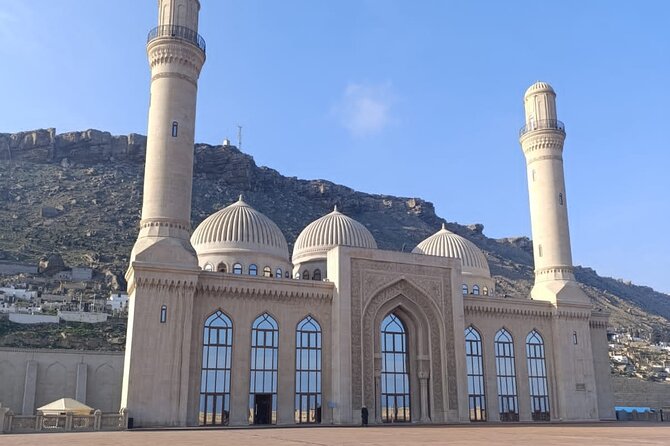
Bibi-Heybat Mosque is described as an ancient mosque and a pearl of Islamic architecture. The visit is free, so there is no admission cost to plan for. With only 20 minutes scheduled, expect a brief look rather than a long architectural study. Your guide can help you focus on the mosque’s place in Azerbaijan’s religious and cultural life.
Dress and behavior should be respectful at any mosque. The supplied information does not give a formal dress code, opening schedule, or interior access details, so do not assume that every part of the building will be open during your visit. Use the short stop to see the setting, hear the background, and ask what makes Bibi-Heybat important.
The oil-well stop shifts the story from faith to industry. In 1846, an oil well was drilled in the Bibi-Heybat area, described here as the world’s first oil well. You will see oil pumps connected to Azerbaijan’s oil boom and its place in modern history.
This is a quick stop, but it helps explain why Baku became so important. The pumps are not merely industrial objects. They point to the petroleum wealth that changed the city and influenced events far beyond Azerbaijan. If you have already visited Baku’s modern streets and grand buildings, this stop gives you a useful reason for part of that development.
The mosque and oil well are close enough in the schedule to feel like a final chapter rather than separate excursions. One reflects spiritual tradition. The other reflects industrial power. Together they prevent the day from being only an ancient-history outing.
A few more ways to spend a day out of Baku
- Baku: Guba, Shahdag, Laza & Lunch w/ Free City & Night Tour
★ 4.8 · 1,455 reviews - Shamakhi And Gabala Tour (All inclusive)
★ 5.0 · 815 reviews - From Baku: Gabala and Shamakhi Tour (Free Baku City Tour)
★ 4.8 · 695 reviews - Baku: Candy Cane, Guba, Khinaliq village with Homemade Lunch
★ 4.9 · 519 reviews
The guide’s role: stories matter here
This experience depends heavily on the guide. The supplied feedback repeatedly praises Jabrail for warmth, professionalism, care, and clear communication. One account describes him as going beyond the basic schedule to make the day memorable, while another emphasizes that there were no communication problems or misunderstandings.
That is important because the tour covers subjects that need translation into plain language. Gobustan’s images, the Gavaldash, the Roman inscription, Arabic sayings, Bibi-Heybat, and oil production all belong to different periods. A guide who explains the connections can turn a list of stops into a coherent story.
The guide also says the experience can be adapted to your interests, age, and preferences. That is a useful promise for a private tour, though the exact limits of customization are not stated. If you care most about archaeology, Islamic architecture, or oil history, tell the guide at the start so the explanations can lean in that direction.
I would also ask how the two-hour Gobustan visit will be divided between the museum and outdoor reserve. The ticket is included, but the information does not set out the exact order or time at each part. A quick question at the beginning can help you plan your attention.
What the $65.55 price includes
At $65.55 per person, the cost covers several practical items:
- Air-conditioned vehicle
- Bottled water
- Gobustan museum tickets
- Payment for the off-road car to the mud volcanoes
- Private participation for your group
- Pickup offered, with the start and end point at Nizami Garden
The private format is the biggest value factor. You are not sharing the experience with a large mixed group, and you can direct questions to your own guide. That is especially useful at Gobustan, where a hurried group can make the carvings feel like a series of quick stops.
The price does not include lunch, all fees and taxes, or the admission charge listed for the mud volcanoes. You should budget for those extras. Since the whole tour lasts about five hours and lunch is not supplied, you may want to eat before departure or plan a meal after returning to Baku.
Bottled water is included, which is a small but welcome touch for an outdoor morning. The air-conditioned vehicle also matters because the route combines a city departure with open-air sites. The information does not specify the vehicle model or maximum group size, so ask if that detail is important to you.
Timing, pickup, and cancellation details
The meeting point is Nizami Garden in Sabayil, Baku, with a 9:00 am start. The experience ends back at the same meeting point. Pickup is offered, but the supplied details do not explain the exact pickup radius or whether hotel pickup is automatic, so confirm that point when booking.
The tour is near public transportation, which gives you another way to reach the start point. Confirmation is received at the time of booking. Most people can participate, although no detailed accessibility information is provided.
Free cancellation is available if you cancel at least 24 hours before the local start time. A cancellation within 24 hours is not refunded, and changes within that period are not accepted. This is a straightforward policy, but the cutoff matters if your Baku plans are still changing.
The experience is often reserved far ahead, with average bookings made 203 days before the date. That does not guarantee that every date will sell out, but it suggests you should not leave a preferred morning until the last minute, especially if your visit to Baku is short.
Who will like this Gobustan tour
I would recommend this outing if you want several sides of Azerbaijan in one morning. It suits you especially well if:
- You enjoy archaeology and early human art.
- You want a private guide rather than a large group.
- You like unusual natural sights, including bubbling mud and small volcanic cones.
- You want some religious and industrial history alongside Gobustan.
- You have about five hours available from Baku.
- You value explanation and conversation more than a simple transfer between sights.
Families may appreciate the mix of subjects, since the mud volcanoes give the day a visual change from the rock carvings. Older visitors and anyone with mobility concerns should ask for details about walking surfaces and access before booking, because the information only confirms that most people can participate.
This may not be the right choice if you want a slow, full-day archaeological visit or a long meal included in the schedule. The two 20-minute city stops are brief, and the mud volcano admission is extra. You are paying for a compact private route, not an all-inclusive full-day excursion.
Final verdict: should you book it?
I would book this tour if you want an efficient, well-rounded introduction to the area outside Baku. Gobustan is the main reason to go, with its ancient carvings, Gavaldash, Roman inscription, Arabic sayings, and glimpses of early ritual life. The mud volcanoes then add a memorable natural oddity, while Bibi-Heybat and the oil well explain two later forces that shaped Azerbaijan.
The strongest reason to choose this particular experience is the private format and the guide’s praised warmth and care. Before paying, confirm the mud-volcano admission charge, pickup details, and how much time is spent inside the museum. If those points suit your plans, $65.55 per person is reasonable for a private, air-conditioned half-day with museum admission and off-road transport included.
FAQ
How long does the tour last?
The experience lasts approximately five hours.
What time does the tour begin?
The tour starts at 9:00 am.
Where does the tour start and finish?
It starts at Nizami Garden in Sabayil, Baku, and ends back at the same meeting point.
Is pickup offered?
Yes, pickup is offered. The exact pickup arrangements should be confirmed when booking.
Is this a private tour?
Yes. Only your group participates.
Is Gobustan museum admission included?
Yes. Tickets to the Gobustan museum are included.
Is transportation to the mud volcanoes included?
An air-conditioned vehicle is included, and payment for the off-road car to the mud volcanoes is included.
Is mud-volcano admission included?
No. Admission to the mud-volcano stop is listed as not included.
Is lunch included?
No. Lunch is not included.
Can I cancel for a full refund?
Yes, if you cancel at least 24 hours before the experience start time. Cancellations within 24 hours are not refunded.
Recently added around Baku
- Heartbeat of Baku: Old & Modern City Walk (Group or Private)★ 5.0 · 3 reviews
- Baku: Secret Tour with Surprise Activity★ 5.0 · 3 reviews
- From Baku: Shahdag Mountain Resort Day Trip★ 5.0 · 3 reviews
- Full Day Guided Tour of Shamakhi and Gabala★ 5.0 · 3 reviews
- Guba and Khinaligh Private Tour★ 5.0 · 3 reviews
- Guba and Shahdag Tour with Guide★ 5.0 · 3 reviews
- Lahij – village of masters★ 4.5 · 3 reviews
- Gobustan & Mud Volcano★ 4.5 · 3 reviews
Gobustan & Mud Volcano Tours, compared.
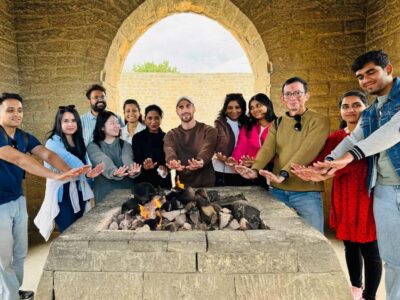
Gobustan, Mud Volcano, Fire Mount, Temple Lunch Entry
Read our review →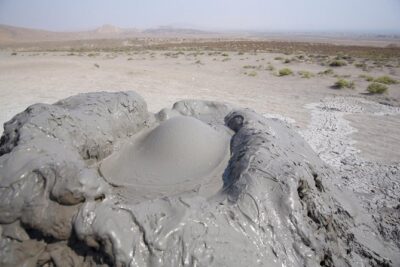
BEST Gobustan, Volcanoes & Absheron Fire Tour (Group or Private)
Read our review →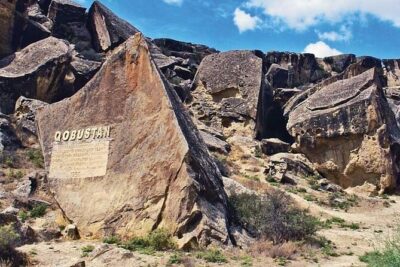
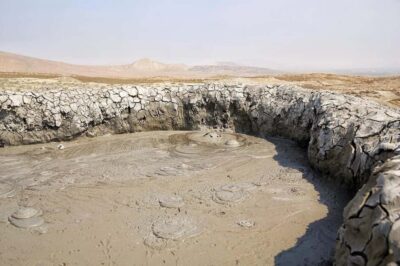
Gobustan, Volcanoes, Fire Temple and Yanardag Day Trip
Read our review →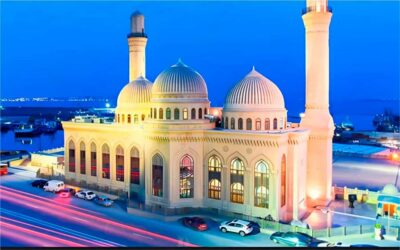
Gobustan-Mud Volcan-Fire Temple and Mountain Tour/Entrance inc
Read our review →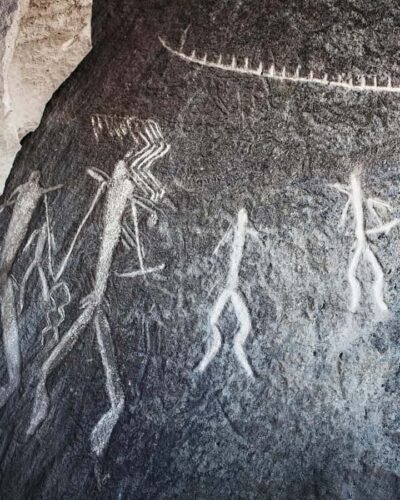
Gobustan Mud Volcanoes Temple & Entry tickets included
Read our review →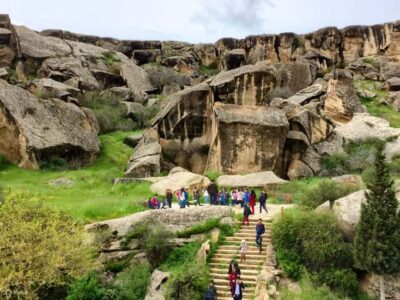
Gobustan-Absheron Tour with Hotel PICK UP and DROP OFF
Read our review →Browse the lists this tour appears in