
Reviewed · GOBUSTAN & MUD VOLCANO TOURS
Lunch included Qobustan, Mud Vulcano, Ateshgah Temple & Yanardag Fire Mountain
Ancient carvings, bubbling mud, and living fire. This seven-hour private trip packs several of Azerbaijan’s most unusual sights into one day beyond Baku. I like the mix of 5,000 to 40,000-year-old rock art and rare mud volcanoes, and I like that round-trip hotel transport, entrance fees, lunch, and a private guide are included. The main drawback is the rough road to the volcanoes, which means leaving the comfortable vehicle for an old Soviet Lada.
The route also gives you a useful taste of Azerbaijan’s religious and geological story. Guide Fahad earned praise for being informative, kind, and attentive, even opening the car door for his guest. Still, the mud volcano stop can feel brief, so you should book this tour for variety and convenience rather than long, unhurried visits at every site.
In This Review
- Key points to know before booking
- Why this Baku day trip works
- Gobustan’s ancient carvings and stone shelters
- The old Soviet Lada and Gobustan’s mud volcanoes
- Azerbaijani buffet lunch near Ateshgah
- Ateshgah Fire Temple and the old fire traditions
- Yanar Dag’s flame on the Absheron Peninsula
- Transport, timing, and the value of a private guide
- What to pack and how to set your expectations
- Who should book this experience?
- FAQ
- What time does the tour start?
- How long does the experience last?
- Is lunch included?
- Is this a private tour?
- How far is Gobustan from Baku?
- Do I ride the same vehicle to the mud volcanoes?
- What happens if bad weather cancels the tour?
Key points to know before booking
- Four very different sights in one day: Ancient carvings, active mud volcanoes, a fire temple, and a natural gas flame all appear on the route.
- Gobustan is the cultural centerpiece: The reserve contains more than 6,000 engravings, caves, settlements, and burial remains.
- The Lada ride is part of the experience: The final road to the mud volcanoes is poor, so you switch from the air-conditioned vehicle to an old Soviet car.
- Lunch is included near Ateshgah: Expect a local Azerbaijani buffet, useful for tasting several dishes without choosing from an unfamiliar menu.
- Private transport keeps the day flexible: Only your group takes part, with hotel pickup and drop-off in Baku.
- The $180 price buys convenience: For one person, it is not a budget outing, but the fee includes a driver-guide, private vehicle, admissions, lunch, water, and small souvenirs.
Why this Baku day trip works
Baku is an easy city to enjoy on foot, but some of Azerbaijan’s most distinctive sights sit well outside the center. Gobustan is about 60 kilometers from Baku, while Ateshgah and Yanar Dag lie on the Absheron Peninsula. Seeing them independently would require arranging several rides and managing separate entrance fees.
This tour solves that problem in a single day. You leave Baku at 10:00 a.m. and travel with a private driver-guide, then return after visiting four major stops. The total touring time is listed at about seven hours, though road time between the sites forms a meaningful part of the day.
I especially like the range of the route. Gobustan introduces you to prehistoric human life. The mud volcanoes show Azerbaijan’s strange geology. Ateshgah explains the area’s old fire worship traditions, and Yanar Dag brings the story into the present with a flame that burns from natural gas.
That variety also means the schedule moves quickly. You will not get a slow, museum-heavy day with long periods for quiet reflection. Instead, you get a well-packed introduction to several places that are difficult to connect on your own.
More Yanar Dag burning mountain trips:
- Baku: Gobustan, Mud Volcano, Fire Mount, Temple Lunch Entry
★ 4.9 · 3,246 reviews - Baku: Gobustan, Volcanoes, Fire Temple and Yanardag Day Trip
★ 4.7 · 433 reviews - Gobustan & Mud, Fire Temple, Burning Mountain (Group & Private)
★ 4.5 · 418 reviews
Gobustan’s ancient carvings and stone shelters
Your first major stop is Gobustan Rock Art Museum and Reserve, about 60 kilometers from central Baku. The area is included on the UNESCO World Heritage list, and its importance comes from the sheer spread of evidence left by early inhabitants.
More than 6,000 rock engravings are recorded here. They date from roughly 5,000 to 40,000 years ago, giving the site an unusually broad time span. The carvings are only part of the story. You can also see remains linked to caves, settlements, and burials.
The setting matters. Gobustan was used intensively during the wetter period after the last Ice Age, when conditions supported human communities in this otherwise dry part of Azerbaijan. The traces here help explain how early people lived, moved, and recorded their world.
Plan on about 90 minutes at the museum and reserve. That is enough time for a guided introduction and a look at the principal remains, but it is not an entire archaeological day. I would pay close attention to your guide here, since the meaning of the carvings is easier to grasp with context than by simply looking at the rocks.
The site involves walking outdoors and uneven ground may be present, so the stated requirement for moderate physical fitness is worth taking seriously. Wear practical shoes and clothing suited to the weather. The tour operates in all weather conditions unless poor weather forces cancellation, so do not dress only for Baku’s city streets.
The old Soviet Lada and Gobustan’s mud volcanoes
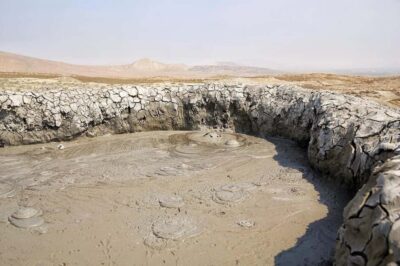
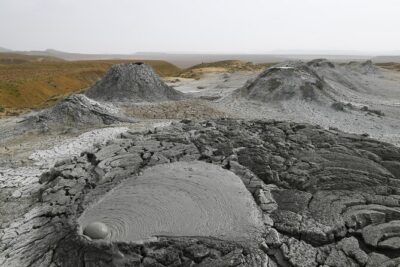
Azerbaijan is famous for its mud volcanoes, and the visit adds a welcome change of pace after the ancient rock art. These formations are not lava volcanoes. They push mud and gases from below the ground, creating a strange, bare setting that feels very different from Gobustan’s carvings.
The final road is the catch. According to the tour provider, it is too poor for the regular comfortable vehicle, so you switch to an old Soviet Lada for the roughly five-kilometer trip to the volcanoes and back. One guest described the ride as a dusty safari, which is a fair way to think of it.
You should not expect a polished off-road vehicle or a smooth transfer. The Lada is old, the road is rough, and dust is part of the deal. That inconvenience is also one of the day’s most memorable details. You are not being given a luxury version of the site, but you are getting there in a vehicle suited to the road.
The listed visit lasts about 40 minutes. That is enough to see the formations and take photographs, but it can feel rushed if the volcanoes are your main reason for booking. One review specifically wished for more time here, so mention this preference when planning your expectations.
Wear shoes that can handle dirt and bring the bottled water included in the tour. If you are sensitive to jolting rides or want a long, quiet visit, this is the stop to consider carefully. If you enjoy unusual transport and geological oddities, the Lada ride may become a highlight.
Azerbaijani buffet lunch near Ateshgah
Lunch is served near Ateshgah Fire Temple and is included in the price. It is described as a local Azerbaijani buffet, which gives you a practical chance to sample a variety of dishes rather than order one meal from a menu.
The meal is scheduled for about an hour. One review called it decent and useful for trying different local foods. That is the right expectation: this is a convenient regional meal built into a sightseeing day, not a separate fine-dining event.
I like having lunch here because it breaks up the long ride from Gobustan to the Absheron sites. You can eat before visiting the temple and fire mountain, rather than trying to find food between scheduled stops. Bottled water is also included.
Dinner is not included, so plan for your evening meal back in Baku. The package does include lunch, water, two fridge magnets per person, transport, the driver-guide, and museum entrance fees. Those extras make the day simpler, especially if you prefer one paid experience instead of several small expenses.
More Ateshgah fire temple trips:
- Gobustan-Mud Volcan-Fire Temple and Mountain Tour/Entrance inc
★ 5.0 · 267 reviews - Gobustan, Mud volcanoes, Fire temple, Fire mountain PRIVATE TOUR
★ 5.0 · 47 reviews - Gobustan & Mud, Fire Temple, Burning Mountain, H.A. Center
★ 4.6 · 46 reviews - Ateshgah Fire temple and Burning mountain tour
★ 4.5 · 42 reviews
Ateshgah Fire Temple and the old fire traditions
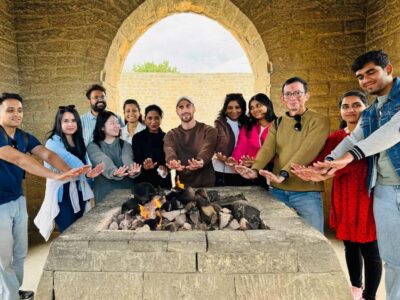
Ateshgah is one of Azerbaijan’s most striking historical sites. The temple near Surakhani was used as a Hindu and Zoroastrian place of worship, and its story is tied to natural flames that once appeared through several openings in the ground.
Historical accounts refer to seven holes with burning fire. Before the Indian fire temple was built at the end of the 17th century, local people already worshiped at the site because of these flames. The present complex helps you see how local beliefs and outside religious traditions met in this part of the Absheron Peninsula.
The visit is paired with lunch and forms one of the longer portions of the afternoon. The timing listed for this section is one hour, though the wider schedule gives two hours for the temple and Yanar Dag together. Your exact pacing may depend on your guide and the time spent eating.
The temple is valuable because it adds human meaning to the natural-fire theme. Gobustan shows how early communities marked stone. Ateshgah shows how later communities built religious practice around fire. The experience is stronger if you listen for that connection instead of treating the temple as just another photo stop.
You should also remember that the site is not simply an ancient Azerbaijani temple in the narrow sense. Its history includes Hindu and Zoroastrian use, as well as local fire worship. That mix is part of what makes it important.
Yanar Dag’s flame on the Absheron Peninsula
The last major stop is Yanar Dag, or Fire Mountain. It is a natural gas fire burning continuously on a hillside near the Caspian Sea and Baku. Flames rise about three meters from a thin, porous sandstone layer.
This is a small but powerful sight. There is no enormous crater or dramatic eruption. Instead, you see fire coming directly from the hillside, a simple effect with an unusual cause. In a country often associated with fire, Yanar Dag gives that idea a physical form.
The stop is particularly useful after Ateshgah. At the temple, fire shaped worship and architecture. At Yanar Dag, the flame is still a natural feature, burning from gas beneath the ground. Together, the two sites explain why Azerbaijan has long been called the Land of Fire.
The combined time for Ateshgah and Yanar Dag is listed as about two hours. That should give you a reasonable look at both, though this remains a structured day rather than a free-form outing. Keep an eye on the clock if you want time for photographs at each place.
The area is outdoors, and the tour runs in all weather conditions unless poor weather requires a change or cancellation. Dress for the conditions rather than relying on the assumption that the fire site will always feel warm. Bring sensible shoes and a light layer if needed.
Transport, timing, and the value of a private guide
The tour starts at 10:00 a.m. and includes pickup and drop-off at your Baku hotel. You ride in an air-conditioned vehicle for the main journey, with private transportation reserved for your group. That matters because the attractions are spread out and public transport would make this route difficult to handle in one day.
A private tour also gives you a direct line to your guide. You can ask about the carvings, fire worship, or the geology as you go, rather than waiting for a fixed group explanation. Fahad was praised for being informative and considerate, including opening the car door for his guest. The guide assigned to you may differ, but that gives you a useful sense of the service standard reported for the experience.
The private format is best for couples, families, or small groups who want to set their own pace within a fixed route. It is less attractive if you are traveling alone on a tight budget. The listed price is $180 per person, and the private arrangement can make that reasonable for a group sharing the benefits. For one person, the cost is harder to justify unless convenience is your top priority.
The tour has a 4.3 rating from three reviews, which suggests a generally positive but not flawless experience. The strongest praise goes to the guide, the mix of sights, and the enjoyable lunch. The clearest criticism is the short mud volcano visit, along with the unavoidable rough vehicle transfer.
What to pack and how to set your expectations
This is an outdoor sightseeing day, not just a museum visit. You should bring:
- Comfortable walking shoes
- Clothing suitable for changing weather
- Water, although bottled water is supplied
- A camera or phone for the carvings, volcanoes, temple, and flames
- Clothing and footwear you do not mind getting dusty during the Lada ride
A moderate level of physical fitness is required. The information provided does not give a detailed accessibility description, so anyone with mobility concerns should confirm whether the outdoor surfaces and vehicle change will work for them before booking.
Do not assume every stop will receive equal time. Gobustan gets about 90 minutes, the mud volcanoes about 40 minutes, and the temple and fire mountain share roughly two hours. Road travel and lunch fill out the rest of the seven-hour schedule.
The free cancellation rule is straightforward: cancel at least 24 hours before the 10:00 a.m. start for a full refund. Changes made inside that period are not accepted, and poor weather may lead to another date or a full refund. Cutoff times follow local time in Azerbaijan.
Who should book this experience?
I would recommend this tour if you want a broad introduction to Baku’s nearby cultural and geological sights without arranging separate drivers. It suits people who value hotel pickup, a private guide, included admissions, and a planned lunch more than the lowest possible price.
It is also a good choice if you want to see places that feel genuinely different from central Baku. Gobustan and the mud volcanoes provide the most unusual scenery, while Ateshgah and Yanar Dag give the day its strongest historical thread.
I would hesitate if you want extended time at each site, dislike rough roads, or are mainly interested in the mud volcanoes. In that case, the 40-minute stop and old Lada transfer may disappoint. Ask your guide at the start of the day if there is any flexibility, but do not count on a long visit.
For most first-time visitors with one free day outside Baku, I think the package offers good practical value. You get four distinct experiences, lunch, transport, entrance fees, water, and a private guide in about seven hours. Book it for variety, local context, and convenience, and treat the dusty Soviet-car ride as part of the adventure rather than a flaw to be hidden.
FAQ
What time does the tour start?
The tour starts at 10:00 a.m. Local hotel pickup and drop-off in Baku are included.
How long does the experience last?
The tour lasts approximately seven hours.
Is lunch included?
Yes. A local Azerbaijani buffet lunch near Ateshgah Fire Temple is included. Dinner is not included.
Is this a private tour?
Yes. Only your group participates, and private transportation is provided.
How far is Gobustan from Baku?
Gobustan is located about 60 kilometers from Baku city center.
Do I ride the same vehicle to the mud volcanoes?
No. Because the road is in poor condition, you change from the regular air-conditioned vehicle to an old Soviet Lada for the route to the mud volcanoes and back.
What happens if bad weather cancels the tour?
If poor weather causes cancellation, you will be offered a different date or a full refund. For your own cancellation, you must cancel at least 24 hours before the start time to receive a full refund.
More All-Inclusive Day Tours
- Shamakhi And Gabala Tour (All inclusive)
★ 5.0 · 815 reviews - Baku: Candy Cane, Guba, Khinaliq village with Homemade Lunch
★ 4.9 · 519 reviews - Baku: Guba & Sahdag Tour Lunch included and Laza Waterfall
★ 4.9 · 506 reviews - Baku: Guba Khinalig & Candy Cane Tour with Homemade Lunch
★ 4.9 · 447 reviews
More Gobustan & Mud Volcano Tours
- BEST Gobustan, Volcanoes & Absheron Fire Tour (Group or Private)
★ 5.0 · 1,254 reviews - Gobustan and Absheron tour (All inclusive)
★ 5.0 · 1,014 reviews - Baku: Gobustan Absheron Tour Entry Tickets included
★ 4.9 · 329 reviews - Baku:Gobustan Mud Volcanoes Temple & Entry tickets included
★ 4.8 · 178 reviews
Recently added around Baku
- Heartbeat of Baku: Old & Modern City Walk (Group or Private)★ 5.0 · 3 reviews
- Baku: Secret Tour with Surprise Activity★ 5.0 · 3 reviews
- From Baku: Shahdag Mountain Resort Day Trip★ 5.0 · 3 reviews
- Full Day Guided Tour of Shamakhi and Gabala★ 5.0 · 3 reviews
- Guba and Shahdag Tour with Guide★ 5.0 · 3 reviews
- Lahij – village of masters★ 4.5 · 3 reviews
- Guba and Khinaligh Private Tour★ 5.0 · 3 reviews
- Gobustan & Mud Volcano★ 4.5 · 3 reviews
Gobustan & Mud Volcano Tours, compared.
Gobustan, Mud Volcano, Fire Mount, Temple Lunch Entry
Read our review →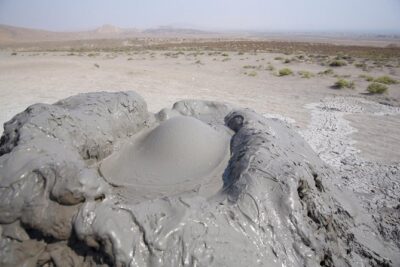
BEST Gobustan, Volcanoes & Absheron Fire Tour (Group or Private)
Read our review →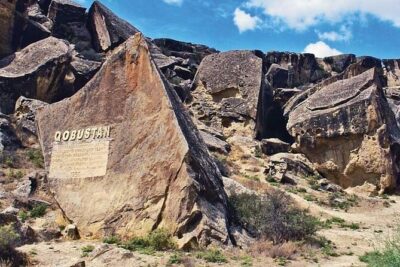
Gobustan, Volcanoes, Fire Temple and Yanardag Day Trip
Read our review →
Gobustan-Mud Volcan-Fire Temple and Mountain Tour/Entrance inc
Read our review →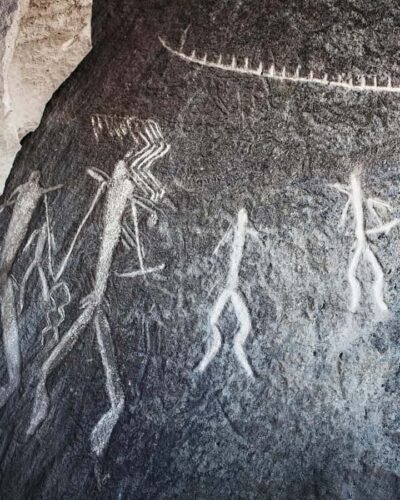
Gobustan Mud Volcanoes Temple & Entry tickets included
Read our review →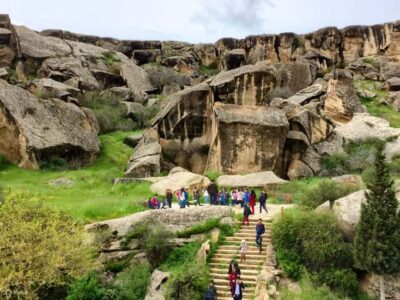
Gobustan-Absheron Tour with Hotel PICK UP and DROP OFF
Read our review →Browse the lists this tour appears in