
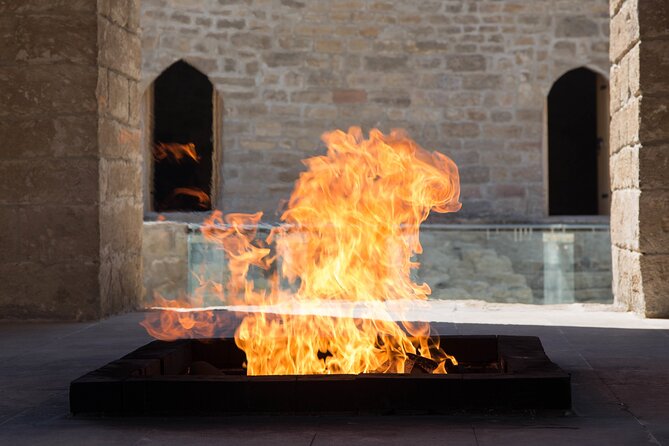
Reviewed · ATESHGAH FIRE TEMPLE TOURS
Ateshgah Fire Temple and Yanardag Fire Mountain Private Tour
Ancient flames still burn outside Baku. This private tour pairs the Ateshgah Fire Temple with Yanardag’s natural gas fire, giving you a compact lesson in Azerbaijan’s religious past and unusual geology. I like the private vehicle and flexible guide attention, and I like that the two sites create a clear story rather than feeling like unrelated stops. The main drawback is that admission costs extra, and driving takes a sizable part of the three-to-four-hour program.
This is a good afternoon choice if you want to leave central Baku without giving up a full day. Guides such as Aga, Fuad, and Anar have been praised for patient explanations, useful city advice, and smooth driving. Still, you should confirm the pickup point and expect a focused visit, not a slow, wide-ranging tour of the Absheron Peninsula.
In This Review
- Key points to know before you book
- Why these two fire sites belong together
- Reaching Ateshgah from central Baku
- Entering Ateshgah Fire Temple
- The long road to Yanardag
- Seeing the flame at Yanar Dag
- How good is the $55 value?
- The guide can make or break the visit
- Who will enjoy this private half-day trip?
- Timing, pickup, and cancellation advice
- Should you book Ateshgah and Yanardag?
- FAQ
- How long does the Ateshgah and Yanardag tour last?
- What are the two main stops?
- Is hotel pickup available?
- Is this a private tour?
- Is transportation included?
- Are entrance tickets included in the $55 price?
- How much driving is involved?
- Can most people participate?
- What is the cancellation policy?
Key points to know before you book
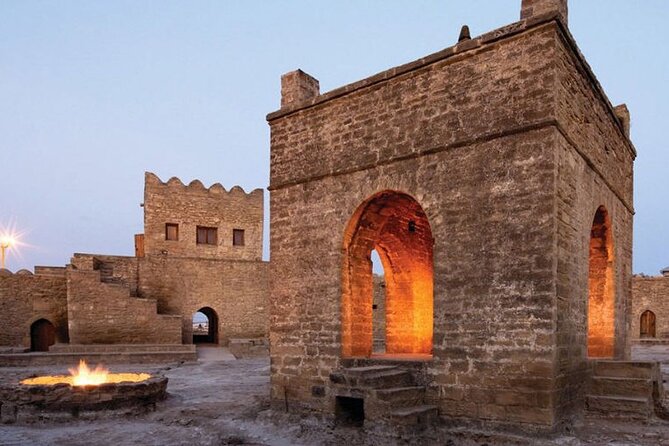
- Two very different fireside sights: Ateshgah is a human-built place of worship, while Yanardag is a natural gas flame on a hillside.
- Private touring keeps things simple: Only your group takes part, with an air-conditioned vehicle and an English-speaking guide.
- Plan on three to four hours: The city to Ateshgah takes about 30 minutes by car, then the road to Yanardag takes roughly 50 minutes.
- Budget about $64 per person in total: The tour costs $55, while the estimated combined entry fee is another $9.
- The temple rewards explanation: Its pentagonal layout, monk cells, central altar, and ties to Indian worshippers make a guide especially useful.
- Yanardag is a short, striking stop: The flame burns steadily because gas seeps from underground, with no mud or liquid flowing around it.
Why these two fire sites belong together
Baku is famous for its connection to fire, and this outing gives you two ways to understand that reputation. At Ateshgah, people built a sacred complex around a fire altar. At Yanardag, nature supplies the flame directly from gas beneath the ground.
That contrast is the heart of the experience. One stop is architectural and religious. The other is elemental and geological. You can see both in one half-day, then return to the city with time left for dinner or an evening walk.
The tour focuses on Zoroastrian traditions in Azerbaijan, but Ateshgah also reflects the presence of a Baku-based Hindu community connected with Sikhs. That detail matters because the temple was not simply an isolated Zoroastrian shrine. It was part of a wider network of merchants, pilgrims, and religious communities linked to the region.
I like this pairing because it gives you context without asking you to spend an entire day away from Baku. You get a meaningful excursion, but not a marathon.
More Yanar Dag burning mountain trips:
- Baku: Gobustan, Mud Volcano, Fire Mount, Temple Lunch Entry
★ 4.9 · 3,246 reviews - Baku: Gobustan, Volcanoes, Fire Temple and Yanardag Day Trip
★ 4.7 · 433 reviews - Gobustan & Mud, Fire Temple, Burning Mountain (Group & Private)
★ 4.5 · 418 reviews
Reaching Ateshgah from central Baku
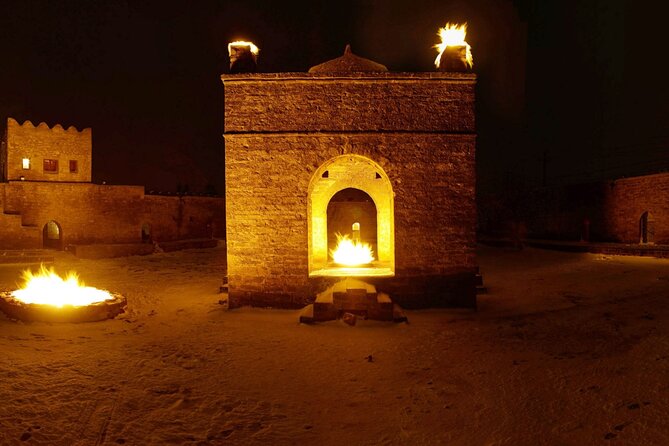
The first drive from central Baku to the Fire Temple takes about 30 minutes. Pickup is offered from a hotel or an agreed meeting point, though the stated meeting location is on the road to Nizami Badalan school in Aşurlu. Confirm the exact pickup arrangement when you book, especially if you are staying outside the city center.
The air-conditioned vehicle is a practical advantage. The Absheron Peninsula can be warm and exposed, and having a private ride is easier than piecing together public transportation for two separate sites. Since this is a private activity, you do not have to wait for a large group to gather or adjust your pace around strangers.
The tradeoff is time. With roughly 30 minutes to the temple, about 50 minutes between the temple and Yanardag, and the return drive, a fair part of the experience happens on the road. That is normal for this pair of sites, but you should not expect three or four full hours at the monuments.
Entering Ateshgah Fire Temple
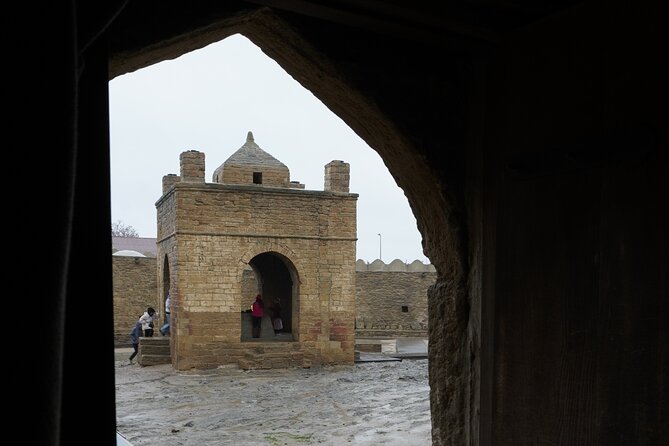
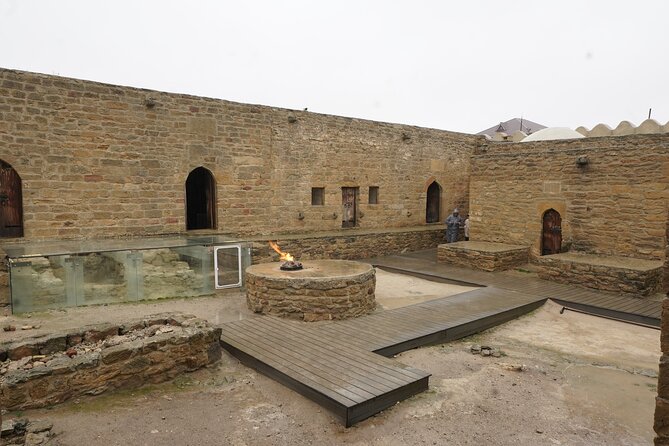
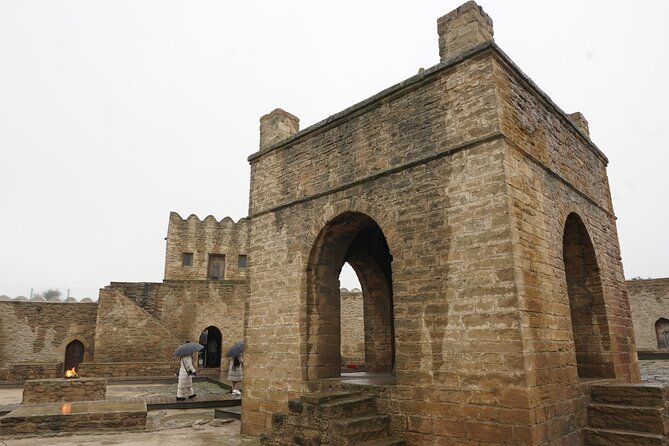
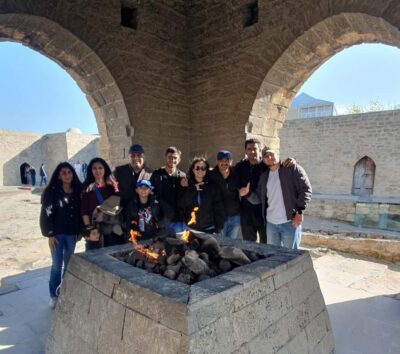
Ateshgah is a pentagonal complex built around a central altar. Its courtyard is enclosed by small cells associated with monks and worshippers, while a four-pillared altar occupies the middle. The shape makes the site easy to understand once you enter: you are looking at a religious compound organized around fire.
The temple was used as a holy place by fire worshippers and was later abandoned in the late 19th century. The decline of the Indian population in the area is given as a likely reason. That connection to Indian worshippers adds an important layer to the visit, particularly if you had assumed the site represented only one local religious tradition.
You are scheduled to spend about one hour here. That is enough time to walk through the complex, study the cells, see the central altar, and listen to an explanation from your guide. The stop is not huge, so a full hour should feel useful rather than rushed.
I would pay close attention to how the building frames the central fire. The architecture makes the flame the focus, while the surrounding cells show that this was a place where people stayed, prayed, and made a pilgrimage. The site becomes much more interesting when you see it as a working religious center rather than just an old stone courtyard.
Ateshgah was nominated for the UNESCO World Heritage List in 2007 and is protected as a state historical-architectural reserve. That status does not turn the visit into a formal UNESCO site, but it tells you the complex is considered important to Azerbaijan’s cultural record.
One practical note: the temple admission is not included in the tour price. The estimated combined ticket for Ateshgah and Yanardag is $9 per person. Bring that cost into your planning so the $55 headline price does not catch you by surprise.
The long road to Yanardag
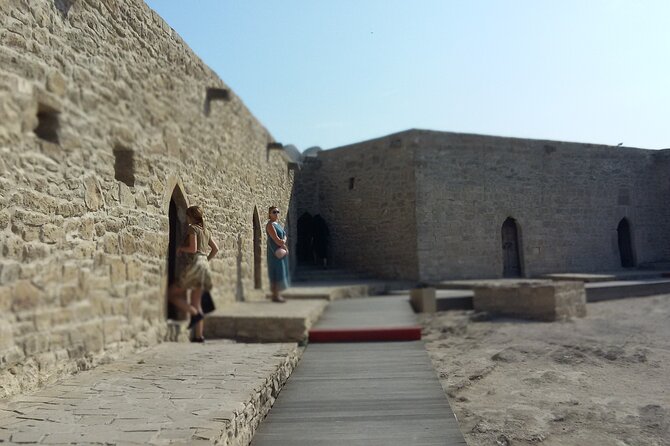
The drive from Ateshgah to Yanardag takes about 50 minutes. This is the longest transfer of the outing, and it can make the tour feel more like a half-day excursion than a quick city add-on.
A private car helps here. You can ask your guide questions during the drive, and you return directly to the original meeting point or your city-center hotel after the final stop. The guide can also offer city tips, a service praised in connection with Aga and other members of the provider’s team.
The timing also means you should avoid booking this tour too close to another fixed appointment. Pickup time is included in the total duration, but traffic and the two intersite drives leave little room for delay. If you have a flight, dinner reservation, or evening performance, leave a generous buffer.
More Ateshgah fire temple trips:
- Gobustan-Mud Volcan-Fire Temple and Mountain Tour/Entrance inc
★ 5.0 · 267 reviews - Gobustan, Mud volcanoes, Fire temple, Fire mountain PRIVATE TOUR
★ 5.0 · 47 reviews - Gobustan & Mud, Fire Temple, Burning Mountain, H.A. Center
★ 4.6 · 46 reviews - Ateshgah Fire temple and Burning mountain tour
★ 4.5 · 42 reviews
Seeing the flame at Yanar Dag
Yanardag, also called Fire Mountain, is a natural gas fire that burns continuously on a hillside of the Absheron Peninsula near the Caspian Sea. The flame is not a temple fire maintained by people. It comes from a steady seep of gas below the ground.
That distinction is what makes the second stop memorable. At Ateshgah, humans built a sacred setting around fire. At Yanardag, the earth itself produces the spectacle. The flame burns fairly steadily, and there is no mud or liquid flowing around it. This sets it apart from nearby mud volcano areas such as Lokbatan or Gobustan.
The planned visit lasts about 30 to 60 minutes. Your guide explains the site, and you have time to view the larger area. This is a shorter stop than Ateshgah, but that is sensible. Yanardag is a concentrated natural attraction, not a large complex with rooms and courtyards to explore.
You should keep your expectations measured. The appeal is not size. It is the odd sight of fire rising from a hillside in a region known for underground gas. In daylight, the effect may feel more restrained than a dramatic nighttime blaze, but the fact that it burns continuously gives the place its power.
Yanardag is also a state-protected conservation area. That protection helps preserve the natural feature and gives the stop more weight than a simple roadside flame. Your guide’s explanation is important here because the geology can otherwise be reduced to a quick photograph.
How good is the $55 value?
At $55 per person, this is not the cheapest possible way to see sites outside Baku, but the price is easier to justify if you value private transport. The fee covers a professional English-speaking guide and an air-conditioned vehicle. Entry tickets are separate, with an estimated combined cost of $9, bringing the likely total to about $64 per person before food or drinks.
The value improves for anyone who does not want to arrange transport independently. You get hotel or meeting-point pickup, a direct route to both attractions, explanations at the sites, and a return to the starting point. A private group also means you can ask questions without competing with a busload of people.
The value is less convincing if you only want to see a flame and take a quick photograph. Since driving takes a meaningful portion of the day, the tour works best when you care about the temple’s religious background and the difference between sacred fire and natural gas fire.
Food and drinks are not included. The program is short enough that this is not a serious problem, but you should eat before leaving or plan your next meal after returning to Baku.
The guide can make or break the visit
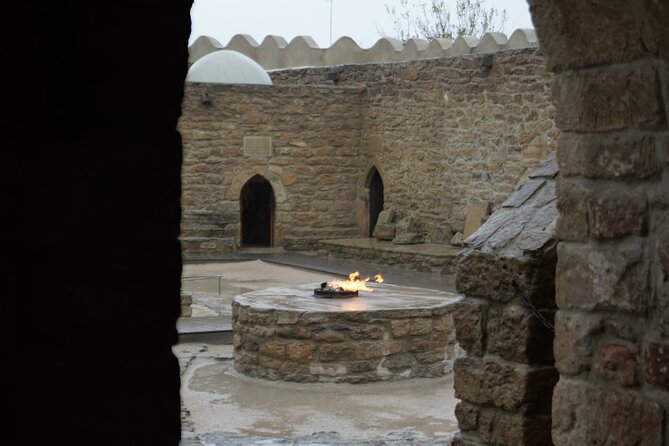
Ateshgah has enough historical and religious detail that a good explanation changes the experience. The central altar and surrounding cells are easy to see, but their meaning is less obvious without context about fire worshippers, Indian connections, and the site’s abandonment.
The strongest praise for the guiding comes through names including Aga, Fuad, and Anar. Aga is described as careful and clear when explaining the places visited, while Anar is praised for combining guiding and driving in a smooth, memorable day. Fuad is noted for helping with practical needs and being readily available.
You cannot guarantee a particular guide unless the provider confirms one, so treat those names as useful indications of the service style rather than a promise. The repeated themes are patience, clear explanations, helpful answers, and city advice. Those qualities are especially useful on a private tour because you can shape the conversation around your own interests.
A guide who answers questions well can also help you compare Ateshgah and Yanardag instead of treating them as two isolated attractions. Ask about the religious communities connected with the temple, the reason it was abandoned, and how the natural gas at Yanardag differs from mud volcano activity.
Who will enjoy this private half-day trip?
I would recommend this experience to first-time visitors who want a manageable introduction to the Absheron Peninsula. It also suits couples, families, and small groups who prefer a private car to public transportation or a large coach.
You will get the most from it if you enjoy cultural sites that need a little explanation. Ateshgah is not only a place to photograph. Its value comes from understanding who worshipped there, how the compound was arranged, and why fire mattered.
Yanardag is a good match for anyone interested in natural oddities. The steady underground gas flame gives you a memorable story to take home, even though the stop itself is brief.
This is less suitable if you want a full-day exploration of the peninsula or a broad survey of Azerbaijani history. It is also not the right choice if you dislike driving between stops. The route is efficient, but not compact.
Most people can participate, and the tour is near public transportation. Since the exact physical conditions at each site are not detailed, you should ask the operator if you have specific mobility concerns.
Timing, pickup, and cancellation advice
The total duration is approximately three to four hours, including pickup. The program finishes at the first meeting point or returns you to your city-center hotel, depending on the arrangement made in advance.
Confirmation is provided when you book. The activity is private, so only your group takes part. That makes it easier to keep the visit focused, but it also means you should communicate clearly about pickup details before the day begins.
Free cancellation is available if you cancel at least 24 hours before the start time. A cancellation within 24 hours is not refunded, and changes made inside that period are not accepted. Cutoff times follow local time in Azerbaijan.
Should you book Ateshgah and Yanardag?
Book it if you want a convenient, well-explained half-day outside Baku and you are happy to pay extra for private transport. The strongest reasons are the clear contrast between the man-made fire temple and the natural gas flame, plus the patient guiding style associated with Aga, Fuad, Anar, and the provider’s team.
Skip it if you want a longer excursion or if the $55 price feels high once the estimated $9 entry fee is added. For most first-time Baku visitors, though, this is a sensible way to see two distinctive Absheron sights without surrendering an entire day.
FAQ
How long does the Ateshgah and Yanardag tour last?
The total experience lasts approximately three to four hours, including pickup and the return to the original meeting point or city-center hotel.
What are the two main stops?
The tour visits Ateshgah Fire Temple, an ancient fire-worshipping complex, and Yanardag, a hillside where natural gas produces a continuously burning flame.
Is hotel pickup available?
Pickup is offered from a hotel or a defined meeting point. You should confirm the exact pickup arrangement when booking.
Is this a private tour?
Yes. Only your group participates in the activity.
Is transportation included?
Yes. The tour includes an air-conditioned vehicle and an English-speaking professional guide.
Are entrance tickets included in the $55 price?
No. Entry to the Fire Temple and Fire Mountain is not included. The estimated combined ticket price is $9 per person.
How much driving is involved?
The drive from central Baku to Ateshgah takes about 30 minutes. The drive from Ateshgah to Yanardag takes about 50 minutes, followed by the return journey to the meeting point or hotel.
Can most people participate?
The tour information states that most people can participate and that the activity is near public transportation. Specific accessibility details are not provided, so contact the provider if you have particular mobility needs.
What is the cancellation policy?
You receive a full refund if you cancel at least 24 hours before the experience start time. Cancellations and changes made less than 24 hours before departure are not accepted for a refund.
Recently added around Baku
- Heartbeat of Baku: Old & Modern City Walk (Group or Private)★ 5.0 · 3 reviews
- Full Day Guided Tour of Shamakhi and Gabala★ 5.0 · 3 reviews
- Baku: Secret Tour with Surprise Activity★ 5.0 · 3 reviews
- From Baku: Shahdag Mountain Resort Day Trip★ 5.0 · 3 reviews
- Guba and Shahdag Tour with Guide★ 5.0 · 3 reviews
- Lahij – village of masters★ 4.5 · 3 reviews
- Guba and Khinaligh Private Tour★ 5.0 · 3 reviews
- Gobustan & Mud Volcano★ 4.5 · 3 reviews
Ateshgah Fire Temple Tours, compared.
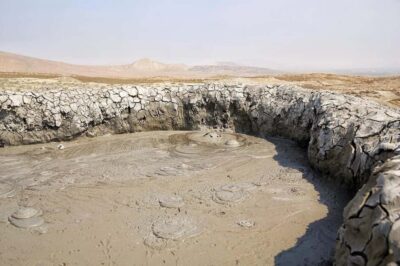
Gobustan, Volcanoes, Fire Temple and Yanardag Day Trip
Read our review →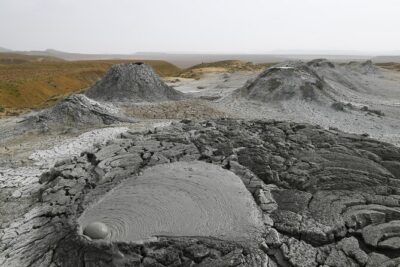
Gobustan-Mud Volcan-Fire Temple and Mountain Tour/Entrance inc
Read our review →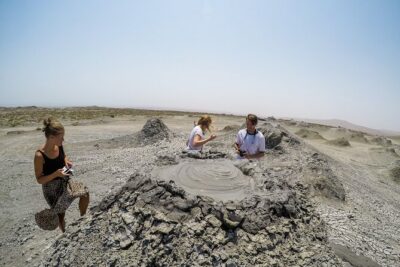
Gobustan, Mud volcanoes, Fire temple, Fire mountain PRIVATE TOUR
Read our review →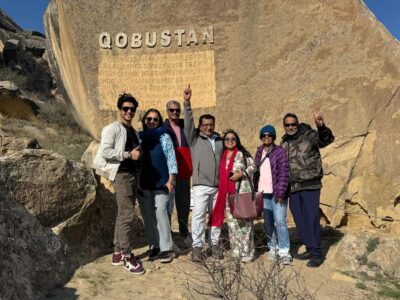
Gobustan & Mud, Fire Temple, Burning Mountain, H.A. Center
Read our review →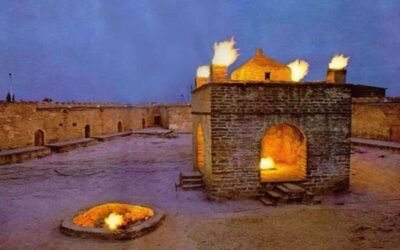
Gobustan, Mud Volcanoes, Fire Temple, & Yanar Dag Tour
Read our review →
Atashgah Fire Temple & Burning Mountain Half-Day Tour
Read our review →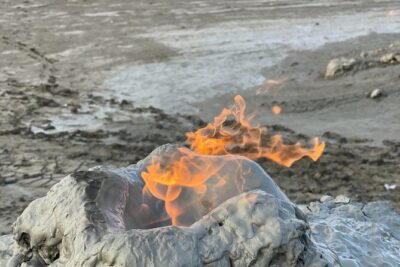
Qobustan rock arts, Mud Volcanoes, Fire temple Ateshgah, Yanardag
Read our review →Browse the lists this tour appears in