
Reviewed · ATESHGAH FIRE TEMPLE TOURS
Baku: Atashgah Fire Temple & Burning Mountain Half-Day Tour
Two fires explain Absheron better than one. This three-hour trip takes you from Baku to Ateshgah Fire Temple, where natural gas once fed sacred flames, then to Yanar Dag, a hill with fire still burning from the ground. I like the strong contrast between the stone temple and open-air flames, and I like that entry tickets, transport, and an English or Russian-speaking guide are included. The main concern is timing: this half-day outing may be joined to a longer group tour, which can create long waits and a late finish.
At $23 per person, the price looks good for two major Absheron sights with a guide and van transport. I would book it for the cultural context and unusual geology, but I would confirm the pickup time and group arrangements before paying, since poor coordination has caused serious delays for some customers.
In This Review
- Key points to know before you book
- Why these Absheron fires matter
- Ateshgah Fire Temple, a fortress built around flame
- Yanar Dag and the wall of fire
- The guide can make or break the visit
- The biggest problem is the afternoon schedule
- Is $23 good value?
- Who should take this tour?
- How to get the most from the three hours
- Should you book Baku City Tours?
- FAQ
- How long is the Atashgah and Yanar Dag tour?
- How much does the tour cost?
- Which sites does the tour visit?
- How far is Ateshgah from Baku?
- How long does it take to reach Yanar Dag from Ateshgah?
- What languages are available for the guide?
- Can I book a private group?
Key points to know before you book
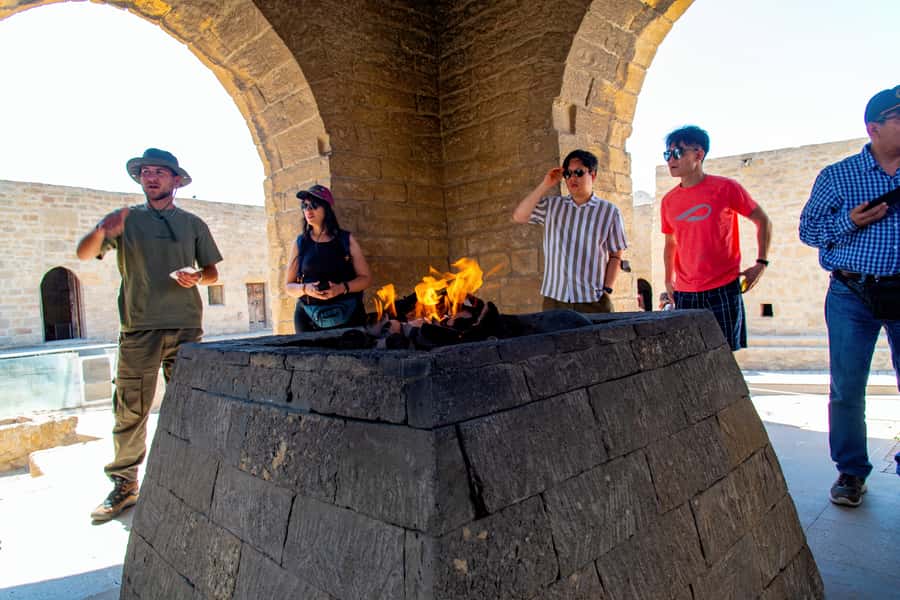
- Ateshgah is a compact stone courtyard: Cells circle a central fire area, creating the feel of a small fortress rather than a grand palace.
- The temple’s flames come from natural gas: Gas once rose through the ground and fed the sacred fire used in local worship.
- Yanar Dag is a real wall of flame: Natural gas escapes through rock on a hill, keeping fire burning in the open air.
- The tour lasts about three hours on paper: Actual time can run longer if you join a full-day group that stops for lunch.
- The guide is central to the experience: The best part of the visit is understanding the rituals and beliefs behind the fire sites.
- The price is strong if the schedule holds: At $23, the package offers useful value, but lost time can change the calculation.
Why these Absheron fires matter
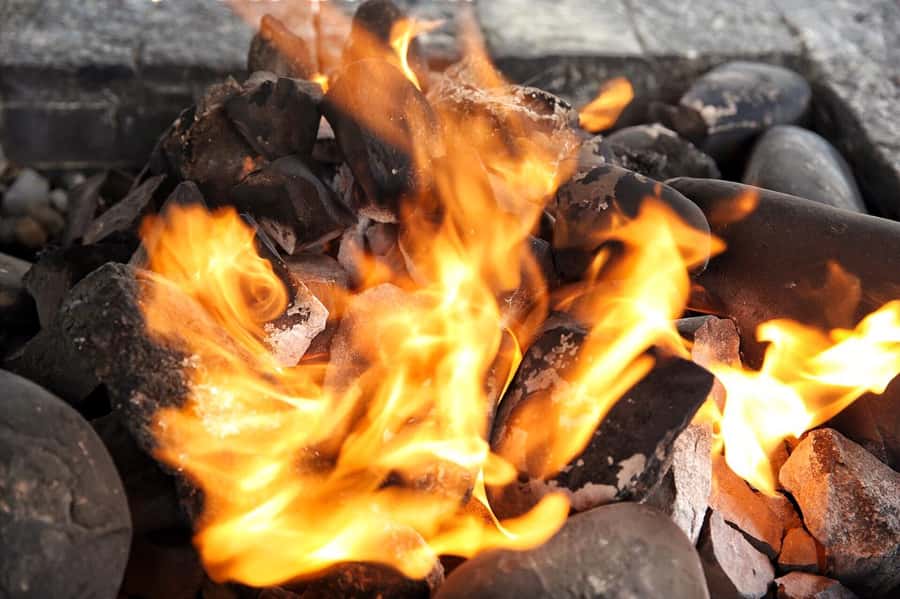
Baku is famous for oil, gas, and modern architecture, but the Absheron Peninsula tells an older story. Long before the city’s polished towers, natural gas rose through cracks in the earth. In a place where fire appeared to burn without wood, people built religious traditions around the flames.
This tour links two very different kinds of fire. At Ateshgah, people shaped the site into a religious complex with walls, rooms, and a central shrine. At Yanar Dag, nature provides the spectacle directly. You look at fire burning from a hillside, with no temple roof or altar to frame it.
That pairing makes the outing worthwhile. Ateshgah gives you history and human meaning. Yanar Dag gives you a short, striking reminder that the ground beneath Absheron is geologically active and gas-bearing.
You should not expect a full day of museum-level interpretation. The sites are relatively compact, and the tour is designed as a quick trip from Baku. Its value comes from seeing two unusual places efficiently, provided the operator keeps the schedule under control.
More Yanar Dag burning mountain trips:
- Baku: Gobustan, Mud Volcano, Fire Mount, Temple Lunch Entry
★ 4.9 · 3,246 reviews - Baku: Gobustan, Volcanoes, Fire Temple and Yanardag Day Trip
★ 4.7 · 433 reviews - Gobustan & Mud, Fire Temple, Burning Mountain (Group & Private)
★ 4.5 · 418 reviews
Ateshgah Fire Temple, a fortress built around flame
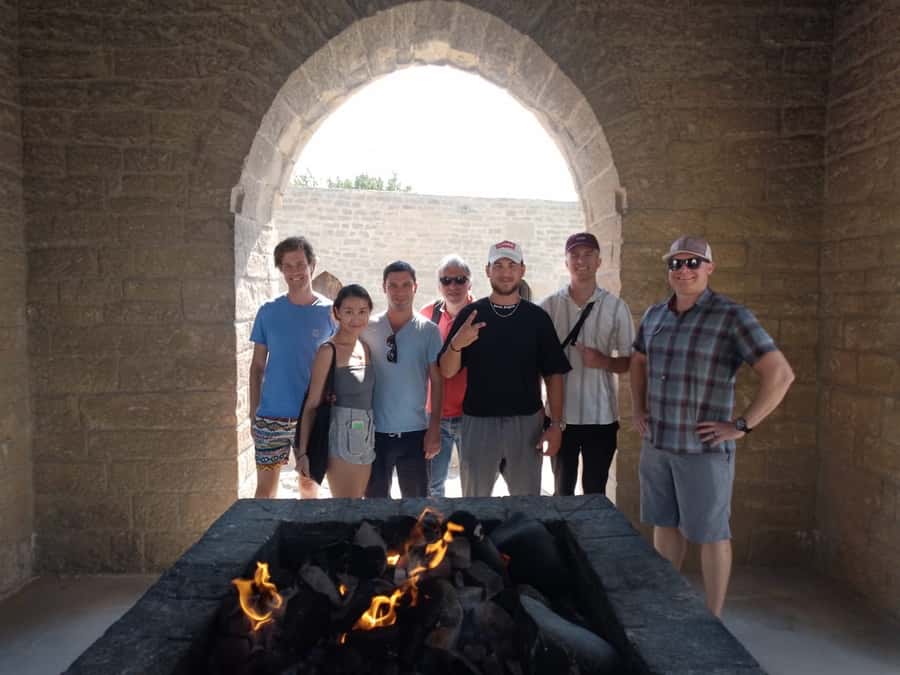
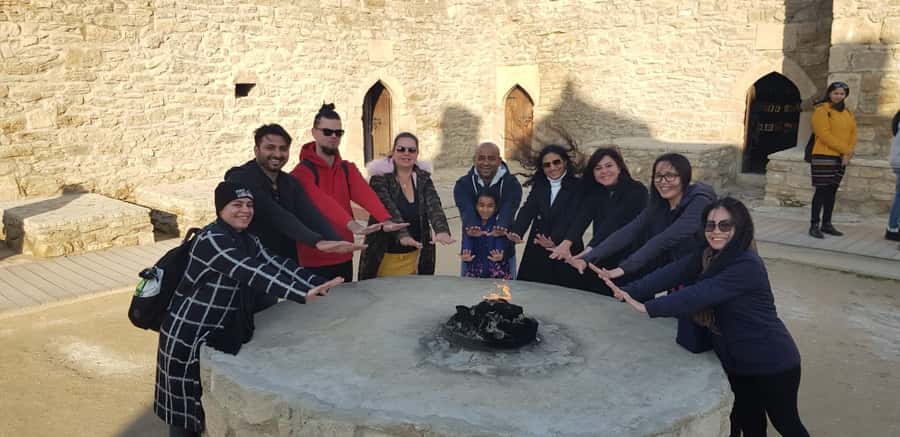
Ateshgah lies about 21 kilometers east of Baku. The complex has the shape of a small fortified courtyard, with stone walls surrounding a central temple and a ring of small rooms.
The layout is easy to understand once you enter. You walk around the enclosed courtyard, look into the cells, and approach the central fireplace. The rooms around the edge were used by ascetics and pilgrims, giving you a sense of a working religious site rather than a simple monument.
The central fire is the main focus. Natural gas once flowed from below the ground through vents and fed a large flame. Four smaller fires were also associated with the corners of the pavilion roof. The effect would have seemed extraordinary in an age before modern geology offered an explanation.
The guide’s role matters here. Without some context, you may see only a stone enclosure and a fire display. With a good explanation, the rooms, courtyard, and fire take on a clearer purpose. You can learn how fire worship shaped the site and why Indian merchants built the temple complex in the 18th century.
The site is linked to fire-worship traditions, including practices associated with Zoroastrian beliefs. The supplied description also places the site within traditions that reach back to ancient times. I would listen carefully to the guide’s explanation, since the complex reflects several layers of regional and religious history rather than one simple story.
One detail I appreciate is the small scale. Ateshgah does not overwhelm you with enormous halls or endless galleries. You can see the whole plan quickly, then spend your time noticing the cells, stonework, and central shrine. That makes it a good stop on a short excursion.
The drawback is that the visit may feel brief. One customer who enjoyed the tour suggested allowing more free time to explore. If you like reading every panel and taking a slow look at architectural details, three hours for the full outing may leave you wishing for a little longer at the temple.
Yanar Dag and the wall of fire
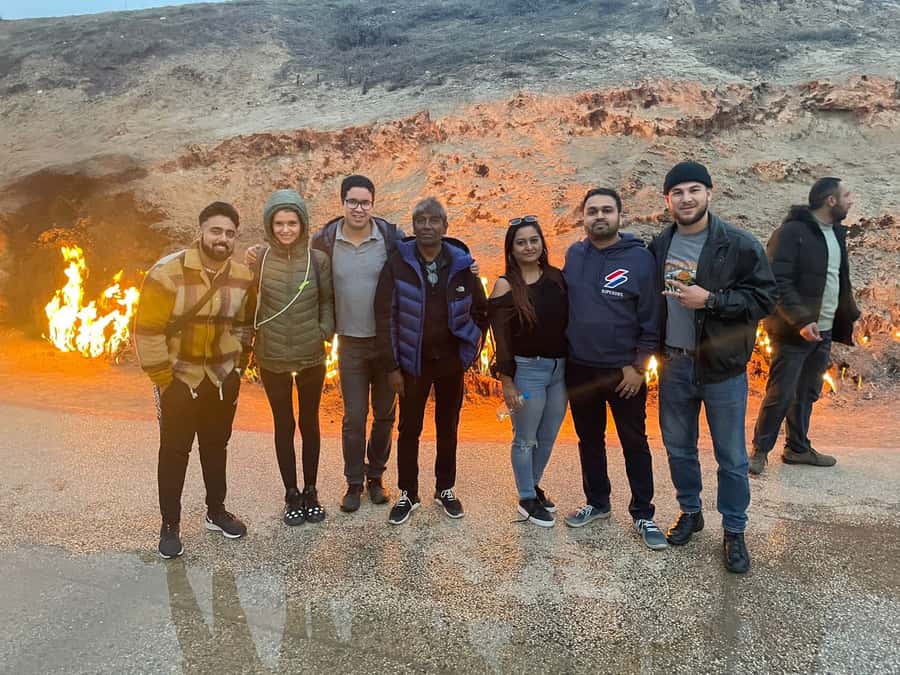
After Ateshgah, the van continues to Yanar Dag State Historical, Cultural and Natural Reserve. The ride takes about 35 to 40 minutes, depending on conditions and the group schedule.
Yanar Dag means burning mountain. The name is plain and accurate. The attraction is a hill where natural gas escapes through the rocks and burns as a continuous wall of flames. Tectonic movement and volcanic material beneath the surface help explain why gas reaches the open air.
This is not a campfire or a staged performance. The flame comes from the ground, which gives the site its odd power. You are looking at a natural gas leak that has burned for a very long time. The description places the fire in a tradition known for centuries, and Marco Polo is said to have noted flames in the Baku area during his travels.
Yanar Dag is more immediate than Ateshgah. At the temple, you think about people gathering around sacred fire. At the reserve, you simply watch the earth burn. I like visiting the two sites in that order because the temple gives you cultural background before the natural phenomenon provides the visual payoff.
Still, keep your expectations sensible. Yanar Dag is a focused stop, not a large reserve where you will spend half a day walking. The main attraction is the burning slope. Your enjoyment will depend on the guide’s explanation, the amount of time allowed, and how much you value unusual natural sights.
The guide can make or break the visit
The most praised feature of this tour is the guide. One highly positive assessment described the guide as friendly and informative, and that matches what this itinerary needs. Neither fire site benefits from a rushed photo stop with no explanation.
At Ateshgah, ask about the cells, the Indian merchants who built the complex, and the role of the central fire. At Yanar Dag, ask how natural gas reaches the surface and how the site differs from the temple’s former religious fires. A guide who connects those points can turn two short stops into a coherent story about Absheron.
English and Russian guiding are available. The advertised setup includes transport in a minivan or van, which suits the distance from Baku and keeps the outing simple. A private group is also available, according to the activity details, though the standard operation may place you with other people.
That last point deserves attention. The half-day option has not always operated as a clean, separate three-hour tour. Some customers were added to a full-day excursion and had to wait while the larger group ate lunch. One person described waiting for about an hour and 20 minutes before the sightseeing began. Another reported a total delay of around two and a half hours.
This is not a minor issue. A delay of 60 minutes consumes one third of a three-hour tour. A delay of two and a half hours changes the product completely. You may still see the sights, but you lose the convenience that makes a short excursion attractive.
More Ateshgah fire temple trips:
- Gobustan-Mud Volcan-Fire Temple and Mountain Tour/Entrance inc
★ 5.0 · 267 reviews - Gobustan, Mud volcanoes, Fire temple, Fire mountain PRIVATE TOUR
★ 5.0 · 47 reviews - Gobustan & Mud, Fire Temple, Burning Mountain, H.A. Center
★ 4.6 · 46 reviews - Ateshgah Fire temple and Burning mountain tour
★ 4.5 · 42 reviews
The biggest problem is the afternoon schedule
The stated duration is three hours, and the afternoon start is listed as 1 p.m. The trouble is that the half-day outing may be an extension of a morning or full-day route rather than a separate departure with its own clean timetable.
In practice, that can mean meeting the operator, being told to return later, waiting at an office, or sitting through another group’s lunch. One account described a 1 p.m. meeting, a return request for 2 p.m., and then another long wait before a taxi transferred the group to a different meeting point.
You should treat pickup details as something to confirm, not something to assume. Contact Baku City Tours before the day of departure and ask:
- Is this a separate half-day group?
- Will I wait for a full-day group to finish lunch?
- What is the exact pickup time and place?
- What time should I expect to return?
- Will transport go directly to Ateshgah and Yanar Dag?
These questions are especially important if you have a restaurant booking, flight, train, or evening event in Baku. The tour may finish on time, but the available evidence shows that you should leave a buffer.
The positive side is that the company has responded to problems by arranging transfers in at least one reported case. That does not erase the delay, but it suggests that staff may try to repair a bad situation. For a short paid tour, though, clear communication before departure would be far better.
Is $23 good value?
At $23 per person, this is an inexpensive way to reach two sights outside central Baku. You receive an English or Russian-speaking guide, transport in a minivan or van, and entry tickets. If the tour runs close to the advertised three hours, I consider that a fair price.
The value is strongest for solo visitors. Hiring separate transport to the Absheron Peninsula would cost more, and you would lose the guide’s explanations. One positive assessment specifically found the trip suitable for someone traveling alone.
The calculation changes if you spend an hour or more waiting. A cheap ticket is not automatically good value when your limited holiday time disappears at an office or restaurant. If a late finish would disrupt your plans, a private group may be worth considering, even though the price will likely be higher than the advertised shared rate.
I would also compare the cost with your priorities. If you care about religious history, unusual geology, and a guided explanation, the price works well. If you want long, leisurely visits or a tightly managed schedule, you may find the standard arrangement too rushed or uncertain.
Who should take this tour?
I would recommend it to you if you have a spare half-day in Baku and want to see something beyond the city center. It suits first-time visitors who want transport and interpretation handled for them, as well as solo visitors who do not want to arrange a car.
It is also a good match if you enjoy places with a slightly strange edge. A temple built around natural fire and a hill that burns from below are more memorable than another standard city monument.
You may want a different plan if your schedule is tight. The two low ratings were not mainly about the sights or the guides. They focused on organization, delayed departures, surprise group arrangements, and an unadvertised lunch stop. Those complaints are serious enough to affect your booking decision.
Families and visitors using wheelchairs may find the tour useful because wheelchair access is listed. Still, the supplied details do not explain the exact access conditions at each fire site, so ask the operator for more information if you need specific facilities or assistance.
How to get the most from the three hours
Before departure, save the operator’s contact details and confirm the meeting point. Do not rely only on a last-minute message, since pickup information has not always arrived when promised.
During the temple visit, focus on the building plan rather than only the flame. Walk the courtyard, look at the cells, and notice how the stone walls turn the site into a protected religious compound.
At Yanar Dag, give yourself time to watch the flames rather than taking one quick photograph. The sight is simple, but the effect comes from realizing that the fire is fed by gas rising through the earth.
Wear practical shoes and bring water, especially in warm weather. Those basic tips are not special requirements of the tour, but they make a short outdoor visit more comfortable. If you want more free time, say so at the start and find out how tightly the guide must follow the group schedule.
The strongest experience will come from treating the tour as a connected story. Ateshgah shows how people interpreted natural fire. Yanar Dag shows the natural force itself. That link is the reason to choose both stops together.
Should you book Baku City Tours?
I would book this tour if you want an affordable, guided look at Absheron and can keep your schedule flexible. The Ateshgah and Yanar Dag combination is genuinely unusual, the guide can add useful context, and $23 covers transport and admission.
I would not book it blindly if you have an important appointment later in the day. Confirm whether you are joining a full-day group and whether lunch is part of the route. If the operator gives you a clear pickup plan, this is a good-value short excursion. If the answers are vague, choose a private arrangement or another departure with firmer timing.
FAQ
How long is the Atashgah and Yanar Dag tour?
The advertised duration is three hours. The actual finish may be later if the half-day group joins a longer tour that includes a lunch stop or experiences delays.
How much does the tour cost?
The listed price is $23 per person. Transport, an English-speaking guide, and entry tickets are included.
Which sites does the tour visit?
The tour visits Ateshgah Fire Temple and Yanar Dag State Historical, Cultural and Natural Reserve.
How far is Ateshgah from Baku?
Ateshgah is about 21 kilometers east of Baku.
How long does it take to reach Yanar Dag from Ateshgah?
The journey to Yanar Dag takes around 35 to 40 minutes.
What languages are available for the guide?
Guiding is available in English and Russian.
Can I book a private group?
Yes. A private group option is available. The activity is also listed as wheelchair accessible.
More Half-Day
- Baku: Half-Day Gobustan and Mud Volcanoes Tour with Entry
★ 4.7 · 144 reviews - Gobustan & Mud Volcanoes Half Day Adventure
★ 5.0 · 36 reviews - Half-Day Baku City Sightseeing Tour
★ 5.0 · 23 reviews - From Baku: Gobustan Half Day Guided Tour
★ 4.5 · 10 reviews
Recently added around Baku
- Heartbeat of Baku: Old & Modern City Walk (Group or Private)★ 5.0 · 3 reviews
- Baku: Secret Tour with Surprise Activity★ 5.0 · 3 reviews
- From Baku: Shahdag Mountain Resort Day Trip★ 5.0 · 3 reviews
- Full Day Guided Tour of Shamakhi and Gabala★ 5.0 · 3 reviews
- Guba and Khinaligh Private Tour★ 5.0 · 3 reviews
- Guba and Shahdag Tour with Guide★ 5.0 · 3 reviews
- Lahij – village of masters★ 4.5 · 3 reviews
- Gobustan & Mud Volcano★ 4.5 · 3 reviews
Ateshgah Fire Temple Tours, compared.
Gobustan, Volcanoes, Fire Temple and Yanardag Day Trip
Read our review →
Gobustan-Mud Volcan-Fire Temple and Mountain Tour/Entrance inc
Read our review →
Gobustan, Mud volcanoes, Fire temple, Fire mountain PRIVATE TOUR
Read our review →
Gobustan & Mud, Fire Temple, Burning Mountain, H.A. Center
Read our review →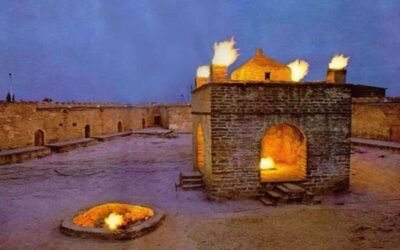
Gobustan, Mud Volcanoes, Fire Temple, & Yanar Dag Tour
Read our review →
Qobustan rock arts, Mud Volcanoes, Fire temple Ateshgah, Yanardag
Read our review →
All inclusive! Qobustan, Mud Vulcano, Ateshgah & Yanardag Fire Mountain Tour
Read our review →Browse the lists this tour appears in