
Reviewed · GOBUSTAN & MUD VOLCANO TOURS
From Baku: Gobustan Half Day Guided Tour
A time tunnel lies just outside Baku. I like this tour for its unusual mix of 20,000-year-old rock art and active mud volcanoes, two sights that are hard to pair anywhere else. I also like the short stops at Bibi-Heybat Mosque and the world’s first mechanically drilled oil well, which connect Azerbaijan’s ancient past with its modern energy story.
The main concern is the amount of time spent on the road. The rock-art stop takes about four hours and the mud-volcano stop about two, so this is a long outing with several stretches in a vehicle. One very negative assessment describes cramped transport and too much time sitting in the car, so I would confirm the vehicle and group size before paying.
In This Review
- Five things to know before booking
- Why Gobustan is worth a full day from Baku
- Reading the rock art across 20,000 years
- Mud volcanoes in the Dashgil Group
- Bibi-Heybat Mosque in a 30-minute stop
- The first oil well and Azerbaijan’s energy story
- Seven hours, private transport, and the comfort question
- What the $33.70 price really covers
- Who will enjoy this outing most
- Booking advice and cancellation terms
- Should you book the Gobustan half-day tour?
- FAQ
- How long does the Gobustan tour last?
- Is hotel pickup and drop-off included?
- Are entrance fees included in the price?
- Is lunch included?
- How long is the Gobustan Rock Art visit?
- How long is the mud-volcano visit?
- Can I cancel for a full refund?
Five things to know before booking
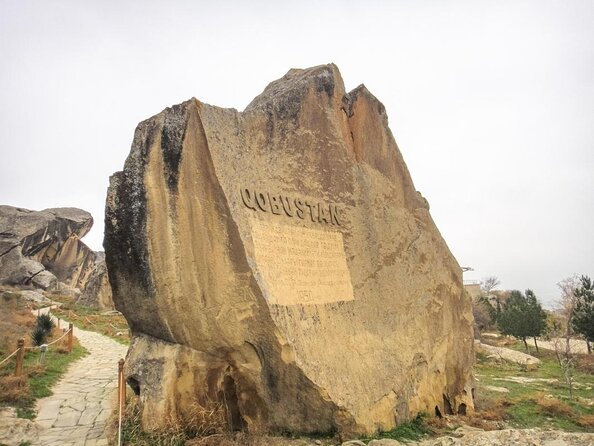
- Gobustan’s oldest drawings date back about 20,000 years, while later images reach the first century AD.
- Azerbaijan has about 350 of the world’s 800 mud volcanoes, making this one of the country’s most distinctive natural stops.
- The tour lasts around seven hours, with hotel pickup and drop-off included.
- The $33.70 price does not include entrance fees or lunch, so your final cost will be higher.
- Bibi-Heybat Mosque and the first oil well are brief stops, each lasting about 30 minutes.
- The experience requires moderate physical fitness, especially at the rocky Gobustan site.
Why Gobustan is worth a full day from Baku
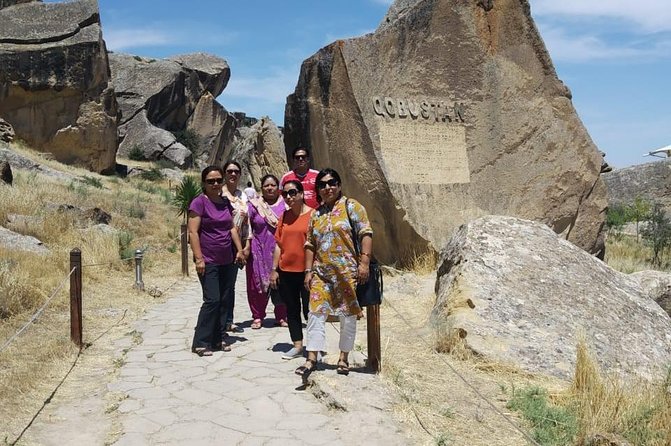
Gobustan is not simply a collection of old drawings on rocks. It is evidence of people living, working, hunting, and marking their world thousands of years ago.
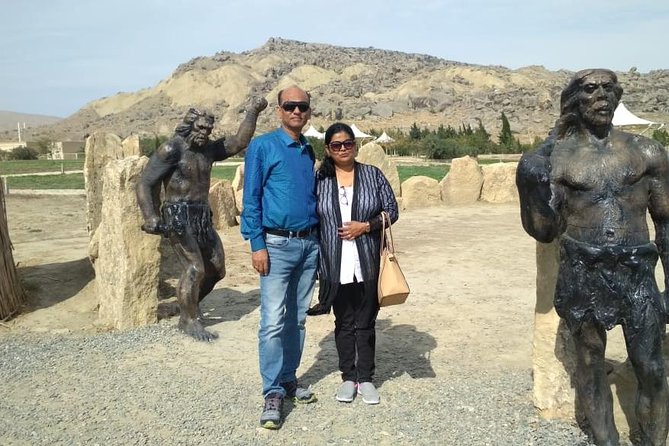
The craggy rock formations create a dramatic setting. Fissures cut through the stone, and the exposed rock faces hold thousands of images. The site also contains ancient dwellings and more than 100,000 artifacts, giving the rock art a wider human context.
I like that the age range is so broad. The earliest images date from the Mesolithic period, about 20,000 years ago. Later pictures continue into the first century AD. You can see how the subject matter changes across that long span.
The oldest scenes include mountain-goat hunts and ritual dancing with spears. Later images show battle scenes, group labor, harvesting, and women beside the hearth. These are not abstract decorations. They offer glimpses of daily life, work, ceremony, and survival.
A guide matters here because the markings can look simple at first glance. With explanation, a carved or painted figure becomes part of a much larger story about how people used this place. The supplied tour information promises a professional guide, but it does not name the guide or describe a specific language. If detailed interpretation is important to you, confirm that before departure.
The four-hour allocation is generous. That can be a strength if you enjoy archaeology and want time to look carefully. It can also feel long if you prefer a quick overview or have limited interest in prehistoric art. The rock surfaces are uneven, and the tour calls for moderate physical fitness, so comfortable shoes are a sensible choice.
Admission is not included at Gobustan. That matters when you compare the advertised price with the actual cost. The tour is inexpensive at $33.70 per person, but you should set aside extra money for entrance charges and any facility fees.
More Gobustan and mud volcano runs:
- Baku: Gobustan, Mud Volcano, Fire Mount, Temple Lunch Entry
★ 4.9 · 3,246 reviews - BEST Gobustan, Volcanoes & Absheron Fire Tour (Group or Private)
★ 5.0 · 1,254 reviews - Gobustan and Absheron tour (All inclusive)
★ 5.0 · 1,014 reviews
Reading the rock art across 20,000 years
The best way to approach Gobustan is to think in layers of time rather than as one single ancient site.
The early images of mountain goats point to hunting as a central part of life. The hunting scenes are valuable not because they offer a perfect picture of the past, but because they show what mattered enough to record. A goat, a spear, or a group of figures can reveal the relationship between people, animals, and the surrounding land.
The ritual dancing scenes add another side of life. They suggest that these communities gathered for more than work and hunting. The presence of spears in the images gives the scenes a strong visual character, but the meaning of the dances depends on interpretation. I would listen closely to the guide here rather than relying only on the pictures.
The later carvings broaden the story. Battle scenes suggest conflict. Images of collective labor show people acting together. Harvesting points to food production and seasonal work, while women by the hearth offer a domestic view that is easy to overlook beside more dramatic hunting and battle scenes.
That range is one of the strongest reasons to choose this outing. You are not looking at a single frozen moment. You are seeing how pictures changed over thousands of years.
Still, expectations matter. Gobustan is an outdoor archaeological area, not a polished museum attraction. The rock is rough, the setting is exposed, and the appeal comes from the age and meaning of the site rather than from elaborate visitor facilities. The tour includes a guide, but admission is separate.
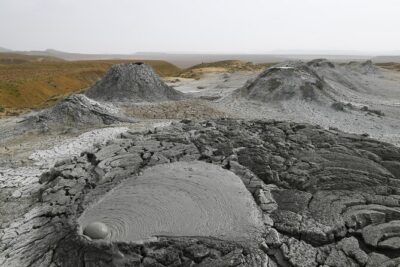
Mud volcanoes in the Dashgil Group
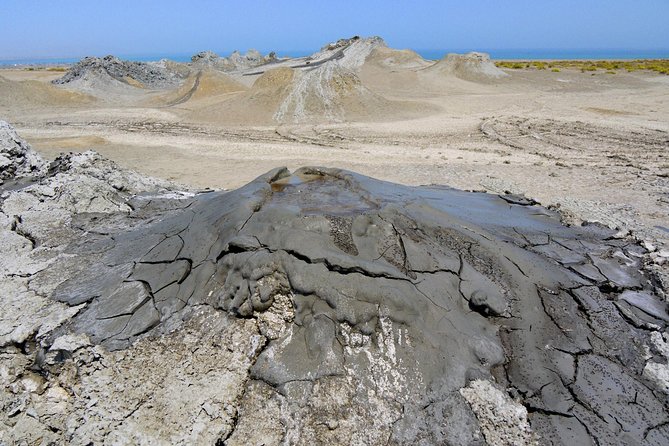
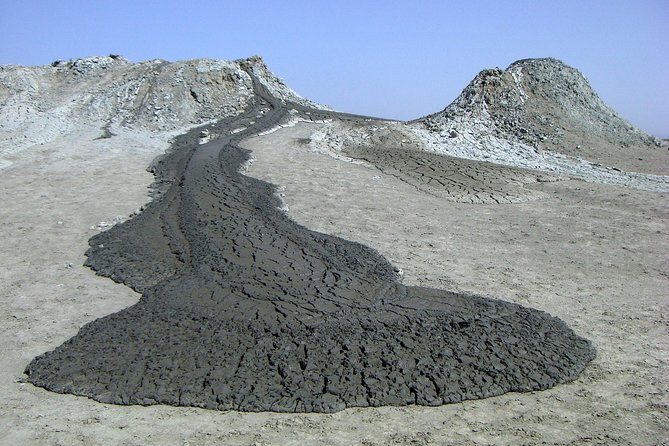
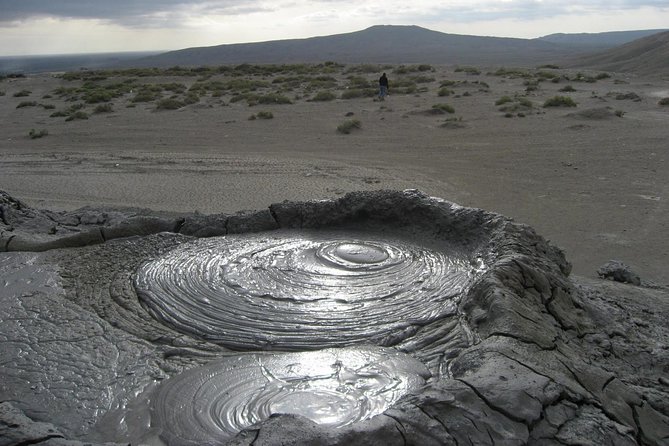
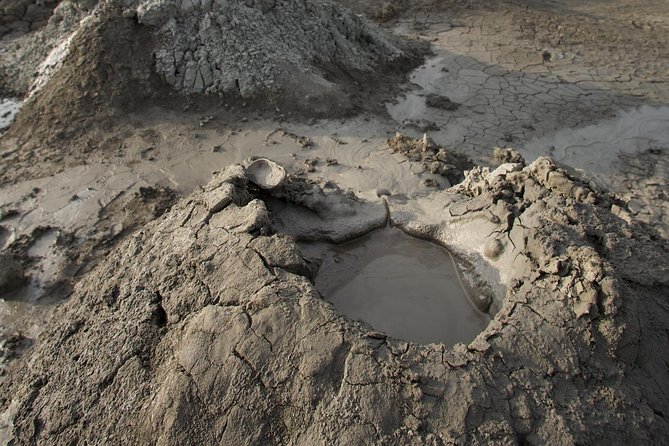
After Gobustan, the tour heads toward the Dashgil Group, east of the Gobustan museum. This area has a high concentration of active mud volcanoes.
A mud volcano is not a lava volcano. It forms when underground gases and mud push upward, creating cones, pools, and small eruptions. Azerbaijan is especially associated with these formations. About 350 of the world’s roughly 800 mud volcanoes are found in Azerbaijan, giving the country an unusually strong claim as a place to see them.
The tour allows about two hours for the mud volcanoes. That is enough time to make the geological setting a major part of the day rather than a quick roadside glance.
I like this stop because it changes the mood completely. Gobustan asks you to look backward at human activity. Dashgil asks you to watch the earth itself move and bubble. Together, the two stops create a more varied outing than a museum visit or a standard city excursion.
The main practical issue is comfort. Mud volcano areas can be remote and uneven, and the tour advises a moderate level of physical fitness. The supplied details do not specify how close you walk to the formations, what the ground is like on the day, or whether conditions can affect access. Your guide will be the best source of current information.
Admission is also listed as not included. Ask what entrance or facility charges apply so there are no surprises. The price description separately excludes landing and facility fees, though it does not explain exactly which charges apply to this route.
Bibi-Heybat Mosque in a 30-minute stop
The Bibi-Heybat Mosque gives the day a strong change of period and setting.
The present mosque was built in the 1990s as a recreation of a much older structure. The original mosque was built in the 13th century by Shirvanshah Farrukhzad II Ibn Ahsitan II. Bolshevik authorities destroyed it in 1936.
That history makes the stop more complicated than a simple old-building visit. The structure you see today is recent, but it recreates a mosque with medieval roots and a painful 20th-century story. I appreciate the chance to see that distinction clearly: historic importance does not always mean every stone is original.
The stop lasts about 30 minutes and admission is free. That is enough for a brief look, photographs, and an explanation from the guide, but not a long architectural visit. Dress and conduct should respect the religious setting, even though the provided information does not list a formal dress code.
Because the mosque is one of two short final stops, you should not expect a detailed religious or architectural tour. Its value is as a concise introduction to Baku’s Islamic heritage and to the destruction and rebuilding that shaped the city.
A few more ways to spend a day out of Baku
- Baku: Half-Day Gobustan and Mud Volcanoes Tour with Entry
★ 4.7 · 144 reviews - Gobustan & Mud Volcanoes Half Day Adventure
★ 5.0 · 36 reviews - Baku: Atashgah Fire Temple & Burning Mountain Half-Day Tour
★ 4.0 · 35 reviews - Half-Day Baku City Sightseeing Tour
★ 5.0 · 23 reviews
The first oil well and Azerbaijan’s energy story
The final stop is the Oil Museum and first oil well at Bibi-Heybat, about 10 kilometers west of Baku.
The site marks what is described as the world’s first mechanically drilled oil well, completed in 1846. It produced its first gush of oil in 1847 and reached only 21 meters in depth at that time. The State Oil Company of the Azerbaijan Republic completed reconstruction of the well on April 26, 2017.
This is a small stop with a large historical subject. Baku’s connection to oil is central to understanding the city and Azerbaijan. The well gives you a concrete starting point for that story, rather than leaving oil history as something you only hear about in a museum or see in modern industry.
The visit lasts about 30 minutes and is free. The provided information does not say how extensive the museum displays are, so I would treat this as a concise historical stop rather than a full museum visit.
Placed after Gobustan and the mosque, it creates a useful sequence: prehistoric life, medieval religious history, then industrial development. That progression gives the outing more meaning than a simple trip to one archaeological site.
Seven hours, private transport, and the comfort question
The tour lasts about seven hours and includes private transportation, a professional guide, and hotel pickup and drop-off. Those inclusions make the trip easy to arrange from Baku, especially if you do not want to negotiate separate transport to several sites.
The word private needs a little care. The experience is described as private transportation, but the maximum group size is listed as 100 people. That does not necessarily mean you will ride with 100 people, but it does mean you should ask how the group and vehicle are organized.
This point matters because one particularly harsh assessment complains about spending most of the day in a cramped car with little room. It is only one reported experience, and the overall score is 4.4 from 10 ratings, but the warning is specific enough to take seriously.
Before booking, ask these practical questions:
- What type of vehicle is used?
- How many people will be in the vehicle?
- Is the transport private for your party or shared?
- Are entrance fees paid directly at each site?
- How much walking is expected at Gobustan and the mud volcanoes?
The route covers several locations, so some vehicle time is unavoidable. If you enjoy a full day outside Baku and want several unrelated sights in one trip, that tradeoff may be worthwhile. If you strongly dislike long drives or need roomy transport, get clear answers first.
What the $33.70 price really covers
At $33.70 per person, the tour is priced as a low-cost way to cover several major sights outside central Baku. Hotel pickup, transport, and a guide are included, which can represent good value if you would otherwise need to arrange a car and driver.
The price is not all-inclusive. Lunch is excluded, and entrance fees are also excluded. Landing and facility fees are listed separately as exclusions, though the exact charges are not given.
That means I would compare the tour on convenience, not just on the headline price. You are paying for one organized day with transport and interpretation. You are not paying for meals, admissions, or every possible site charge.
The four-hour Gobustan stop and two-hour mud-volcano stop make up most of the day. The mosque and oil-well visits are brief additions rather than major standalone tours. If you want a broad introduction to the area, the price looks reasonable. If your main goal is only the rock art, a shorter private visit might better match your interests, though no alternative price is provided here.
Who will enjoy this outing most
I would recommend this tour to you if you want a broad introduction to the area beyond Baku and enjoy connecting archaeology, geology, religion, and industry in one day.
It is especially suitable for:
- First-time visitors with one free day outside Baku
- People interested in prehistoric art and archaeology
- Anyone curious about mud volcanoes
- Visitors who want hotel pickup and a guided route
- Families or groups willing to manage uneven ground and a long day
- History fans who appreciate seeing several periods in one outing
I would be more cautious if you have limited mobility, dislike rocky outdoor sites, or need a spacious vehicle. The tour requires moderate physical fitness, and the transport complaint means comfort should be checked before booking.
It may also feel rushed for someone who wants a long mosque visit or a detailed oil museum experience. Those stops are each only about 30 minutes. Gobustan is the main event, with the mud volcanoes close behind.
Booking advice and cancellation terms
Confirmation is provided at booking. Pickup and drop-off at your hotel are included, but the supplied information does not state the exact pickup window or whether every Baku hotel is covered.
Free cancellation is available if you cancel at least 24 hours before the start time. Cancellations made less than 24 hours in advance are not refunded, and changes inside that same period are not accepted. The cut-off uses local time.
I would book early enough to review the transport details and ask about admission costs. Those two questions matter more here than small differences in the base price.
Should you book the Gobustan half-day tour?
Book it if you want a convenient, budget-friendly day that combines ancient rock art, active mud volcanoes, Bibi-Heybat Mosque, and Azerbaijan’s first oil well. The range of sights is its main strength, and Gobustan gives the day a genuine sense of age and place.
Pause before booking if the vehicle arrangement is unclear. The single very negative assessment focuses on cramped transport and too much sitting, while the rating of 4.4 from 10 ratings suggests the experience is generally appealing but not flawless.
My call is simple: ask about the vehicle size, group arrangement, walking demands, and extra admission charges. If the answers suit you, this is a worthwhile way to see several important sites beyond Baku in one organized day.
FAQ
How long does the Gobustan tour last?
The tour lasts approximately seven hours.
Is hotel pickup and drop-off included?
Yes. Hotel pickup and drop-off are included in the tour.
Are entrance fees included in the price?
No. Entrance fees are not included. Landing and facility fees are also listed as exclusions.
Is lunch included?
No. Lunch is not included in the $33.70 price.
How long is the Gobustan Rock Art visit?
The Gobustan Rock Art portion lasts about four hours.
How long is the mud-volcano visit?
The mud-volcano portion lasts about two hours and focuses on the active formations in the Dashgil Group.
Can I cancel for a full refund?
Yes, if you cancel at least 24 hours before the experience start time. Cancellations made less than 24 hours in advance are not refunded.
Recently added around Baku
- Heartbeat of Baku: Old & Modern City Walk (Group or Private)★ 5.0 · 3 reviews
- Baku: Secret Tour with Surprise Activity★ 5.0 · 3 reviews
- From Baku: Shahdag Mountain Resort Day Trip★ 5.0 · 3 reviews
- Full Day Guided Tour of Shamakhi and Gabala★ 5.0 · 3 reviews
- Guba and Khinaligh Private Tour★ 5.0 · 3 reviews
- Guba and Shahdag Tour with Guide★ 5.0 · 3 reviews
- Lahij – village of masters★ 4.5 · 3 reviews
- Gobustan & Mud Volcano★ 4.5 · 3 reviews
Gobustan & Mud Volcano Tours, compared.
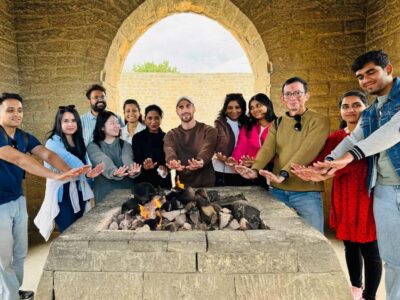
Gobustan, Mud Volcano, Fire Mount, Temple Lunch Entry
Read our review →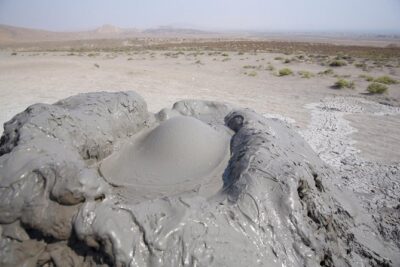
BEST Gobustan, Volcanoes & Absheron Fire Tour (Group or Private)
Read our review →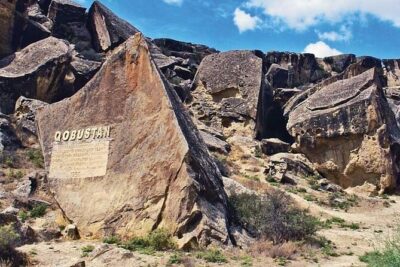
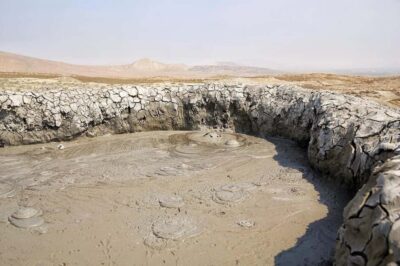
Gobustan, Volcanoes, Fire Temple and Yanardag Day Trip
Read our review →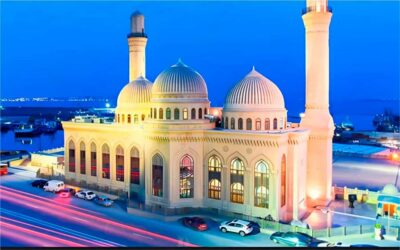
Gobustan-Mud Volcan-Fire Temple and Mountain Tour/Entrance inc
Read our review →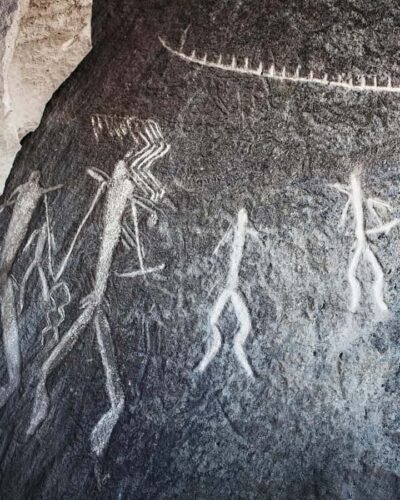
Gobustan Mud Volcanoes Temple & Entry tickets included
Read our review →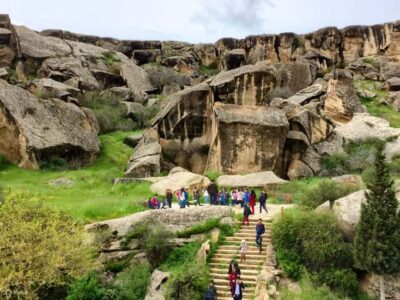
Gobustan-Absheron Tour with Hotel PICK UP and DROP OFF
Read our review →Browse the lists this tour appears in