
Reviewed · ATESHGAH FIRE TEMPLE TOURS
Private Tour – Ateshgah Temple Gala Museum Complex and Yanardag
Fire still burns from the earth here. This four-hour private tour takes you from Baku to three unusual Absheron Peninsula sites: Ateshgah Fire Temple, the Gala Archaeological and Ethnographic Museum Complex, and Yanardag, the hill where natural gas burns from the ground. I like the efficient route and the comfort of a private chauffeured vehicle, especially when you want to see more than central Baku in a single morning.
I also like the cultural range. You move from Zoroastrian, Hindu, and Sikh connections at Ateshgah to ancient settlements at Gala, then finish with Azerbaijan’s famous natural flame at Yanardag. The main drawback is the brisk pace: with only about 40 minutes at Ateshgah, 40 minutes at Gala, and 30 minutes at Yanardag, you will get a strong introduction rather than a leisurely visit. Entrance tickets are also extra.
In This Review
- Key points to know before booking
- Why these three Absheron sights belong together
- Ateshgah Fire Temple and the story of sacred flame
- Gala Museum Complex and ancient Absheron life
- Yanardag, Azerbaijan’s burning hill
- What the private vehicle adds to the morning
- What the $95 price really includes
- Who will enjoy this tour most
- Timing, booking, and cancellation details
- My verdict: a smart half-day beyond Baku
- FAQ
- How long does the private tour last?
- What time does the tour start?
- Does the tour include hotel pickup and drop-off?
- Is the tour private?
- Are entrance tickets included in the $95 price?
- Which sites does the tour visit?
- Can I cancel for a full refund?
Key points to know before booking
- Ateshgah connects several faith traditions: The present temple dates from the 17th and 18th centuries and was linked to a Baku-based Hindu community related to Sikhs.
- Gala covers thousands of years in one stop: Burial mounds, tombs, homes, water storage structures, mosques, baths, and castle ruins occupy the museum complex.
- Yanardag is a natural gas fire: The flames burn along a slope about 10 meters wide, making this a rare geological sight near Baku.
- Your group stays private: Only your party participates, with hotel pickup, drop-off, and transport in a private vehicle.
- The $95 price buys convenience and a guide: It does not cover admission tickets, food, drinks, or insurance.
- A 9:30 a.m. start keeps the tour manageable: The morning schedule gives you the rest of the day for Baku.
Why these three Absheron sights belong together
Baku is famous for its grand center, seaside boulevard, and modern architecture. Yet the Absheron Peninsula explains something older and more elemental about Azerbaijan. This dry region has long been shaped by underground gas, fire worship, farming settlements, trade, and religious exchange.
This tour works because each stop tells a different part of that story. Ateshgah shows how natural flames became a focus for worship. Gala presents the remains of everyday life across a very long period. Yanardag brings the subject back to the earth itself, with gas still feeding fire on a hillside.
I like that the route is not just a collection of famous photo stops. The three places give you a better sense of why fire has such a strong place in Azerbaijan’s identity. The guide is important here, since the physical remains can mean more when someone explains the beliefs, dates, and customs behind them.
The private format also matters. You do not need to keep up with a large group or wait for strangers to finish at every stop. If you have questions about Zoroastrianism, the temple’s Hindu and Sikh links, or the old structures at Gala, you can ask directly.
More Yanar Dag burning mountain trips:
- Baku: Gobustan, Mud Volcano, Fire Mount, Temple Lunch Entry
★ 4.9 · 3,246 reviews - Baku: Gobustan, Volcanoes, Fire Temple and Yanardag Day Trip
★ 4.7 · 433 reviews - Gobustan & Mud, Fire Temple, Burning Mountain (Group & Private)
★ 4.5 · 418 reviews
Ateshgah Fire Temple and the story of sacred flame
The first visit is Ateshgah, located near Surakhani village, roughly 30 kilometers from central Baku. The name is commonly translated as Fire Temple, and the site was drawn to natural gas outlets where underground gas reached oxygen and ignited.
The complex you see today took shape in the 17th and 18th centuries. Its five-sided layout surrounds an open courtyard, with the temple altar in the middle. That central point was the focus of pilgrimage and worship.
Ateshgah is especially interesting because its story is not limited to one religion. The site was revered at different times by Zoroastrians, Hindus, and Sikhs. The present structure was built by a Baku-based Hindu community connected with Sikhs, giving the complex a cultural history that reaches across religious and regional borders.
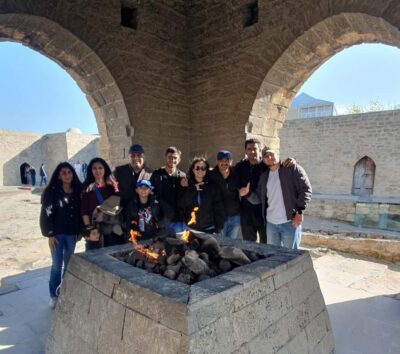
Your scheduled time here is about 40 minutes. That is enough to walk through the courtyard, see the altar, study the surrounding rooms, and listen to an explanation of how fire worship developed at the site. It is not enough for a slow architectural study or a long period of quiet reflection.
Admission is not included in the tour price, so you should budget separately for the entrance fee. The supplied details do not give the current ticket cost, so check it when booking or before arrival. The same advice applies to Gala.
I would pay close attention to the guide at Ateshgah. Without context, you may mainly see a compact stone complex with small chambers around a courtyard. With a good explanation, the site becomes a meeting point of natural science, pilgrimage, and several faith traditions.
Gala Museum Complex and ancient Absheron life
Gala, also written Qala, is the most archaeology-focused stop. The museum complex covers remains found on the Absheron Peninsula and represents a period stretching from the third millennium BC to the 20th century.
That enormous time span is the reason this stop deserves careful attention. You are not looking at one single building from one single era. The grounds include burial mounds, tombs, houses, water storage structures, an ancient castle ruin, five mosques, and three baths.
The variety helps you picture how people lived in this dry region. Water storage was essential. Religious buildings show how communities were organized. Homes and craft-related structures give a sense of ordinary life, while the tombs and burial mounds point to beliefs about death and remembrance.
You have about 40 minutes at Gala. I see this as an introduction rather than a full archaeological visit. The site contains enough material to reward a longer stay, but the half-day schedule divides your time among three places. If archaeology is your main interest, you may wish you had more time here.
The guide can help you decide what deserves your attention first. Ask for a clear explanation of the oldest remains, the castle, and the religious buildings. Otherwise, the number of structures can feel like a lot to absorb in a short period.
Gala also gives the tour a useful human scale. Ateshgah is about ritual and pilgrimage, while Yanardag is about nature. Gala shows the homes, water systems, places of worship, and burial customs that made life possible around those dramatic sites.
Yanardag, Azerbaijan’s burning hill
Yanardag is the final stop, around 25 kilometers north of Baku. The name means Burning Mountain, although the site is more accurately a hill than a mountain. Natural gas escapes from the ground and burns along the slope.
The flames reach about a meter in height and run across a section roughly 10 meters wide. The fire is not a temporary display arranged for visitors. It comes from gas rising through the earth and meeting oxygen at the surface.
You have around 30 minutes here. That is enough to see the burning slope, take photographs, and hear the explanation of the geological phenomenon. Benches are available for watching the flames, and the fire can look especially effective later in the day.
Since this tour begins at 9:30 a.m., you will probably see Yanardag in daylight rather than during the evening. That is the trade-off for using a morning schedule. Daylight makes the surrounding area easier to see, while evening can make the flames appear more dramatic.
Admission to Yanardag is listed as free for this experience. The site has been protected as a state conservation area since 2007. I would keep your expectations realistic. Yanardag is an unusual natural sight, but it is not a large park with hours of activities. The attraction is focused on the burning slope itself.
For many people, this will be the most memorable photo stop. Still, Ateshgah and Gala provide the deeper cultural and historical setting, so I would not treat Yanardag as the sole reason to book the tour.
More Ateshgah fire temple trips:
- Gobustan-Mud Volcan-Fire Temple and Mountain Tour/Entrance inc
★ 5.0 · 267 reviews - Gobustan, Mud volcanoes, Fire temple, Fire mountain PRIVATE TOUR
★ 5.0 · 47 reviews - Gobustan & Mud, Fire Temple, Burning Mountain, H.A. Center
★ 4.6 · 46 reviews - Ateshgah Fire temple and Burning mountain tour
★ 4.5 · 42 reviews
What the private vehicle adds to the morning
The tour includes transport by private vehicle, fuel costs, and hotel pickup and drop-off. Pickup is offered from your Baku hotel, with a stated start time of 9:30 a.m. That removes the need to arrange separate transport to sites outside the city.
This is useful on the Absheron Peninsula, where the three locations are spread beyond central Baku. A private car also saves you from working out several separate taxi rides or trying to link the stops with public transportation.
The experience is private, so only your group participates. That makes the $95 per person price easier to assess. For one person or a couple, it may feel expensive compared with a shared bus excursion. For a family or small group, the price can offer better value because you are paying for a dedicated vehicle and guide rather than only a seat.
The chauffeur arrangement is another practical benefit. Past positive feedback connected the company with organized service, clear timing, and drivers such as Jafar. Guides named in particularly favorable comments include Farman and Karim. Guide assignments can change, so treat those names as examples rather than a guarantee.
I would ask the guide to keep an eye on the clock. The published stop times add up to about 110 minutes, leaving the rest of the four-hour period for driving, pickup, drop-off, and transitions. A private tour gives you some flexibility, but it is still a compact route.
What the $95 price really includes
At $95 per person, the price covers:
- A professional guide
- Hotel pickup and drop-off
- A private vehicle
- Fuel surcharge
It does not cover entrance tickets, food, drinks, or insurance. That distinction matters because the headline price is not the full cost of the morning.
The value comes from combining three outlying sites with private transport and guided interpretation. You are not simply paying to be driven to a burning hill. You are paying for a planned route, a dedicated vehicle, and someone who can connect the religious, archaeological, and natural elements.
I would compare this with the cost and effort of arranging three separate visits yourself. If you already have a rental car and prefer to explore at your own pace, the tour may feel less attractive. If you are staying in Baku for a short time, do not want to drive, or value direct explanations, the convenience is stronger.
The lack of included food is not a major issue for a four-hour morning tour. Still, eat beforehand or bring something suitable if you need a snack. The provided details do not indicate that food or drinks are supplied.
Who will enjoy this tour most
I think this experience suits first-time visitors who want to see beyond central Baku without giving up half a day. It also works well for families, couples, and small groups who prefer a private schedule.
History fans will appreciate Ateshgah and Gala. Anyone interested in religion will find the mix of Zoroastrian, Hindu, and Sikh connections at Ateshgah unusual. People who enjoy geology or striking photographs will remember Yanardag.
The tour is also a practical choice for those who want front-door pickup. Most people can participate, and the meeting information notes that the sites are near public transportation. Even so, the private vehicle makes the route simpler and more comfortable.
I would hesitate if your ideal visit involves long museum stops, extended photography, or unhurried time at every location. The tour is action-packed by design. You will see a lot, but you should be ready to move on when the schedule calls.
The short format also means the quality of the guide affects the experience. A strong guide can make the ancient remains and religious details easy to follow. If you have special interests, such as Zoroastrian practice or Absheron architecture, tell the operator in advance so the visit can be shaped around your questions if possible.
Timing, booking, and cancellation details
The scheduled start time is 9:30 a.m. Confirmation is normally sent at booking. If you book within seven days of the travel date, confirmation may arrive within 48 hours and remains subject to availability.
You can cancel for a full refund if you do so at least 24 hours before the local start time. Changes or cancellations made less than 24 hours before departure are not accepted for a refund.
The tour offers a mobile ticket, which is convenient when you are moving between hotel pickup and the sites. I would still keep the booking confirmation easy to reach on your phone.
My verdict: a smart half-day beyond Baku
I would book this tour if you want an efficient introduction to the Absheron Peninsula, especially if you have limited time in Baku. The combination of private transport, hotel pickup, and a professional guide makes the route easy, while Ateshgah, Gala, and Yanardag offer three clearly different experiences.
The main caution is pace. You will not study every archaeological feature at Gala or linger at Ateshgah for hours. You will get a well-organized overview, with admission fees added to the $95 price.
For a small group that values comfort and direct commentary, the cost is reasonable. For independent visitors with a car and plenty of time, a self-guided route may give more freedom. For everyone else, this is a useful, focused morning that shows why fire, faith, and survival are so closely tied to Azerbaijan’s Absheron Peninsula.
FAQ
How long does the private tour last?
The tour lasts approximately four hours.
What time does the tour start?
The stated start time is 9:30 a.m.
Does the tour include hotel pickup and drop-off?
Yes. Hotel pickup and drop-off are included.
Is the tour private?
Yes. Only your group participates in the activity.
Are entrance tickets included in the $95 price?
No. Entrance tickets are not included. Food, drinks, and insurance are also excluded.
Which sites does the tour visit?
The route includes Ateshgah Fire Temple, the Qala Archaeological and Ethnographic Museum Complex, and Yanardag.
Can I cancel for a full refund?
Yes. You can receive a full refund if you cancel at least 24 hours before the experience start time. Cancellations made less than 24 hours before the start are not refunded.
Recently added around Baku
- Heartbeat of Baku: Old & Modern City Walk (Group or Private)★ 5.0 · 3 reviews
- Baku: Secret Tour with Surprise Activity★ 5.0 · 3 reviews
- From Baku: Shahdag Mountain Resort Day Trip★ 5.0 · 3 reviews
- Full Day Guided Tour of Shamakhi and Gabala★ 5.0 · 3 reviews
- Guba and Shahdag Tour with Guide★ 5.0 · 3 reviews
- Lahij – village of masters★ 4.5 · 3 reviews
- Guba and Khinaligh Private Tour★ 5.0 · 3 reviews
- Gobustan & Mud Volcano★ 4.5 · 3 reviews
Ateshgah Fire Temple Tours, compared.
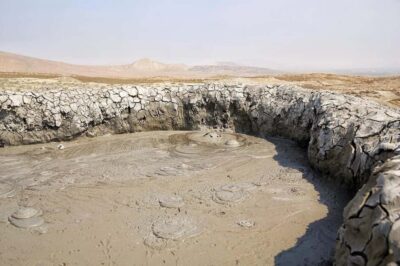
Gobustan, Volcanoes, Fire Temple and Yanardag Day Trip
Read our review →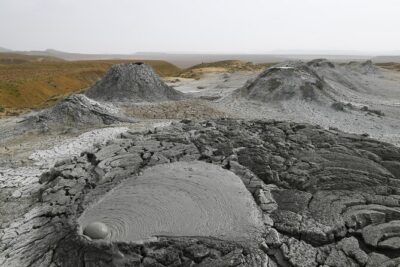
Gobustan-Mud Volcan-Fire Temple and Mountain Tour/Entrance inc
Read our review →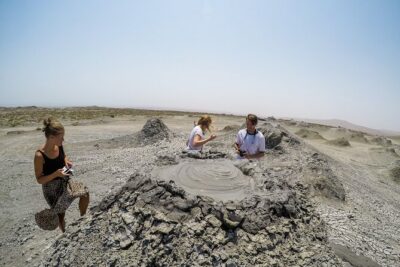
Gobustan, Mud volcanoes, Fire temple, Fire mountain PRIVATE TOUR
Read our review →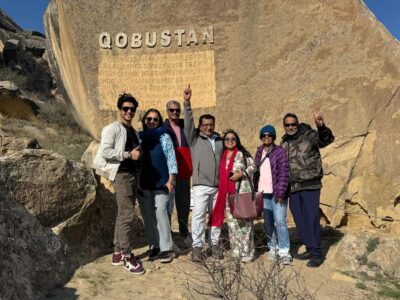
Gobustan & Mud, Fire Temple, Burning Mountain, H.A. Center
Read our review →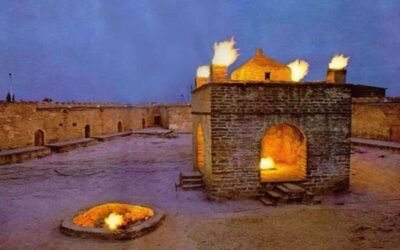
Gobustan, Mud Volcanoes, Fire Temple, & Yanar Dag Tour
Read our review →
Atashgah Fire Temple & Burning Mountain Half-Day Tour
Read our review →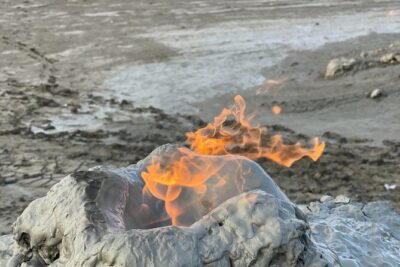
Qobustan rock arts, Mud Volcanoes, Fire temple Ateshgah, Yanardag
Read our review →Browse the lists this tour appears in